Home CareNotes Atrial Flutter
Thomson Reuters Micromedex

Atrial Flutter

WHAT YOU SHOULD KNOW:

Atrial Flutter (Inpatient Care) Care Guide

Atrial (Ay-tre-al) flutter is when the atria (top two chambers of your heart) beat faster than normal. With atrial flutter, there is more than one atrial contraction (squeeze) for every heartbeat. Because the atria beat too fast, the ventricles may not be able provide good circulation to the body with every heartbeat. Atrial flutter often happens with another arrhythmia called atrial fibrillation (fib-ri-LAY-shun). Some people with atrial flutter do not have noticeable symptoms. Others feel weak, dizzy, or faint. Some feel pain or fluttering in the chest, or have trouble breathing. Your atrial flutter may come and go, last for only a short time, or be a life-long condition.

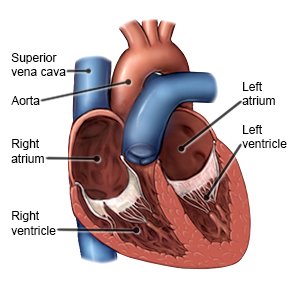
Picture of a normal heart

CARE AGREEMENT:

You have the right to help plan your care. Learn about your health condition and how it may be treated. Discuss treatment options with your caregivers to decide what care you want to receive. You always have the right to refuse treatment.

RISKS:

If your atrial flutter is not treated, your body may not get the oxygen it needs to work well. Untreated atrial flutter increases your chance of heart failure, a heart attack, stroke, and fluid or blood clots in the lungs. The sooner you are treated the better your chance of avoiding these problems.

WHILE YOU ARE HERE:

Activity:

  • You may need to rest in bed until your heart rhythm is under control. Ask caregivers if you may exercise your legs in bed. Do this by lifting one leg off the bed and drawing big circles with your toes. Then do it with the other leg. Another good exercise is to lie on your side and pretend to pedal a bike. This may make your legs stronger and help circulation. Stop exercising if you become tired.

  • Your caregiver will tell you when it is OK to get out of bed. Call your caregiver before getting up for the first time. If you ever feel weak or dizzy, sit or lie down right away. Then call your caregiver.

Call button:

You may use the call button when you need your caregiver. Pain, trouble breathing, or wanting to get out of bed are good reasons to call. The call button should always be close enough for you to reach it.

Informed consent:

A consent form is a legal document that explains the tests, treatments, or procedures that you may need. Informed consent means you understand what will be done and can make decisions about what you want. You give your permission when you sign the consent form. You can have someone sign this form for you if you are not able to sign it. You have the right to understand your medical care in words you know. Before you sign the consent form, understand the risks and benefits of what will be done. Make sure all your questions are answered.

Tests:

You may need one or more of the following tests. The results of these tests help caregivers plan the best way to treat you.

  • Blood tests: You may need blood taken to give caregivers information about how your body is working. The blood may be taken from your hand, arm, or IV.

  • Chest x-ray: This is a picture of your lungs and heart. Caregivers use it to see how your lungs and heart are doing. Caregivers may use the x-ray to look for signs of infection like pneumonia, or to look for collapsed lungs. Chest x-rays may show tumors, broken ribs, or fluid around the heart and lungs.

  • Echocardiogram: This test is a type of ultrasound. Sound waves are used to show the structure, movement, and blood vessels of your heart.

  • Heart monitor: This is also called an ECG or EKG. Sticky pads placed on your skin record your heart's electrical activity.

  • Intake and output: Caregivers will keep track of the amount of liquid you are getting. They also may need to know how much you are urinating. Ask how much liquid you should drink each day. Ask caregivers if they need to measure or collect your urine.

  • Pulse oximeter: A pulse oximeter is a device that measures the amount of oxygen in your blood. A cord with a clip or sticky strip is placed on your finger, ear, or toe. The other end of the cord is hooked to a machine. Never turn the pulse oximeter or alarm off. An alarm will sound if your oxygen level is low or cannot be read.

  • Vital signs: Caregivers will check your blood pressure, heart rate, breathing rate, and temperature. They will also ask about your pain. These vital signs give caregivers information about your current health.

  • Transesophageal echocardiogram (TEE):

    • A transesophageal (trans-e-sof-ah-JEE-al) echocardiogram is a type of ultrasound that shows pictures of the size and shape of your heart. It also looks at how your heart moves when it is beating. These pictures are seen on a TV-like screen. You may need a TEE if your heart does not show up very well in a regular echocardiogram. You may also need a TEE to check for blood clots in your atria.

    • You will be given medicine to relax you during a TEE. Caregivers put a tube in your mouth that is moved down into your esophagus (food pipe). The tube has a small ultrasound sensor on the end. Since your esophagus is right next to your heart, your caregiver can see your heart clearly.

  • Heart monitor: This test is also called an EKG or ECG. Sticky pads are placed on your skin to record your heart's electrical activity. An EKG gives information about how your heart is working. Lie as still as possible during the test.

  • Urine sample: For this test you need to urinate into a small container. You will be given instructions on how to clean your genital area before you urinate. Do not touch the inside of the cup. Follow instructions on where to place the cup of urine when you are done.

Medicines:

  • Blood pressure medicine: This is given to lower your blood pressure. A controlled blood pressure helps protect your organs, such as your heart, lungs, brain, and kidneys. Take your blood pressure medicine exactly as directed.

  • Blood thinners: This medicine helps prevent clots from forming in the blood. Clots can cause strokes, heart attacks, and death. Blood thinners make it more likely for you to bleed or bruise. Use an electric razor and soft toothbrush to help prevent bleeding.

  • Diuretics: This medicine is given to decrease edema (excess fluid) that collects in a part of your body, such as your legs. Diuretics can also remove excess fluid from around your heart or lungs and decrease your blood pressure. It is often called water pills. You may urinate more often when you take this medicine.

  • Heart medicine: This medicine is given to strengthen or regulate your heartbeat. It also may help your heart in other ways. Talk with your caregiver to find out what your heart medicine is and why you are taking it.

Treatment options:

The treatment that is right for you depends on how bad your atrial flutter is. It also depends on how long you have had atrial flutter, what is causing it, and other heart or rhythm problems you may have. There are several ways that your caregiver may try to get your heart into a better rhythm or rate. Your treatment may change if your atrial flutter is not being controlled. This is often decided after you have tests. You may have some of the following treatments alone or together.

  • IV: An IV (intravenous) is a small tube placed in your vein that is used to give you medicine or liquids.

  • Oxygen: You may need extra oxygen if your blood oxygen level is lower than it should be. You may get oxygen through a mask placed over your nose and mouth or through small tubes placed in your nostrils. Ask your caregiver before you take off the mask or oxygen tubing.

  • Pressure stockings: These are long, tight stockings that put pressure on your legs to promote blood flow and prevent clots. You may need to wear pressure stockings before or after surgery or if you have poor circulation (blood flow).

  • Cardioversion: This is when an electric shock is given to the heart. The shock is usually given through paddles or sticky patches placed on your chest or back. The shock helps your heart return to a normal beat. Cardioversion (KAHR-dee-oh-ver-zhun) may be needed if medicine does not make your heart work better. You may need a cardioversion if your heart rhythm is making you sick or is dangerous. You may be given medicine to help you relax before getting the electric shock. If the shock works, your heart rate and rhythm will return to normal. Medicine may be needed to keep your heart in a normal rhythm. You may need a cardioversion more than once.

  • Catheter ablation: This is a procedure where a wire is fed through an artery or a vein to your heart. Your doctor finds the area of the heart muscle causing the unorganized impulses. Heat energy is applied to the area to stop the abnormal impulses.

  • Temporary pacemaker:

    • This is a machine that helps your heart beat at a normal speed and in a regular rhythm. A temporary pacemaker may use large patches placed on your chest and back. These are connected to a special monitor. Sometimes, your caregiver may need to put small wires through your skin and into your heart muscle instead. The wires may then be connected to a small pacemaker box outside of your body.

    • The temporary pacemaker "reads" what your heart is doing. If your heart is beating in a different way than it should, the pacemaker takes over and controls your heartbeat. It does this by sending small electric signals to the heart muscle. This tells your heart when to beat. You may feel these signals, especially if your temporary pacemaker uses large patches on the skin. If this causes pain, use your call light and tell your caregiver. Do not get out of bed without first asking your caregiver if it is OK. You may need a pacemaker just for a short time. In some cases, you may need it for the rest of your life. Your caregiver may place a permanent pacemaker if it is needed.

  • Permanent pacemaker:

    • A permanent pacemaker is a small device that helps regulate your heart rate. A permanent pacemaker is about the size of a wristwatch, and is implanted under your skin. You may need a pacemaker to slow your heartbeat down, speed it up, or make it more regular.

    • A pacemaker is made up of leads (thin flexible wires) and a generator (JEN-e-ray-tor) (battery). Getting a pacemaker involves having a procedure done. Most pacemakers work only when they are needed. These are called demand pacemakers. Other pacemakers work all the time. Your caregiver will decide which pacemaker is right for you.

  • Internal atrial defibrillator (atrial ICD):

    • An internal cardioverter (CAR-dee-oh-ver-ter) defibrillator (dee-FIB-ri-la-ter) is also called an ICD. It is a small device that monitors your heart rate and rhythm. If your ICD senses that your atria are beating too fast, it will give your heart a small electrical shock. This helps your heart start beating normally again.

    • An ICD is made up of a generator and leads (thin, flexible wires that attach to your heart). The generator and the leads will be placed inside you during a procedure. The generator has a metal shell with a battery and a small computer inside.

  • Maze surgery: This is a procedure where a surgeon makes many small cuts into the heart muscle. These cuts create a maze-like new path for the heart impulses to travel. This helps your heart beat in a more normal rhythm.

Copyright © 2011. Thomson Reuters. All rights reserved. Information is for End User's use only and may not be sold, redistributed or otherwise used for commercial purposes.

The above information is an educational aid only. It is not intended as medical advice for individual conditions or treatments. Talk to your doctor, nurse or pharmacist before following any medical regimen to see if it is safe and effective for you.

Learn more about Atrial Flutter (Inpatient Care)

(web2)