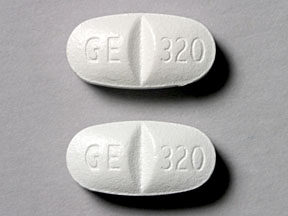
Generic Factive Availability
Factive is a brand name of gemifloxacin, approved by the FDA in the following formulation(s):
FACTIVE (gemifloxacin mesylate - tablet; oral)
-
Manufacturer: CORNERSTONE THERAP
Approval date: April 4, 2003
Strength(s): EQ 320MG BASE [RLD]
Has a generic version of Factive been approved?
No. There is currently no therapeutically equivalent version of Factive available.
Note: Fraudulent online pharmacies may attempt to sell an illegal generic version of Factive. These medications may be counterfeit and potentially unsafe. If you purchase medications online, be sure you are buying from a reputable and valid online pharmacy. Ask your health care provider for advice if you are unsure about the online purchase of any medication.
See also: About generic drugs.
Related Patents
Patents are granted by the U.S. Patent and Trademark Office at any time during a drug's development and may include a wide range of claims.
-
Quinoline carboxylic acid derivatives having 7-(4-amino-methyl-3-oxime) pyrrolidine substituent and processes for preparing thereof
Patent 5,633,262
Issued: May 27, 1997
Inventor(s): Hong; Chang Y. & Kim; Young K. & Chang; Jay H. & Kim; Se H. & Choi; Hoon & Nam; Do H. & Kwak; Jin H. & Jeong; Yi N. & Oh; Jeong I. & Kim; Mu Y.
Assignee(s): LG Chemical Ltd.
The present invention relates to a novel quinolone compound having an excellent antibacterial activity. More specifically, the present invention relates to a novel quinoline(naphthyridine)carboxylic acid derivative represented by the following formula (I), which has an 4-aminomethyl-3-oximepyrrolidine substituent on 7-position of the quinolone nucleus and shows a superior antibacterial activity in contrast to the known quinolone antibacterial agents having a weak activity against gram-positive bacterial strains and also has a broad antibacterial spectrum and a highly improved pharmacokinetic property: ##STR1## wherein R, R.sub.1, R.sub.2, R.sub.3, R.sub.4 and Q are defined as described in the specification.Patent expiration dates:- June 15, 2015
- June 15, 2015
-
7-(4-aminomethyl-3-methyloxyiminopyrroplidin-1-yl)-1-cyclopropyl-6-flu oro-4-oxo-1,4-dihydro-1,8-naphthyridine-3-carboxylic acid and the process for the preparation thereof
Patent 5,776,944
Issued: July 7, 1998
Inventor(s): Hong; Chang Yong & Kim; Young Kwan & Kim; Se Ho & Chang; Jay Hyok & Choi; Hoon & Nam; Do Hyun & Kim; Ae Ri & Lee; Jin Hwa & Park; Ki Sook
Assignee(s): LG Chemical Ltd.
The present invention relates to a novel quinolone compound having an excellent antibacterial activity. More specifically, the present invention relates to 7-(4-aminomethyl-3-methyloxyiminopyrrolidin-1-yl)-1-cyclopropyl-6-fluoro-4 -oxo-1, 4-dihydro-1,8-naphthyridine-3-carboxylic acid represent by the following formula: ##STR1## or its isomer.Patent expiration dates:- April 4, 2017✓✓
- April 4, 2017
-
7-(4-aminomethyl-3-methyloxyiminopyrrolidin-1-yl)-1- cyclopropyl-6-fluoro-4-oxo-1, 4-dihydro-1, 8-naphthyridine-3-carboxylic acid and the process for the preparation thereof
Patent 5,962,468
Issued: October 5, 1999
Inventor(s): Hong; Chang Yong & Kim; Young Kwan & Kim; Se Ho & Chang; Jay Hyok & Choi; Hoon & Nam; Do Hyun & Kim; Ae Ri & Lee; Jin Hwa & Park; Ki Sook
Assignee(s): LG Chemical Ltd.
The present invention relates to a novel quinolone compound having an excellent antibacterial activity. More specifically, the present invention relates to 7-(4-aminomethyl-3-methyloxyiminopyrrolidin-1-yl)-1-cyclopropyl-6-fluoro-4 -oxo-1,4-dihydro-1,8-naphthyridine-3-carboxylic acid represent by the following formula: ##STR1## or its isomer.Patent expiration dates:- June 15, 2015✓
- June 15, 2015
-
Methods of use of antimicrobial compounds against pathogenic amycoplasma bacteria
Patent 6,262,071
Issued: July 17, 2001
Inventor(s): Crabb; Donna M. & Duffy; Lynn B. & Searcy; Karen B.
Assignee(s): SmithKline Beecham Corporation
This invention relates, in part, to newly identified methods of using quinolone antibiotics, particularly a gemifloxacin compound against certain pathogenic bacteria.Patent expiration dates:- September 21, 2019✓
- September 21, 2019
-
Methods of use of quinolone compounds against anaerobic pathogenic bacteria
Patent 6,331,550
Issued: December 18, 2001
Inventor(s): Citron; Diane M. & Goldstein; Ellie J. C.
Assignee(s): SmithKline Beecham Corporation
This invention relates, in part, to newly identified methods of using quinolone antibiotics, particularly a gemifloxacin compound against pathogenic bacteria, especially anaerobic pathogens.Patent expiration dates:- September 21, 2019✓
- September 21, 2019
-
Methods of use of quinolone compounds against atypical upper respiratory pathogenic bacteria
Patent 6,340,689
Issued: January 22, 2002
Inventor(s): Jacques; Dubois & Claude; St-Pierre
Assignee(s): SmithKline Beecham Corporation
A method of treating an atypical upper respiratory pathogenic bacteria comprising administering a gemifloxacin compound is disclosed.Patent expiration dates:- September 14, 2019✓
- September 14, 2019
-
Methods of use of quinolone compounds against anaerobic pathogenic bacteria
Patent 6,455,540
Issued: September 24, 2002
Inventor(s): Diane M.; Citron & Ellie J. C.; Goldstein
Assignee(s): SmithKline Beecham Corporation
This invention relates, in part, to newly identified methods of using quinolone antibiotics, particularly a gemifloxacin compound against pathogenic bacteria, especially anaerobic pathogens.Patent expiration dates:- September 21, 2019✓
- September 21, 2019
-
Salt of naphthyridine carboxylic acid derivative
Patent 6,723,734
Issued: April 20, 2004
Inventor(s): Ae Ri; Kim & Jin Hwa; Lee & Ki Sook; Park & Jong Ryoo; Choi & Tae Hee; Lee & Jay Hyok; Chang & Do Hyun; Nam & Hoon; Choi
Assignee(s): LG Life Sciences, Ltd.
7-(3-Aminomethyl-4-methoxyiminopyrrolidin-1-yl)-1-cyclopropyl-6-fluoro-4-oxo-1,4-dihydro-1,8-naphthyridine-3-carboxylic acid methanesulfonate and hydrates thereof, processes for their preparation, pharmaceutical compositions comprising them, and their use in antibacterial therapy.Patent expiration dates:- March 20, 2018✓✓
- March 20, 2018
-
Method of use of quinolone compounds against pneumococcal and haemophilus bacteria
Patent 6,803,376
Issued: October 12, 2004
Inventor(s): Peter C.; Appelbaum & Kim L.; Credito & Todd; Davies & Diane B.; Hoellman & Linda M.; Kelly & Glenn A.; Pankuch
Assignee(s): SmithKline Beecham Corporation
This invention relates, in part, to newly identified methods of using quinolone antibiotics, particularly a gemifloxacin compound against certain pathogenic bacteria, particularly quinolone resistant S. pnemoniae and rare H. influenzae strains.Patent expiration dates:- September 21, 2019✓✓✓
- September 21, 2019✓✓✓
- September 21, 2019
See also...
- Factive Consumer Information (Wolters Kluwer)
- Factive Consumer Information (Cerner Multum)
- Factive Advanced Consumer Information (Micromedex)
- Factive AHFS DI Monographs (ASHP)
- Gemifloxacin Consumer Information (Wolters Kluwer)
- Gemifloxacin Consumer Information (Cerner Multum)
- Gemifloxacin Advanced Consumer Information (Micromedex)
- Gemifloxacin Mesylate AHFS DI Monographs (ASHP)
Glossary
| Term | Definition |
|---|---|
| Drug Patent | A drug patent is assigned by the U.S. Patent and Trademark Office and assigns exclusive legal right to the patent holder to protect the proprietary chemical formulation. The patent assigns exclusive legal right to the inventor or patent holder, and may include entities such as the drug brand name, trademark, product dosage form, ingredient formulation, or manufacturing process A patent usually expires 20 years from the date of filing, but can be variable based on many factors, including development of new formulations of the original chemical, and patent infringement litigation. |
| Drug Exclusivity | Exclusivity is the sole marketing rights granted by the FDA to a manufacturer upon the approval of a drug and may run simultaneously with a patent. Exclusivity periods can run from 180 days to seven years depending upon the circumstance of the exclusivity grant. |
| RLD | A Reference Listed Drug (RLD) is an approved drug product to which new generic versions are compared to show that they are bioequivalent. A drug company seeking approval to market a generic equivalent must refer to the Reference Listed Drug in its Abbreviated New Drug Application (ANDA). By designating a single reference listed drug as the standard to which all generic versions must be shown to be bioequivalent, FDA hopes to avoid possible significant variations among generic drugs and their brand name counterpart. |