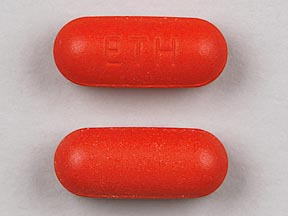
Excedrin Tension Headache Side Effects
Generic name: acetaminophen / caffeine
Note: This document provides detailed information about Excedrin Tension Headache Side Effects associated with acetaminophen / caffeine. Some dosage forms listed on this page may not apply specifically to the brand name Excedrin Tension Headache.
Applies to acetaminophen / caffeine: oral tablet, oral tablet disintegrating.
Important warnings
This medicine can cause some serious health issues
Do not take more of this medication than is recommended. An overdose of acetaminophen can damage your liver or cause death. Call your doctor at once if you have nausea, pain in your upper stomach, itching, loss of appetite, dark urine, clay-colored stools, or jaundice (yellowing of your skin or eyes).
Ask a doctor or pharmacist before using any other cold, allergy, pain, or sleep medication. Acetaminophen (sometimes abbreviated as APAP) is contained in many combination medicines. Taking certain products together can cause you to get too much acetaminophen which can lead to a fatal overdose. Check the label to see if a medicine contains acetaminophen or APAP.
In rare cases, acetaminophen may cause a severe skin reaction. Stop taking this medicine and call your doctor right away if you have skin redness or a rash that spreads and causes blistering and peeling.
Get emergency medical help if you have any of these signs of an allergic reaction while taking acetaminophen/caffeine: hives; difficulty breathing; swelling of your face, lips, tongue, or throat.
In rare cases, acetaminophen may cause a severe skin reaction that can be fatal. This could occur even if you have taken acetaminophen in the past and had no reaction. Stop taking this medicine and call your doctor right away if you have skin redness or a rash that spreads and causes blistering and peeling. If you have this type of reaction, you should never again take any medicine that contains acetaminophen.
Stop using acetaminophen and caffeine and call your doctor at once if you have:
-
low fever with nausea, stomach pain, and loss of appetite;
-
dark urine, clay-colored stools; or
-
jaundice (yellowing of the skin or eyes).
Common side effects may include:
-
sleep problems (insomnia); or
-
feeling nervous, irritable, or jittery.
This is not a complete list of side effects and others may occur. Call your doctor for medical advice about side effects.
For healthcare professionals
Applies to acetaminophen / caffeine: oral tablet, oral tablet disintegrating.
Hepatic
Acetaminophen: Rare (less than 0.1%): Severe and sometimes fatal dose dependent hepatitis in alcoholic patients, hepatotoxicity increased during fasting, hepatotoxicity from chronic acetaminophen usage[Ref]
Alcoholic patients may develop hepatotoxicity after even modest doses of acetaminophen. In healthy patients, approximately 15 grams of acetaminophen is necessary to deplete liver glutathione stores by 70% in a 70 kg person. However, hepatotoxicity has been reported following smaller doses. Glutathione concentrations may be repleted by the antidote N-acetylcysteine. One case report has suggested that hypothermia may also be beneficial in decreasing liver damage during overdose.
In a recent retrospective study of 306 patients admitted for acetaminophen overdose, 6.9% had severe liver injury but all recovered. None of the 306 patients died.
A 19 year old female developed hepatotoxicity, reactive plasmacytosis and agranulocytosis followed by a leukemoid reaction after acute acetaminophen toxicity.[Ref]
Other
Caffeine: Rare (less than 0.1%): Fibrocystic breast disease[Ref]
In one study of the effects of caffeine, 634 women with fibrocystic breast disease (compared to 1066 women without the disease), the occurrence of fibrocystic breast disease was positively associated with average daily consumption of caffeine. Women who consumed 31 to 250 mg/day of caffeine were reported to have a 1.5 times increase in odds to have the disease. Women who consumed over 500 mg/day of caffeine were reported to have a 2.3 times increase in odds.[Ref]
Gastrointestinal
Acetaminophen: Rare (0.01% to 0.1%): Mostly seen in alcoholics and after overdose: Acute pancreatitis; Caffeine citrate: Very rare (less than 0.01%): Necrotizing enterocolitis in infants[Ref]
One study has suggested that acetaminophen may precipitate acute biliary pain and cholestasis. The mechanism of this effect may be related to inhibition of prostaglandin and alterations in the regulation of the sphincter of Oddi.[Ref]
Renal
Acetaminophen: Rare (less than 0.1%): Acute tubular necrosis, interstitial nephritis; these effects are most often observed after overdose or after chronic abuse (often with multiple analgesics), or in association with acetaminophen-related hepatotoxicity[Ref]
Acute tubular necrosis usually occurs in conjunction with liver failure, but has been observed as an isolated finding in rare cases. A possible increase in the risk of renal cell carcinoma has been associated with chronic acetaminophen use as well.
A recent case control study of patients with end-stage renal disease suggested that long term consumption of acetaminophen may significantly increase the risk of end-stage renal disease particularly in patients taking more than two pills per day.[Ref]
Hypersensitivity
Acetaminophen: Rare (less than 0.1%): Anaphylaxis, fixed drug eruptions[Ref]
Hematologic
Acetaminophen: Rare (less than 0.1%): Thrombocytopenia, methemoglobinemia resulting in cyanosis in acute overdose[Ref]
Dermatologic
Acetaminophen: Rare (0.01% 0.1%): Erythematous skin rashes, bullous erythema, purpura fulminans; Very rare (less than 0.01%): Potentially fatal skin reactions: Stevens-Johnson syndrome (SJS), toxic epidermal necrolysis (TEN), acute generalized exanthematous pustulosis (AGEP)[Ref]
Respiratory
Acetaminophen: Very rare (less than 0.01%): Eosinophilic pneumonia[Ref]
Cardiovascular
Acetaminophen: Very rare (less than 0.01%): Hypotension[Ref]
Nervous system
Caffeine: Frequency not reported: Caffeinism (Caffeinism is a syndrome characterized by anxiety, restlessness, and sleep disorders similar to anxiety states), aggravation of PMS
References
1. Zimmerman HJ, Maddrey WC (1995) "Acetaminophen (paracetamol) hepatotoxicity with regular intake of alcohol: analysis of instances of therapeutic misadventure." Hepatology, 22, p. 767-73
2. Gursoy M, Haznedaroglu IC, Celik I, Sayinalp N, Ozcebe OI, Dundar SV (1996) "Agranulocytosis, plasmacytosis, and thrombocytosis followed by a leukemoid reaction due to acute acetaminophen toxicity." Ann Pharmacother, 30, p. 762-5
3. Boyle CA, Berkowitz GS, LiVolsi VA, Ort S, Merino MJ, White C, Kelsey JL (1984) "Caffeine consumption and fibrocystic breast disease: a case-control epidemiologic study." J Natl Cancer Inst, 72, p. 1015-9
4. "Multum Information Services, Inc. Expert Review Panel"
5. Lee WM (1995) "Medical progress: drug-induced hepatotoxicity." N Engl J Med, 333, p. 1118-27
6. Perneger TV, Whelton PK, Klag MJ (1994) "Risk of kidney failure associated with the use of acetaminophen, aspirin, and nonsteroidal antiinflammatory drugs." N Engl J Med, 331, p. 1675-79
7. Kawada A, Hiruma M, Noguchi H, Ishibashi A (1996) "Fixed drug eruption induced by acetaminophen in a 12-year-old girl." Int J Dermatol, 35, p. 148-9
8. Shoenfeld Y, Shaklai M, Livni E, Pinkhas J (1980) "Thrombocytopenia from acetaminophen." N Engl J Med, 303, p. 47
9. Bougie DW, Benito AI, Sanchez-Abarca LI, Torres R, Birenbaum J, Aster RH (2007) "Acute thrombocytopenia caused by sensitivity to the glucuronide conjugate of acetaminophen." Blood, 109, p. 3608-9
10. Filipe PL, Freitas JP, Decastro JC, Silva R (1995) "Drug eruption induced by acetaminophen in infectious mononucleosis." Int J Dermatol, 34, p. 220-1
11. Kondo K, Inoue Y, Hamada H, Yokoyama A, Kohno N, Hiwada K (1993) "Acetaminophen-induced eosinophilic pneumonia." Chest, 104, p. 291-2
12. Brown G (1996) "Acetaminophen-induced hypotension." Heart Lung, 25, p. 137-40
More about Excedrin Tension Headache (acetaminophen / caffeine)
- Check interactions
- Compare alternatives
- Pricing & coupons
- Reviews (3)
- Drug images
- Dosage information
- During pregnancy
- Drug class: analgesic combinations
Patient resources
- Excedrin Tension Headache drug information
- Excedrin Tension Headache Caplet
- Excedrin Tension Headache Express Gels
- Excedrin Tension Headache Geltab
Other formulations
Related treatment guides
Further information
Excedrin Tension Headache side effects can vary depending on the individual. Always consult your healthcare provider to ensure the information displayed on this page applies to your personal circumstances.
Some side effects may not be reported. You may report them to the FDA.