Sodium Oxybate (Monograph)
Brand names: Lumryz, Xyrem, Xywav
Drug class: Wakefulness-promoting Agents
Warning
Risk Evaluation and Mitigation Strategy (REMS):
FDA approved a REMS for sodium oxybate and calcium, magnesium, potassium, and sodium oxybates to ensure that the benefits outweigh the risks. The REMS may apply to one or more preparations and consists of the following: medication guide, elements to assure safe use and implementation system. See https://www.accessdata.fda.gov/scripts/cder/rems/.
Warning
- CNS Depression
-
CNS depressant. Obtundation and respiratory depression reported in adult and pediatric patients in clinical trials at recommended dosages. Most patients with narcolepsy were receiving a CNS stimulant concomitantly.
- Abuse and Misuse
-
A known drug of abuse.
-
Abuse or misuse of illicit forms of sodium oxybate (γ-hydroxybutyrate [GHB]), alone or in combination with other CNS depressants, associated with serious adverse CNS effects, including seizures, respiratory depression, decreases in level of consciousness, coma, and death.
Introduction
CNS depressant that exhibits anticataplectic and potent hypnotic activity.
Calcium, magnesium, potassium, and sodium oxybates (Xywav) is a preparation of sodium oxybate with a composition of cations resulting in a lower sodium content. Unless otherwise specified in this monograph, the term “lower-sodium oxybate” refers to this formulation.
Uses for Sodium Oxybate
Narcolepsy
Used in the management of excessive daytime sleepiness or cataplexy in patients with narcolepsy.
Commercially available as an immediate-release oral solution (Xyrem) and an extended-release oral suspension (Lumryz) for use in patients ≥7 years of age. A lower-sodium oxybate formulation (Xywav) is also available for use in patients ≥7 years of age and contains the same active moiety as sodium oxybate, but with a composition of cations (calcium, magnesium, and potassium) resulting in 92% less sodium.
The American Academy of Sleep Medicine (AASM) strongly recommends the use of sodium oxybate (versus no treatment) for adults with narcolepsy. AASM suggests the use of sodium oxybate (versus no treatment) for pediatric patients with narcolepsy, but gives this a conditional recommendation.
Idiopathic Hypersomnia
Lower-sodium oxybate (Xywav) is used in the management of idiopathic hypersomnia in adults.
The American Academy of Sleep Medicine (AASM) suggests the use of sodium oxybate for the treatment of idiopathic hypersomnia in adults with narcolepsy, but gives this a conditional recommendation because the overall quality of evidence is low.
Sodium Oxybate Dosage and Administration
General
Patient Monitoring
-
Monitor patients for events related to CNS depression upon initiation of therapy and periodically thereafter.
-
Monitor patients with a history of a depressive illness and/or suicide attempt carefully for the emergence of depressive symptoms.
-
Monitor patients for an emergence or increase of behavioral or psychiatric events.
REMS
-
Because of the risks of CNS depression, abuse, and misuse, commercially available sodium oxybate preparations are prescribed and distributed under a restricted distribution program (XYWAV and Xyrem REMS and LUMRYZ REMSprograms).
-
Prescribers and patients must enroll in the program. The goals of the program are to restrict access to sodium oxybate and to educate clinicians and patients about the risks and benefits of the drug.
-
Information regarding the distribution programs may be obtained by contacting the central pharmacy for XYWAV and XYREM REMS at 866-997-3688 or by visiting [Web] or for LUMRYZ REMS at 877-453-1029 or by visiting [Web].
Administration
Sodium oxybate is available as an immediate-release oral solution (Xyrem) and extended-release oral suspension (Lumryz). Calcium, magnesium, potassium and sodium oxybates is available as an oral solution (Xywav).
Oral Administration
Sodium Oxybate Immediate-release Solution
Administer orally in 2 equally divided doses daily. Administer at least 2 hours after eating.
Dilute each dose with approximately 1/4 cup (approximately 60 mL) of water in the child-resistant vial provided by pharmacy. Prepare both doses before bedtime.
Take first dose at bedtime and second dose 2.5–4 hours later (both doses taken while sitting in bed).
May need to set alarm clock to awaken for second dose; place second dose in close proximity to bed.
Lie down immediately and remain in bed after each dose.
If the second dose is missed, skip that dose. Never take 2 doses at one time.
Sodium Oxybate Extended-release Oral Suspension
Administer orally as a single dose at bedtime. Administer at least 2 hours after eating.
Suspend dose in approximately 1/3 cup (approximately 80 mL) of water in the mixing cup provided by the pharmacy. Do not use hot water. Prepare dose before bedtime and administer within 30 minutes after mixing.
Lie down immediately and remain in bed after taking the dose.
Calcium, Magnesium, Potassium and Sodium Oxybates (Lower-Sodium Oxybate) Oral Solution
Administer in 2 evenly divided doses nightly for patients with narcolepsy and in 2 evenly divided doses or as a single dose in patients with idiopathic hypersomnia. Administer at least 2 hours after eating.
Dilute each dose with approximately 1/4 cup (approximately 60 mL) of water in the empty container provided by the pharmacy. Prepare all doses before bedtime and use within 24 hours.
If dosing twice nightly, the first dose is taken at bedtime and the second dose is taken 2.5–4 hours later after the first dose. The patient will probably need to set an alarm clock to awaken for the second dose; place second dose in close proximity to bed.
Lie down immediately and remain in bed after taking the dose.
If the second dose is missed, skip that dose. Never take 2 doses at one time.
Dosage
Pediatric Patients
Narcolepsy (Excessive Daytime Sleepiness and Cataplexy)
Oral
Sodium oxybate immediate-release oral solution (Xyrem) in pediatric patients ≥7 years of age: Recommended starting dosage, titration regimen, and maximum total nightly dosage based on patient weight. (See Table 1) Gradually titrate dosage based on efficacy and tolerability. Some patients may achieve better responses with unequal doses at bedtime and 2.5 to 4 hours later.
For patients who sleep more than 8 hours per night, the first dose may be given at bedtime or after an initial period of sleep.
There is insufficient information to provide specific dosing recommendations for patients who weigh <20 kg. If sodium oxybate oral solution is used in patients ≥7 years of age who weigh <20 kg, a lower starting dosage, lower maximum weekly dosage increase, and lower total maximum nightly dosage should be considered.
|
Patient Weight |
Initial Dosage (Take at Bedtime) |
Initial Dosage (Take 2.5–4 Hours Later) |
Weekly Maximum Increase to Each Dose |
Maximum Recommended Dose |
|---|---|---|---|---|
|
<20 kg |
||||
|
20 to <30 kg |
≤1 g |
≤1 g |
0.5 g each dose (1 g total nightly) |
3 g each dose (6 g total nightly) |
|
30 to <45 kg |
≤1.5 g |
≤1.5 g |
0.5 g each dose (1 g total nightly) |
3.75 g each dose (7.5 total nightly) |
|
≥45 kg |
≤2.25 g |
≤2.25 g |
0.75 g each dose (1.5 g total nightly) |
4.5 g each dose (9 g total nightly) |
Sodium oxybate extended-release oral suspension (Lumryz): Recommended initial dosage, titration regimen, and maximum total nightly dosage based on patient weight. Patients ≥7 years of age and weighing ≥45 kg: Recommended initial dosage is 4.5 g once per night. Dosage can be increased by 1.5 g per night at weekly intervals to maximum recommended dosage of 9 g once per night. Titrate dosage gradually based on efficacy and tolerability. Patients ≥7 years of age and weighing <45 kg: Recommended initial dosage cannot be achieved with sodium oxybate extended-release oral suspension (Lumryz). Another sodium oxybate product must be used to initiate therapy. Maximum recommended dosage for patients ≥7 years of age and weighing 20 to <30 kg is 6 g orally once per night. Maximum recommended dosage for patients ≥7 years of age weighing 30 to <45 kg is 7.5 g orally once per night. Insufficient data available to determine specific dosing recommendation for patients ≥7 years of age who weigh <20 kg.
Lower-sodium oxybate oral solution (Xywav) in pediatric patients ≥7 years of age: Recommended starting dosage, titration regimen, and maximum total nightly dosage based on patient weight. (See Table 2) Some patients may achieve better responses with unequal nightly doses at bedtime and 2.5 to 4 hours later. The dosage may be gradually titrated based on efficacy and tolerability.
For patients who sleep more than 8 hours per night, the first dose may be given at bedtime or after an initial period of sleep.
There is insufficient information to provide specific dosing recommendations for patients who weigh <20 kg. If lower-sodium oxybate oral solution is used in patients ≥7 years of age who weigh <20 kg, a lower starting dosage, lower maximum weekly dosage increase, and lower total maximum nightly dosage should be considered.
|
Patient Weight |
Initial Dosage (Take at Bedtime) |
Initial Dosage (Take 2.5–4 Hours Later) |
Weekly Maximum Increase to Each Dose |
Maximum Recommended Dosage |
|---|---|---|---|---|
|
<20 kg |
||||
|
20 to <30 kg |
≤1 g |
≤1 g |
0.5 g each dose (1 g total nightly) |
3 g each dose (6 g total nightly) |
|
30 to <45 kg |
≤1.5 g |
≤1.5 g |
0.5 g each dose (1 g total nightly) |
3.75 g each dose (7.5 total nightly) |
|
≥45 kg |
≤2.25 g |
≤2.25 g |
0.75 g each dose (1.5 g total nightly) |
4.5 g each dose (9 g total nightly) |
Transitioning from immediate-release sodium oxybate to lower-sodium oxybate: On the first night of dosing with lower-sodium oxybate, initiate treatment at the same dose (g for g) and regimen as immediate-release sodium oxybate oral solution; titrate as necessary based on efficacy and tolerability.
Adults
Narcolepsy (Excessive Daytime Sleepiness and Cataplexy)
Oral
Sodium oxybate immediate-release oral solution (Xyrem): Initially, 4.5 g nightly in 2 doses of 2.25 g each. Increase dosage in increments of 1.5 g daily (0.75 g per dose) at 1-week intervals to a recommended dosage of 6 to 9 g daily. Gradually titrate dosage based on efficacy and tolerability. Doses >9 g per night have not been studied and should not ordinarily be administered.
Sodium oxybate extended-release oral suspension (Lumryz): Initially, 4.5 g nightly administered orally and given in a single dose. Increase dosage in increments of 1.5 g daily at weekly intervals to the recommended dosage range of 6 to 9 g once per night. Gradually titrate dosage based on efficacy and tolerability. Doses >9 g per night have not been studied and should not ordinarily be administered.
Transitioning from immediate-release to extended-release sodium oxybate: Adult patients who are currently being treated with immediate-release sodium oxybate oral solution (Xyrem) may be switched to the extended-release oral suspension (Lumryz) at the nearest equivalent dosage in g per night (e.g., 7.5 g sodium oxybate oral solution (divided into two 3.75 g doses nightly) to 7.5 g extended-release suspension once each night).
Lower-sodium oxybate oral solution (Xywav): Initially 4.5 g nightly in two divided doses of 2.25 g each. Some patients may achieve better responses with unequal nightly doses. Dosage can be increased in increments of up to 1.5 g daily (0.75 g per dose) at weekly intervals to recommended dosage of 6 to 9 g per night. The dosage may be gradually titrated based on efficacy and tolerability. Doses >9 g per night have not been studied and should not ordinarily be administered.
Transitioning from immediate-release sodium oxybate to lower-sodium oxybate: On the first night of dosing with lower-sodium oxybate, initiate treatment at the same dose (g for g) and regimen as immediate-release sodium oxybate oral solution; titrate as necessary based on efficacy and tolerability.
Idiopathic Hypersomnia
Lower-sodium oxybate oral solution (Xywav): Initial dosage of up to 4.5 g per night divided into 2 doses (e.g., 2.25 g each). Better responses may be achieved with unequal nightly doses in some patients.
Alternatively, can be given initially as a single dose of up to 3 g at bedtime.
Increase the dosage by up to 1.5 g per night at weekly intervals to the recommended dosage range of 6 g (once nightly) to 9 g (given in 2 divided doses). Gradually titrate dosage based on efficacy and tolerability. Doses >9 g per night have not been studied and should not ordinarily be administered.
Dosage Adjustment for Concomitant Administration with Divalproex Sodium
In patients taking a stable dosage of sodium oxybate (immediate-release solution or lower-sodium oxybate formulation), dosage should be reduced by at least 20% when initiating concomitant divalproex sodium. In patients already taking divalproex sodium, a lower starting dosage of sodium oxybate is recommended. Subsequently, adjust dosage of sodium oxybate based on individual clinical response and tolerability.
No dosage changes recommended with concomitant administration of sodium oxybate extended-release suspension with divalproex sodium.
Special Populations
Hepatic Impairment
Sodium oxybate immediate-release oral solution: Recommended initial dosage is one-half of the original daily dosage given nightly in 2 divided doses (one-half each usual dose).
Sodium oxybate extended-release oral suspension: Do not initiate in patients with hepatic impairment because appropriate dosage adjustments cannot be made with the available dosage strengths. Patients titrated to a maintenance dosage of another sodium oxybate product can be switched to the extended-release oral suspension if the appropriate dosage strength is available.
Lower sodium oxybate solution: Recommended initial dosage is one-half of the original daily dosage given nightly in 2 divided doses (one-half each usual dose).
Renal Impairment
No specific dosage recommendations.
Geriatric Patients
Select dosage with caution, usually starting at lower end of dosage range, because of age-related decreases in hepatic, renal, and/or cardiac function and concomitant disease and drug therapy.
Cautions for Sodium Oxybate
Contraindications
-
Concomitant therapy with sedative-hypnotic agents or concomitant use with alcohol.
-
Succinic semialdehyde dehydrogenase (SSADH) deficiency.
Warnings/Precautions
Warnings
CNS Depression
Obtundation and respiratory depression reported at recommended dosages in clinical trials (see Boxed Warning).
Concomitant use with other CNS depressants may increase risk of respiratory depression, hypotension, profound sedation, syncope, and death.
Deaths reported, although cause of death sometimes indeterminable. Confounding factors have included underlying conditions that may predispose to CNS and respiratory depression (e.g., sleep apnea, COPD), preexisting psychiatric disorders (e.g., depression, substance abuse), use for off-label indications, use of excessive or rapidly titrated dosages, and concomitant use of alcohol or other CNS depressant(s).
Monitor patients for events related to CNS depression upon initiation of therapy and periodically thereafter.
Misuse and Abuse Potential
Severe dependence and craving reported following illicit use at dosages similar to those used in clinical trials. Potential for misuse and abuse. (See Boxed Warning.)
Carefully evaluate patients with history of drug abuse and closely monitor for signs of misuse or abuse (e.g., dosage escalation, drug-seeking behavior, feigned cataplexy).
Other Warnings/Precautions
Respiratory Depression and Sleep-Disordered Breathing
Respiratory drive may be impaired, especially in patients with preexisting respiratory impairment. Life-threatening respiratory depression reported with overdosage. Respiratory depression and an increase in obstructive sleep apnea reported in adult and pediatric patients. Increased central sleep apnea and oxygen desaturation reported in patients with obstructive sleep apnea. Use with caution in patients with respiratory impairment (e.g., sleep apnea, COPD). Be aware that sleep-related breathing disorders tend to be more prevalent in obese patients, in men, and in postmenopausal women not receiving hormone replacement therapy as well as in patients with narcolepsy.
Depression and Suicidality
Depression and suicidality reported.
If symptoms of depression emerge, carefully and immediately evaluate patient. Monitor patients with a previous history of a depressive illness and/or suicide attempt carefully for emergence of depressive symptoms.
Other Behavioral and Psychiatric Effects
Confusion and other neuropsychiatric events (e.g., psychosis, paranoia, hallucinations, aggression, agitation, anxiety) reported.
Immediately and carefully evaluate patients who become confused or who experience thought disorders and/or behavioral abnormalities.
Parasomnia
Confused behavior at night, sometimes associated with wandering (sleepwalking), has occurred in adult and pediatric patients. Substantial or potential injury associated with sleepwalking reported rarely. Evaluate these episodes and consider appropriate interventions.
Sodium Content
Sodium oxybate immediate-release oral solution and sodium oxybate extended-release suspension have high salt content. Consider sodium content in patients at risk such as those with heart failure, hypertension, or renal impairment (see Tables 3 and 4).
Lower-sodium oxybate contains 92% less sodium per g (87–131 mg in the dose range of 6–9 g/night) than sodium oxybate.
|
Sodium Oxybate Oral Solution (Xyrem) Total Nightly Dosage |
Sodium Content in Total Nightly Dosage |
|---|---|
|
3 g/night |
550 mg |
|
4.5 g/night |
820 mg |
|
6 g/night |
1100 mg |
|
7.5 g/night |
1400 mg |
|
9 g/night |
1640 mg |
|
Sodium Oxybate Extended-release Granules (Lumryz) Nightly Dosage |
Sodium Content in Total Nightly Dosage |
|---|---|
|
4.5 g/night |
820 mg |
|
6 g/night |
1100 mg |
|
7.5 g/night |
1400 mg |
|
9 g/night |
1640 mg |
Specific Populations
Pregnancy
No available data on developmental risk .
Not studied in labor or delivery, but use of an injectable formulation resulted in very sleepy newborns with a decrease in Apgar scores.
Lactation
Not known whether distributed into human milk. Metabolite, GHB, is excreted in human milk after oral administration of sodium oxybate; caution advised.
Pediatric Use
Safety and efficacy of sodium oxybate immediate-release oral solution (Xyrem) established in pediatric patients ≥7 years of age for narcolepsy.
Safety and efficacy of lower-sodium oxybate (Xywav) established in pediatric patients ≥7 years of age for cataplexy or excessive daytime sleepiness.
Safety and efficacy of sodium oxybate extended-release oral suspension (Lumryz) established in pediatric patients ≥7 years of age for cataplexy or excessive daytime sleepiness.
Safety and effectiveness of immediate-release sodium oxybate and lower-sodium oxybate not established in pediatric patients <7 years of age.
Geriatric Use
Insufficient experience in patients ≥65 years of age to determine whether geriatric patients respond differently than younger adults; select dosage with caution. Higher incidence of headaches reported in geriatric patients compared with younger adults in clinical studies in patients with disorders other than narcolepsy.
Monitor geriatric patients for impaired motor and cognitive function.
Hepatic Impairment
Elimination half-life and systemic exposure increased; dosage adjustment recommended for immediate-release solution and lower-sodium oxybate solution (reduce by half). Do not initiate treatment with sodium oxybate extended-release suspension as appropriate dosage adjustments cannot be made with the available dosage strengths.
Renal Impairment
Not studied in patients with renal impairment. Consider sodium content.
Common Adverse Effects
Sodium oxybate oral solution (≥5%) in adults: nausea, dizziness, vomiting, somnolence, enuresis, tremor.
Sodium oxybate extended-release oral suspension (≥5%) in adults: nausea, dizziness, enuresis, headache, vomiting.
Lower-sodium oxybate oral solution (≥5%) in adults: nausea, headache, dizziness, anxiety, insomnia, decreased appetite, hyperhidrosis, vomiting, diarrhea, dry mouth, parasomnia, somnolence, fatigue, tremor.
Sodium oxybate oral solution (≥5%) in pediatric patients: nausea, enuresis, vomiting, headache, weight loss, decreased appetite, dizziness, sleepwalking.
Drug Interactions
Does not inhibit CYP1A2, 2C9, 2C19, 2D6, 2E1, or 3A.
Specific Drugs
|
Drug |
Interaction |
Comments |
|---|---|---|
|
CNS depressants (opioid analgesics, benzodiazepines, sedating antidepressants or antipsychotics, sedating antiepileptic drugs, general anesthetics, muscle relaxants, and/or illicit CNS depressants) |
Possible respiratory depression and marked impairment of consciousness |
Concomitant use with sedative-hypnotic agents or alcohol contraindicated Concomitant use with other CNS depressants not recommended; if required, consider dosage reduction or discontinuance of one or more CNS depressants (including sodium oxybate) Consider interrupting sodium oxybate therapy during short-term (e.g., perioperative, postoperative) opiate use |
|
Divalproex sodium |
Increased exposure to GHB |
Reduce dosage of sodium oxybate immediate-release and lower-sodium oxybate by ≥20% when used concomitantly with divalproex sodium No dosage changes recommended for sodium oxybate extended-release, but pharmacodynamic interaction possible |
|
Fomepizole |
Pharmacokinetic interaction unlikely Pharmacodynamic interaction cannot be ruled out |
|
|
Modafinil |
Pharmacokinetic interaction unlikely Pharmacodynamic interaction cannot be ruled out |
|
|
Omeprazole |
Change in sodium oxybate pharmacokinetics due to alterations in gastric pH unlikely |
|
|
Protriptyline |
Pharmacokinetic interaction unlikely Pharmacodynamic interaction cannot be ruled out |
|
|
Zolpidem |
Pharmacokinetic interaction unlikely Pharmacodynamic interaction cannot be ruled out |
Sodium Oxybate Pharmacokinetics
Absorption
Bioavailability
Rapidly absorbed; peak plasma concentrations for oral solution attained within 0.5–1.25 hours. Time to peak plasma concentrations 1.5 hours for extended-release suspension and 1.3 hours for the lower-sodium oral solution.
Absolute bioavailability of the oral solution is approximately 88%.
Nonlinear pharmacokinetics of the oral solution; plasma concentrations increase 3.7-fold as dose is doubled from 4.5 to 9 g.
Food
High-fat meal delays time to peak plasma concentrations (to 2 hours) and reduces peak plasma concentrations by 59% and AUC by 37% of the oral solution.
High-fat meal delays time to peak plasma concentrations (to 1.5 hours) and reduces peak plasma concentrations by 33% and AUC by 14% of the extended-release suspension.
High-fat meal reduces peak plasma concentrations by 33% and AUC by 16% of the lower-sodium oral solution.
Special Populations
AUC values increased 100% in patients with cirrhosis.
Distribution
Plasma Protein Binding
<1%.
Elimination
Metabolism
Metabolized to carbon dioxide and water.
Elimination Route
Carbon dioxide eliminated by expiration. Fecal excretion negligible; <5% excreted in urine as unchanged drug.
Half-life
0.5–1 hour.
Special Populations
Half-life increased in patients with cirrhosis; dosage adjustment recommended in patients with hepatic impairment.
Not studied in patients with renal impairment.
Pharmacokinetic profile in individuals 65–75 years of age similar to that in younger adults (48–64 years of age).
Stability
Storage
Oral
Calcium, Magnesium, Potassium and Sodium Oxybates (Lower-Sodium) Oxybate Oral Solution
25°C (may be exposed to 15–30°C).
Sodium Oxybate Oral Solution
25°C (may be exposed to 15–30°C).
Sodium Oxybate Extended-release Granules
25°C (may be exposed to 15–30°C).
Actions
-
Potent, rapidly acting CNS depressant. Structurally and pharmacologically distinct from other currently available CNS depressants.
-
Occurs endogenously as GHB (a metabolite of GABA).
-
Improves excessive daytime sleepiness in patients with narcolepsy or idiopathic hypersomnia.
-
Exhibits anticataplectic activity in patients with narcolepsy. Mechanism of anticataplectic action is unknown.
-
Effects on cataplexy and excessive daytime sleepiness thought to be mediated through GABAB actions at noradrenergic and dopaminergic neurons, as well as thalamocortical neurons.
-
Also exhibits hypnotic, amnesic, and hypotonic (i.e., causes hypotonia) activity.
Advice to Patients
-
Advise the patient and/or caregiver to read the manufacturer's patient information (medication guide).
-
Inform patients and/or caregivers that sodium oxybate can cause CNS depression, including respiratory depression, hypotension, profound sedation, syncope, and death. Instruct patients to not engage in activities requiring mental alertness or motor coordination, including operating hazardous machinery, for at least 6 hours after taking sodium oxybate.
-
Inform patients and/or caregivers that the active ingredient of sodium oxybate is gamma-hydroxybutyrate (GHB), which is associated with serious adverse reactions with illicit use and abuse.
-
Sodium oxybate and lower-sodium oxybate are available only through restricted programs called the XYWAV and XYREM REMS or the LUMRYX REMS. Inform the patient and/or caregiver that the drug is available only from the central pharmacy participating in the program and will be dispensed and shipped only to patients enrolled in the program. Also provide patients and/or caregivers with the telephone number and website for information on how to obtain the product.
-
Advise patients and/or caregivers that alcohol and other sedative hypnotics should not be taken with sodium oxybate.
-
Inform patients that they are likely to fall asleep quickly after taking sodium oxybate (often within 5 and usually within 15 minutes), but the time it takes to fall asleep can vary from night to night. The sudden onset of sleep, including in a standing position or while rising from bed, has led to falls complicated by injuries, in some cases requiring hospitalization. Instruct patients to remain in bed following ingestion of the first and second nightly doses. Instruct patients to not take their second nightly dose until 2.5 to 4 hours after the first dose.
-
Inform patients and/or caregivers that the first nightly dose should be taken at least 2 hours after eating.
-
Inform patients that sodium oxybate may impair respiratory drive, especially in patients with compromised respiratory function, and may cause apnea.
-
Instruct patients and/or caregivers to contact a healthcare provider immediately if the patient develops depressed mood, markedly diminished interest or pleasure in usual activities, significant change in weight and/or appetite, psychomotor agitation or retardation, increased fatigue, feelings of guilt or worthlessness, slowed thinking or impaired concentration, or suicidal ideation.
-
Inform patients and/or caregivers that sodium oxybate can cause behavioral or psychiatric adverse reactions, including confusion, anxiety, and psychosis. Instruct them to notify their healthcare provider if any of these types of symptoms occur.
-
Instruct patients and/or caregivers that sodium oxybate has been associated with sleepwalking and other behaviors during sleep, and to contact their healthcare provider if this occurs.
-
Instruct patients and/or caregivers that sodium oxybate (Xyrem, Lumryz) contains a significant amount of sodium and patients who are sensitive to sodium intake (e.g., those with heart failure, hypertension, or renal impairment) should limit their sodium intake.
-
Advise women to inform their clinician if they are or plan to become pregnant or plan to breast-feed.
-
Advise patients to inform their clinician of existing or contemplated concomitant therapy, including prescription and OTC drugs and dietary and herbal supplements, as well as any concomitant illnesses.
-
Advise patients of other important precautionary information.
Additional Information
The American Society of Health-System Pharmacists, Inc. represents that the information provided in the accompanying monograph was formulated with a reasonable standard of care, and in conformity with professional standards in the field. Readers are advised that decisions regarding use of drugs are complex medical decisions requiring the independent, informed decision of an appropriate health care professional, and that the information contained in the monograph is provided for informational purposes only. The manufacturer’s labeling should be consulted for more detailed information. The American Society of Health-System Pharmacists, Inc. does not endorse or recommend the use of any drug. The information contained in the monograph is not a substitute for medical care.
Preparations
Excipients in commercially available drug preparations may have clinically important effects in some individuals; consult specific product labeling for details.
Please refer to the ASHP Drug Shortages Resource Center for information on shortages of one or more of these preparations.
Commercially available sodium oxybate preparations are subject to control under the Federal Controlled Substances Act of 1970 as a schedule III (C-III) drug. The active ingredient, sodium oxybate (also called GHB) is subject to control as a schedule I (C-I) drug. Nonmedical uses of the commercially available preparation also are subject to control as a schedule I (C-I) drug.
Distribution of sodium oxybate preparation is restricted (see REMS under Dosage and Administration).
|
Routes |
Dosage Forms |
Strengths |
Brand Names |
Manufacturer |
|---|---|---|---|---|
|
Oral |
For solution, concentrate |
0.5 g/mL |
Xywav (C-III; available with press-in bottle adapter and measuring syringe ) |
Jazz Pharmaceuticals |
|
Routes |
Dosage Forms |
Strengths |
Brand Names |
Manufacturer |
|---|---|---|---|---|
|
Oral |
For solution, concentrate |
0.5 g/mL |
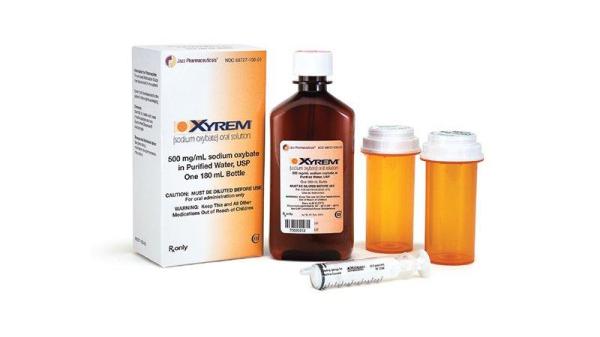
Xyrem (C-III; available with press-in bottle adapter, 10-mL measuring syringe, and two 90-mL pharmacy vials) |
Jazz Pharmaceuticals |
|
For suspension, extended-release granules |
4.5 g |
Lumryz (C-III; available with a mixing cup) |
Avadel CNS Pharmaceuticals |
|
|
6 g |
Lumryz (C-III; available with a mixing cup) |
Avadel CNS Pharmaceuticals |
||
|
7.5 g |
Lumryz (C-III; available with a mixing cup) |
Avadel CNS Pharmaceuticals |
||
|
9 g |
Lumryz (C-III; available with a mixing cup) |
Avadel CNS Pharmaceuticals |
AHFS DI Essentials™. © Copyright 2025, Selected Revisions May 10, 2025. American Society of Health-System Pharmacists, Inc., 4500 East-West Highway, Suite 900, Bethesda, Maryland 20814.
Reload page with references included
Related/similar drugs
Frequently asked questions
- What is the difference between Lumryz vs Xyrem?
- How does Xyrem work for narcolepsy?
- Is Xyrem a controlled substance / narcotic drug of abuse?
- What is Xyrem REMS?
- How much sodium is in Xyrem?
- Can you take Xyrem while pregnant?
- What is Lumryz REMS?
More about sodium oxybate
- Check interactions
- Compare alternatives
- Pricing & coupons
- Reviews (128)
- Side effects
- Dosage information
- During pregnancy
- Drug class: miscellaneous anxiolytics, sedatives and hypnotics
- En español