Dexmedetomidine Hydrochloride (Monograph)
Brand names: Igalmi, Precedex
Drug class: alpha-Adrenergic Agonists
Introduction
Relatively selective α2-adrenergic agonist with sedative properties.
Uses for Dexmedetomidine Hydrochloride
Sedation in Critical Care Settings
IV dexmedetomidine is used for sedation of initially intubated and mechanically ventilated patients in an intensive care setting (i.e., ICU).
May be used to provide mild to moderate levels of sedation, but not considered suitable for deep sedation.
FDA-labeled for use only for short-term (<24 hours) sedation; however, has been used for prolonged sedation† [off-label] in the intensive care setting.
Produces sedation, anxiolysis, and analgesia without causing significant respiratory depression.
Appears to be as effective as propofol and benzodiazepines (e.g., midazolam, lorazepam) for sedation in critically ill mechanically ventilated adults; however, because of some modest clinical benefits (e.g., reduced duration of mechanical ventilation, shorter time to extubation, reduced risk of delirium), nonbenzodiazepine sedatives (dexmedetomidine or propofol) are generally preferred to benzodiazepines.
When selecting an appropriate sedative agent, consider patient's individual sedation goals in addition to specific drug-related (e.g., pharmacology, pharmacokinetics, adverse effects, availability, costs) and patient-related (e.g., comorbid conditions such as anxiety, seizures, or alcohol or benzodiazepine withdrawal) factors.
Patients receiving dexmedetomidine are more arousable than those receiving other sedatives, which may be particularly useful for daily awakening trials.
Because dexmedetomidine does not have a substantial respiratory depressant effect, infusions of the drug can be continued following extubation, if needed.
Procedural Sedation
IV dexmedetomidine is used for sedation of nonintubated patients prior to and/or during surgical or other procedures.
Comparative efficacy with other sedative agents not established. May be preferred in certain patients (e.g., those in whom respiratory compromise with benzodiazepines is a concern); consider risks versus benefits.
Acute Agitation Associated with Schizophrenia or Bipolar Disorder
Sublingual/buccal dexmedetomidine is used for management of agitation associated with schizophrenia or bipolar I or II disorder in adults.
Safety and efficacy not established beyond 24 hours from the first dose.
Related/similar drugs
trazodone, hydroxyzine, lorazepam, olanzapine, promethazine, Ativan, fentanyl
Dexmedetomidine Hydrochloride Dosage and Administration
General
Patient Monitoring
-
Monitor patient continuously during IV administration.
-
Monitor vital signs and alertness after administration of dexmedetomidine sublingual/buccal strips to prevent falls and syncope.
-
Assess vital signs, including orthostatic measurements, prior to administration of a second or third dose of transmucosal dexmedetomidine. Administration is not recommended in patients with systolic BP <90 mm Hg, diastolic BP <60 mm Hg, heart rate <60 beats per minute, or if a postural decrease in systolic BP ≥20 mm Hg or diastolic BP ≥10 mm Hg occurs.
Dispensing and Administration Precautions
-
Based on the Institute for Safe Medication Practices (ISMP), IV dexmedetomidine is a high-alert medication that has a heightened risk of causing significant patient harm when used in error.
-
Administer IV dexmedetomidine only by individuals experienced in the management of patients in an intensive care or surgical setting.
-
Administer sublingual/buccal dexmedetomidine under the supervision of a clinician.
Administration
Administer by IV infusion or by sublingual or buccal administration depending on the dosage form.
IV Administration
Administer by IV infusion.
Commercially available as an injection concentrate (100 mcg/mL) that must be diluted to a concentration of 4 mcg/mL before administration or as premixed ready-to-use 4 mcg/mL solutions.
Visually inspect solutions prior to administration; do not use if discoloration or precipitate matter is present.
Do not infuse through the same IV line with blood or plasma because physical compatibility has not been established.
Compatible with the following IV fluids: 5% dextrose injection, 0.9% sodium chloride injection, 20% mannitol, 100 mg/mL magnesum sulfate solution, 0.3% potassium chloride solution, and lactated Ringer's injection.
Potential for adsorption of dexmedetomidine to some types of natural rubber; use of administration components made with synthetic or coated natural rubber gaskets is recommended.
Rate of Administration
Administer by slow IV infusion via a controlled-infusion device.
Rapid IV infusion associated with loss of α2-adrenergic selectivity and adverse cardiovascular effects.
Standardize 4 Safety
Standardized concentrations for dexmedetomidine have been established through Standardize 4 Safety (S4S), a national patient safety initiative to reduce medication errors, especially during transitions of care (see Table 1). Because recommendations from the S4S panels may differ from the manufacturer’s prescribing information, caution is advised when using concentrations that differ from labeling, particularly when using rate information from the label. For additional information on S4S (including updates that may be available), see [Web]
|
Patient Population |
Concentration Standard |
Dosing Units |
|---|---|---|
|
Adults |
4 mcg/mL |
mcg/kg/hour |
|
Pediatric patients (<50 kg) |
4 mcg/mL |
mcg/kg/hour |
Sublingual/Buccal Administration
Dexmedetomidine sublingual film is intended for sublingual or buccal administration. Prepare and administer under supervision of a clinician.
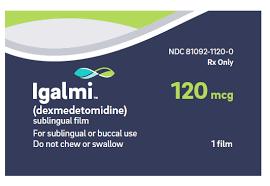
Commercially available films contain 120 or 180 mcg of dexmedetomidine; the 120 or 180 mcg films may be cut in half to obtain doses of 60 or 90 mcg, respectively.
Keep films in foil pouch until ready to use; administer immediately once pouch is opened and dose is prepared.
To prepare dose, open sealed foil pouch by tearing straight across at notch. If a half-dose (60 or 90 mcg) will be administered, remove film from pouch with clean, dry hands and cut strip in half between the dots with clean, dry scissors. Discard unused half in a waste container and place half film for administration back into pouch.
Immediately give pouch containing appropriate dose (full or half film) to patient. Instruct patient to remove film from pouch with clean, dry hands and to place under the tongue (sublingual administration) or behind lower lip (buccal administration), close the mouth, and allow film to dissolve. Film will stick in place and should not be chewed or swallowed. Patients should avoid eating or drinking for ≥15 minutes or ≥1 hour following sublingual or buccal administration, respectively.
Dosage
Available as dexmedetomidine hydrochloride; dosage is expressed in terms of dexmedetomidine.
Dosage reductions may be needed in patients concomitantly receiving other anesthetics, sedatives, hypnotics, or opiates.
Pediatric Patients
Procedural Sedation
IV
Initiation of sedation in pediatric patients 1 month to <2 years of age undergoing noninvasive procedures: 1.5 mcg/kg as a loading infusion over 10 minutes. Consider a reduction in dosage if clinically indicated.
Initiation of sedation in pediatric patients 2 to <18 years of age undergoing noninvasive procedures: 2 mcg/kg as a loading infusion over 10 minutes. Consider a reduction in dosage if clinically indicated.
Maintenance of sedation in pediatric patients 1 month to <18 years of age undergoing noninvasive procedures: Initiate maintenance infusion at a rate of 1.5 mcg/kg per hour; adjust rate within range of 0.5–1.5 mcg/kg per hour to achieve desired level of sedation. Titrate maintenance dose to individual patient clinical response as clinically warranted.
Adults
Sedation in Critical Care Settings
IV
Initiation of sedation: 1 mcg/kg as a loading infusion over 10 minutes. Because of risk of adverse hemodynamic effects, many clinicians do not recommend a loading dose; if a loading dose is used, caution is advised, particularly in patients with bradycardia, heart block, or hemodynamic instability. Manufacturer states loading dose may not be required in patients converting from an alternative sedative agent.
Maintenance of sedation: Continuous IV infusion at a rate of 0.2–0.7 mcg/kg per hour recommended. Adjust infusion rate to desired level of sedation; in most cases, a light rather than deep level of sedation is recommended in critically ill, mechanically ventilated patients. Assess depth and quality of sedation using a validated and reliable assessment tool. Adjust dosage slowly to reduce risk of hypotension and other adverse effects.
Evidence from clinical studies supports use of infusion rates up to 1.5 mcg/kg per hour.
Manufacturer states that continuous IV infusion of dexmedetomidine should not exceed 24 hours. However, the drug has been used for prolonged (>24 hours) sedation in the ICU.
Procedural Sedation
IV
Initiation of sedation: 1 mcg/kg as a loading infusion over 10 minutes. A loading infusion of 0.5 mcg/kg over 10 minutes may be suitable for less invasive procedures (e.g., ophthalmic surgery). For awake fiberoptic intubation, a loading infusion of 1 mcg/kg over 10 minutes is recommended.
Maintenance of sedation: Initiate maintenance infusion at a rate of 0.6 mcg/kg per hour; adjust rate within range of 0.2–1 mcg/kg per hour to achieve desired level of sedation. For awake fiberoptic intubation in adults, a maintenance infusion of 0.7 mcg/kg per hour is recommended until endotracheal tube is secured.
Agitation in Patients with Schizophrenia or Bipolar Disorder
Buccal/Sublingual
Mild or moderate agitation: Initial dose of 120 mcg administered sublingually or bucally; optional second and third doses of 60 mcg each given ≥2 hours apart if agitation persists. The maximum recommended total daily dosage is 240 mcg.
Severe agitation: Initial dose of 180 mcg administered sublingually or bucally; optional second and third doses of 90 mcg given ≥2 hours apart if agitation persists. The maximum recommended total daily dosage is 360 mcg.
Assess vital signs, including orthostatic measurements, prior to administration of a second or third dose. Due to risk of hypotension, additional doses not recommended in patients with systolic BP <90 mm Hg, diastolic BP <60 mm Hg, heart rate <60 beats per minute, or a postural decrease in systolic BP of ≥20 mm Hg or in diastolic BP of ≥10 mm Hg.
Special Populations
Hepatic Impairment
IV Dexmedetomidine:Consider dosage reduction in patients with impaired hepatic function.
Buccal/Sublingual Dexmedetomidine:Dosage reduction of sublingual or buccal dexmedetomidine for agitation is recommended in patients with hepatic impairment. Recommended dosage is based on severity of hepatic impairment and severity of agitation. (See Table 2).
|
Severity of Hepatic Impairment |
Severity of Agitation |
Initial Dose |
Optional Second/Third Dose |
Maximum Total Daily Dosage |
|---|---|---|---|---|
|
Mild or moderate |
Mild or moderate |
90 mcg |
60 mcg |
210 mcg |
|
Mild or moderate |
Severe |
120 mcg |
60 mcg |
240 mcg |
|
Severe |
Mild or moderate |
60 mcg |
60 mcg |
180 mcg |
|
Severe |
Severe |
90 mcg |
60 mcg |
210 mcg |
Renal Impairment
Manufacturers make no special dosage recommendations.
Geriatric Patients
IV Dexmedetomidine: For initiation and maintenance of ICU sedation in geriatric patients >65 years of age, consider dosage reduction. For procedural sedation in geriatric patients, reduce IV loading dose to 0.5 mcg/kg over 10 minutes; consider dosage reduction for maintenance of procedural sedation.
Buccal/Sublingual Dexmedetomidine:Dosage reduction recommended. In adults ≥65 years of age with mild, moderate, or severe agitation, an initial dose of 120 mcg is recommended. Optional second and third doses of 60 mcg each may be given ≥2 hours apart, for a maximum recommended daily dosage of 240 mcg.
Cautions for Dexmedetomidine Hydrochloride
Contraindications
-
None.
Warnings/Precautions
Administration Precautions
To minimize risk of adverse effects, follow recommendations for administration and monitoring of dexmedetomidine therapy.
IV dexmedetomidine should be administered by individuals skilled in the management of patients in the intensive care or operating room setting.
Continuously monitor patients while receiving IV dexmedetomidine.
Cardiovascular Effects
Bradycardia and sinus arrest reported following IV infusion of dexmedetomidine in young, healthy adults with high vagal tone; also associated with other methods of administration, including rapid IV administration.
Hypotension and/or bradycardia reported frequently with IV infusion; although intervention rarely required, some cases resulted in fatality. May be more pronounced in geriatric patients or those with hypovolemia, diabetes mellitus, or chronic hypertension. If treatment is required, consider slowing or stopping dexmedetomidine infusion, increasing IV fluids, elevating lower extremities, and/or use of vasopressors; consider IV anticholinergic agents (e.g., atropine sulfate, glycopyrrolate) to modify vagal tone. More advanced resuscitative measures may be necessary in patients with significant cardiovascular dysfunction.
Transient hypertension reported with IV loading dose; treatment generally not required, although reduction in the loading dose infusion rate may be desirable.
Supraventricular and ventricular tachycardia, atrial fibrillation, extrasystoles, and cardiac arrest reported during postmarketing experience with IV infusion.
Use IV dexmedetomidine with caution in patients with (or at risk of) advanced heart block and/or severe ventricular dysfunction, and in patients receiving concomitant drugs that slow cardiac conduction.
Dose-dependent hypotension, orthostatic hypotension, and bradycardia reported following use of transmucosal (buccal or sublingual) dexmedetomidine. May be more pronounced in geriatric patients or those with hypovolemia, diabetes mellitus, or chronic hypertension.
Avoid use of sublingual/buccal dexmedetomidine in patients with hypotension, orthostatic hypotension, advanced heart block, severe ventricular dysfunction, or history of syncope. After transmucosal administration, patients should be adequately hydrated and should sit or lie down until vital signs are within normal range. If a patient is unable to remain seated or lying down, take precautions to reduce the risk of falls. Ensure that patient is alert and not experiencing orthostatic hypotension or symptomatic hypotension prior to resumption of ambulation.
QT-interval prolongation reported with transmucosal dexmedetomidine. Avoid use of transmucosal dexmedetomidine in patients at risk of torsades de pointes or sudden death, including those with known QT prolongation, a history of other arrhythmias, symptomatic bradycardia, hypokalemia or hypomagnesemia, and those receiving other drugs known to prolong QT interval.
Somnolence
Somnolence reported in patients receiving transmucosal dexmedetomidine.
Patients should not perform activities requiring mental alertness, such as operating a motor vehicle or operating hazardous machinery, for at least 8 hours after receiving transmucosal dexmedetomidine.
Arousability
Some patients receiving IV dexmedetomidine can be arousable and alert when stimulated; should not be considered as evidence of lack of efficacy in the absence of other signs and symptoms.
Withdrawal Effects
Abrupt withdrawal of IV dexmedetomidine may result in clonidine-like withdrawal symptoms. Withdrawal-related events (e.g., nausea, vomiting, agitation, tachycardia, hypertension) reported following discontinuance of therapy in some patients after prolonged (up to 7 days) infusion for ICU sedation. Withdrawal symptoms not reported with short-term (<6 hours) infusions for procedural sedation.
Mild transient withdrawal symptoms (emergence delirium or agitation) reported following discontinuance of short‑term (<2 hours) infusions of dexmedetomidine in pediatric patients.
Use of transmucosal dexmedetomidine not studied for >24 hours after first dose. Potential risk of physical dependence and a withdrawal syndrome if transmucosal dexmedetomidine used in manner other than indicated.
Tolerance and Tachyphylaxis
Use of IV dexmedetomidine for durations >24 hours associated with tolerance, tachyphylaxis, and dose-related increase in adverse effects.
Use of transmucosal dexmedetomidine not studied for >24 hours after first dose. Potential risk of tolerance and tachyphylaxis if transmucosal dexmedetomidine used in manner other than indicated.
Hyperthermia or Pyrexia
Risk of hyperthermia or pyrexia, which may be resistant to traditional cooling methods (e.g., administration of cooled IV fluids and antipyretic medications).
Discontinue dexmedetomidine if drug-related hyperthermia or pyrexia is suspected; monitor patients until body temperature normalizes.
Specific Populations
Pregnancy
Drug-associated risk of major birth defects and miscarriage not observed with exposure to IV dexmedetomidine after first trimester. Most exposures occurred at the time of caesarean section delivery; adverse effects on maternal outcomes or infant Apgar scores not observed.
Fetal and developmental toxicity observed in animal studies.
No data available on sublingual/buccal use of dexmedetomidine in pregnant women to evaluate for a drug-associated risk of major birth defects, miscarriage, or other adverse maternal or fetal effects.
Lactation
Distributed into human milk following IV infusion. Potential effects of IV or sublingual/buccal dexmedetomidine on the breast-fed infant or on milk production not known.
Consider developmental and health benefits of breast-feeding along with the mother's need for dexmedetomidine and any potential adverse effects on the breast-fed infant from the drug or underlying maternal condition. Advise nursing women to monitor the breast-fed infant for irritability.
Pediatric Use
Safety and efficacy of IV dexmedetomidine for ICU sedation not established in pediatric patients <18 years of age. However, the drug has been used in pediatric patients undergoing sedation in the ICU or other settings to facilitate mechanical ventilation or other procedures (e.g., radiologic imaging). Additional study is needed to evaluate the drug's safety in this population.
Safety and efficacy of IV dexmedetomidine established in pediatric patients 1 month to <18 years of age for sedation during noninvasive procedures. Increased frequency of bradypnea, bradycardia, hypertension, and hypotension observed in pediatric patients; however, overall safety profile consistent with known safety profile in adults. Safety and efficacy for procedural sedation not established in pediatric patients <1 month of age.
Safety and efficacy of transmucosal dexmedetomidine not established in pediatric patients.
Geriatric Use
Hypotension and/or bradycardia may be more pronounced. Consider dosage reduction for IV dexmedetomidine. A reduced loading dose of IV dexmedetomidine is recommended in geriatric patients receiving the drug for procedural sedation.
Dosage reduction of dexmedetomidine transmucosal strips recommended in geriatric patients.
Not known whether efficacy of transmucosal dexmedetomidine differs in geriatric patients compared with younger adults.
Hepatic Impairment
Clearance may be reduced. Consider dosage reduction of IV dexmedetomidine. Dosage reduction of sublingual/buccal dexmedetomidine recommended in patients with hepatic impairment.
Renal Impairment
Pharmacokinetics in patients with severe renal impairment (Clcr <30 mL/minute) and healthy individuals are similar.
Common Adverse Effects
Most common adverse effects (>2%) in adults receiving IV dexmedetomidine: hypotension, bradycardia, dry mouth.
Most common adverse effects (>5%) in pediatric patients 1 month to <17 years of age receiving IV dexmedetomidine: bradypnea, bradycardia, hypertension, hypotension.
Most common adverse effects (≥5%) in adults receiving sublingual/buccal dexmedetomidine: somnolence, oral paresthesia or oral hypoesthesia, dizziness, dry mouth, hypotension, orthostatic hypotension.
Drug Interactions
Metabolized by CYP isoenzymes, principally CYP2A6. However, no evidence of clinically important CYP-mediated drug interactions in vitro.
Drugs that Prolong QT Interval
Potential pharmacodynamic interaction (increased risk of QT-interval prolongation and arrhythmia). Avoid concomitant use.
Drugs with Negative Chronotropic Effects
Potential pharmacodynamic interaction (additive pharmacodynamic effects). Use with caution.
Protein-bound Drugs
Pharmacokinetic interaction unlikely.
Specific Drugs
|
Drug |
Interaction |
Comments |
|---|---|---|
|
Anesthetics |
Additive pharmacologic effects |
May require reduction in dosage of dexmedetomidine or concomitant drug |
|
Digoxin |
Negligible change in dexmedetomidine protein binding in vitro; negligible displacement of digoxin from protein binding sites in vitro Possible additive hypotensive and bradycardic effects |
Caution is advised |
|
Fentanyl |
Negligible change in dexmedetomidine protein binding in vitro |
|
|
Ibuprofen |
Negligible displacement of ibuprofen from protein binding sites in vitro |
|
|
Ketorolac |
Negligible change in dexmedetomidine protein binding in vitro |
|
|
Lidocaine |
Negligible change in dexmedetomidine protein binding in vitro |
|
|
Neuromuscular blocking agents |
Increased plasma rocuronium concentrations |
No clinically important effect on neuromuscular blockade |
|
Opiate agonists |
Additive pharmacologic effects |
May require reduction in dosage of dexmedetomidine or concomitant drug |
|
Phenytoin |
Negligible displacement of phenytoin from protein binding sites in vitro |
|
|
Propranolol |
Negligible displacement of propranolol from protein binding sites in vitro |
|
|
Sedatives/hypnotics |
Additive pharmacologic effects |
May require reduction in dosage of dexmedetomidine or concomitant drug |
|
Theophylline |
Negligible change in dexmedetomidine protein binding in vitro; negligible displacement of theophylline from protein binding sites in vitro |
|
|
Vasodilators |
Possible additive hypotensive effects |
Use with caution |
|
Warfarin |
Negligible displacement of warfarin from protein binding sites in vitro |
Dexmedetomidine Hydrochloride Pharmacokinetics
Absorption
Bioavailability
Mean time for dexmedetomidine to dissolve in mouth is approximately 6–8 minutes or 18 minutes following sublingual or buccal administration, respectively. Dexmedetomidine generally is quantifiable in plasma within 5–20 minutes after transmucosal administration.
Absolute bioavailability approximately 72 or 82% following sublingual or buccal administration, respectively.
Early water intake (as early as 15 minutes postdose) has minimal effects on rate or extent of absorption following sublingual administration. Effects of early water intake (i.e., <2 hours postdose) on absorption following buccal administration not evaluated.
Mean maximal plasma concentrations of dexmedetomidine reached approximately 2 hours after sublingual or buccal administration of the transmucosal strips.
Distribution
Extent
Rapidly distributed. Rapidly crosses blood-brain barrier.
Crosses the placenta and is distributed into human milk.
Plasma Protein Binding
Approximately 94%.
Elimination
Metabolism
Undergoes almost complete biotransformation by direct glucuronidation, aliphatic hydroxylation by CYP2A6, and N-methylation.
Elimination Route
Excreted in urine (95%) and feces (4%).
Half-life
Terminal elimination half-life is approximately 2 hours following IV infusion.
Terminal elimination half-life is approximately 2.8 hours following sublingual or buccal administration of dexmedetomidine strips.
Special Populations
Clearance decreases with increasing severity of hepatic impairment. In adult subects with mild, moderate, or severe hepatic impairment, mean clearance values were 74, 64, or 53%, respectively, of those in healthy individuals.
Pharmacokinetics in patients with severe renal impairment (Clcr <30 mL/minute) not substantially altered.
Stability
Storage
Buccal/Sublingual
Sublingual Film
20–25°C (excursions permitted to 15–30°C). Store films in foil pouch until ready to administer.
Parenteral
Premixed Injection in 0.9% Sodium Chloride Injection
20–25°C (excursions permitted to 15–30°C).
Premixed Injection in 5% Dextrose
20–25°C; protect from light and freezing.
Actions
-
Dose-related sedative, anxiolytic, analgesic, and anesthetic-sparing effects; does not appear to reduce dosage requirements of skeletal muscle relaxants.
-
Helps maintain intraoperative hemodynamic stability by blunting sympathetic response to surgery.
-
Does not cause respiratory depression in healthy individuals when given by IV infusion in recommended dosages.
-
Mechanism of action of transmucosal dexmedetomidine in acute treatment of agitation associated with schizophrenia or bipolar I or II disorder thought to be due to activation of presynaptic α2-adrenergic receptors.
-
Compared with clonidine, dexmedetomidine has a shorter half-life (about 2 versus 8–12 hours) and greater α2-selectivity, with potential for reduced incidence of undesirable α1-adrenergic effects (e.g., hypotension, bradycardia).
-
Exhibits α2-selectivity when given by slow IV infusion in low to moderate doses (10–300 mcg/kg); selectivity diminishes at high doses (e.g., 1000 mcg/kg) or with rapid IV administration.
Advice to Patients
-
When dexmedetomidine hydrochloride is used for short-term IV sedation, dosage must be individualized and titrated to the desired clinical effect. BP, heart rate, and oxygen concentrations are continuously monitored during the infusion and as clinically appropriate after discontinuance.
-
Risk of withdrawal reactions and other adverse effects. When dexmedetomidine is infused for >6 hours, patients should report any nervousness, agitation, and/or headaches that may occur for up to 48 hours following dexmedetomidine administration to their clinician. In addition, patients should report symptoms that may occur within 48 hours following administration (e.g., weakness, confusion, excessive sweating, weight loss, abdominal pain, salt cravings, diarrhea, constipation, dizziness, lightheadedness) to their clinician.
-
Advise patients to place dexmedetomidine films under the tongue, close to the base of the tongue, on the left or right side (for sublingual administration) or behind the lower lip (for buccal administration). Advise patients not to chew or swallow dexmedetomidine films. Advise patients not to eat or drink for ≥15 minutes after sublingual administration, or ≥1 hour after buccal administration.
-
Advise patients that transmucosal dexmedetomidine can cause dose-dependent hypotension, orthostatic hypotension, and bradycardia. Instruct patients to remain sitting or lying down after receiving transmucosal dexmedetomidine and to inform their clinician if any symptoms of hypotension or bradycardia occur.
-
Risk of QT-interval prolongation with transmucosal dexmedetomidine. Inform patients to consult their clinician immediately if they feel faint or have heart palpitations.
-
Advise patients that transmucosal dexmedetomidine can cause somnolence and may impair the ability to perform tasks that require complex motor and mental skills. Instruct patients to avoid activities that require them to be alert (e.g., driving a car, operating machinery) for ≥8 hours after receiving transmucosal dexmedetomidine.
-
Advise patients to inform clinicians of existing or contemplated concomitant therapy, including prescription and OTC drugs as well as any concomitant diseases.
-
Instruct women to inform clinicians if they are or plan to become pregnant or are breast-feeding. Advise women who are exposed to dexmedetomidine to monitor breast-fed neonates for irritability.
-
Inform patients of other important precautionary information.
Additional Information
The American Society of Health-System Pharmacists, Inc. represents that the information provided in the accompanying monograph was formulated with a reasonable standard of care, and in conformity with professional standards in the field. Readers are advised that decisions regarding use of drugs are complex medical decisions requiring the independent, informed decision of an appropriate health care professional, and that the information contained in the monograph is provided for informational purposes only. The manufacturer’s labeling should be consulted for more detailed information. The American Society of Health-System Pharmacists, Inc. does not endorse or recommend the use of any drug. The information contained in the monograph is not a substitute for medical care.
Preparations
Excipients in commercially available drug preparations may have clinically important effects in some individuals; consult specific product labeling for details.
Please refer to the ASHP Drug Shortages Resource Center for information on shortages of one or more of these preparations.
* available from one or more manufacturer, distributor, and/or repackager by generic (nonproprietary) name
|
Routes |
Dosage Forms |
Strengths |
Brand Names |
Manufacturer |
|---|---|---|---|---|
|
Parenteral |
Injection Concentrate, for IV Infusion |
100 mcg (of dexmedetomidine) per mL* |
Dexmedetomidine Hydrochloride Injection |
|
|
Sublingual (Intrabuccal) |
Sublingual Film |
120 mcg (of dexmedetomidine) |
Igalmi |
BioXcel |
|
180 mcg (of dexmedetomidine) |
Igalmi |
BioXcel |
* available from one or more manufacturer, distributor, and/or repackager by generic (nonproprietary) name
|
Routes |
Dosage Forms |
Strengths |
Brand Names |
Manufacturer |
|---|---|---|---|---|
|
Parenteral |
Injection, for IV infusion |
4 mcg (of dexmedetomidine) per mL (80, 200, 400, or 1000 mcg) in sodium chloride 0.9%* |
Dexmedetomidine Hydrochloride in 0.9% Sodium Chloride Injection |
|
|
Precedex |
Hospira |
* available from one or more manufacturer, distributor, and/or repackager by generic (nonproprietary) name
|
Routes |
Dosage Forms |
Strengths |
Brand Names |
Manufacturer |
|---|---|---|---|---|
|
Parenteral |
Injection, for IV infusion |
4 mcg (of dexmedetomidine) per mL (200 or 400 mcg) in 5% dextrose* |
Dexmedetomidine Hydrochloride in 5% Dextrose Injection |
AHFS DI Essentials™. © Copyright 2024, Selected Revisions June 10, 2024. American Society of Health-System Pharmacists, Inc., 4500 East-West Highway, Suite 900, Bethesda, Maryland 20814.
† Off-label: Use is not currently included in the labeling approved by the US Food and Drug Administration.
Reload page with references included
More about dexmedetomidine
- Check interactions
- Compare alternatives
- Pricing & coupons
- Latest FDA alerts (2)
- Side effects
- Dosage information
- During pregnancy
- Drug class: miscellaneous anxiolytics, sedatives and hypnotics
- Breastfeeding
Patient resources
Professional resources
- Dexmedetomidine Hydrochloride Injection prescribing information
- Dexmedetomidine hydrochloride Injection, Concentrate (FDA)
- Dexmedetomidine in Sodium Chloride Injection (FDA)