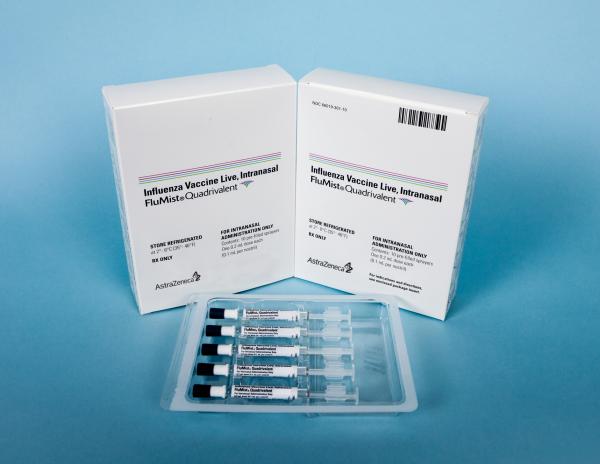
Influenza Vaccine Live Intranasal (Monograph)
Brand name: FluMist
Drug class: Vaccines
Warning
On October 15, 2021, the National Alert Network (NAN) issued an alert to make vaccine providers aware of reports of accidental mix-ups between the influenza (flu) and COVID-19 vaccines. The alert is based on 16 cases reported to the Institute for Safe Medication Practices (ISMP) error reporting programs. Most of the reports ISMP has received involve administration of one of the COVID-19 vaccines instead of an influenza vaccine; in 3 cases, patients received an influenza vaccine instead of a COVID-19 vaccine.
Because most of the errors were reported by consumers, details about the contributing factors were not provided in many cases. However, possible contributing factors include increased demand for vaccination services, the ability to administer the flu and COVID-19 vaccines during the same visit, syringes located next to each other, unlabeled syringes, distractions, and staffing shortages. The alert provides recommendations for preventing such vaccine mix-ups. For additional information, consult the NAN alert at [Web].
Introduction
Live, attenuated virus vaccine. Seasonal influenza vaccine live intranasal (LAIV; LAIV4) contains live (cold-adapted) influenza virus types A and B representing influenza strains likely to circulate in the US during the upcoming season and is used to stimulate active immunity to influenza strains contained in the vaccine.
Uses for Influenza Vaccine Live Intranasal
Prevention of Seasonal Influenza A and B Virus Infections
Prevention of seasonal influenza virus infection in children ≥2 years of age, adolescents, and adults 18 through 49 years of age.
Influenza is an acute viral infection; influenza viruses spread from person to person mainly through large-particle respiratory droplet transmission. In the US, annual epidemics of seasonal influenza occur, usually during the fall or winter. Influenza viruses can cause illness in any age group; children have highest rate of infection. Influenza can exacerbate underlying medical conditions or lead to pneumonia in certain individuals. Adults ≥65 years of age, children <2 years of age, and individuals with chronic medical conditions have highest risk of influenza-related complications and death.
Annual vaccination is the primary means of preventing seasonal influenza and its complications. Annual influenza vaccination necessary since immunity declines in the year following vaccination and circulating influenza strains change from year to year.
CDC Advisory Committee on Immunization Practices (ACIP), AAP, and others recommend routine influenza vaccination for all adults, adolescents, children, and infants ≥6 months of age using an age-appropriate seasonal influenza vaccine, unless contraindicated. Vaccination against seasonal influenza recommended for otherwise healthy individuals as well as those who have medical conditions that put them at increased risk for influenza-related complications or at higher risk for influenza-related outpatient, emergency department, or hospital visits.
All influenza vaccines available in the US are quadrivalent formulations containing antigens representing 2 influenza A strains (H1N1 and H3N2) and 2 influenza B strains (B/Victoria lineage and B/Yamagata lineage).
Several different types of influenza virus vaccines are commercially available, including an inactivated virus vaccine (influenza virus vaccine inactivated [IIV]), an adjuvanted inactivated virus vaccine (influenza vaccine, adjuvanted [aIIV]), a recombinant vaccine (influenza vaccine recombinant [RIV]), and a live attenuated virus vaccine (influenza vaccine live intranasal [LAIV]). The various vaccine formulations also differ based on method of manufacturer (egg-based versus cell culture-based), dose (standard versus high-dose), and route of administration (e.g., parenteral versus intranasal),
Select specific influenza vaccine based on age and health status of the individual. For many individuals, more than one type of influenza vaccine may be appropriate.
ACIP and AAP state that there are no preferential recommendations for any specific vaccine type or trade name when more than one licensed, recommended, and age-appropriate vaccine is available, with the exception of selection of influenza vaccines for individuals ≥65 years of age. If an age-appropriate vaccine is available and there are no contraindications, do not delay vaccination to obtain a specific product.
Efficacy of influenza vaccine live intranasal not evaluated in individuals with altered immunocompetence. ACIP, IDSA, AAP, and others state that influenza vaccine live intranasal should not be used in children or adults who are immunocompromised because of disease or immunosuppressive therapy. Use age-appropriate seasonal influenza virus vaccine inactivated or influenza vaccine recombinant in such individuals.
ACIP, IDSA, AAP, and others state that influenza vaccine live intranasal should not be used in health-care workers, household members, or other individuals who have close contact with severely immunocompromised individuals who require care in a protective environment (e.g., hematopoietic stem cell transplant [HSCT] recipients within 2 months after transplant or with graft-versus-host disease [GVHD], individuals with severe combined immune deficiency [SCID]). Use age-appropriate influenza virus vaccine inactivated or influenza vaccine recombinant in such individuals.
Seasonal influenza vaccines are not effective against all possible strains of influenza, but may be effective against those strains (and possibly closely related strains) represented in the vaccines.
Current information regarding influenza surveillance and updated recommendations for prevention and treatment of seasonal influenza is available from CDC at [Web].
Influenza Vaccination During the Coronavirus Disease 2019 (COVID-19) Pandemic
CDC and ACIP state that efforts to ensure influenza vaccination for all individuals ≥6 months of age for the upcoming (current) influenza season are of paramount importance to reduce influenza-related morbidity and mortality and reduce the impact of respiratory illnesses in the population and the resulting burdens on the health-care system. SARS-CoV-2 (causative agent of COVID-19) is expected to circulate in the US during the influenza season; the extent of continued or recurrent SARS-CoV-2 circulation during the time influenza viruses are circulating is not known. Vaccination against influenza can reduce prevalence of influenza illness and reduce incidence of influenza symptoms that might be confused with COVID-19 symptoms (i.e., fever, cough, dyspnea). In addition, prevention of influenza and reduction in severity of influenza illness and associated outpatient visits, hospitalizations, and intensive care unit admissions could alleviate stress on the US health-care system.
ACIP recommends that influenza vaccination should be deferred in symptomatic individuals with moderate or severe COVID-19 until recovery and deferral also may be considered in person with mild or asymptomatic COVID-19 illness.
Related/similar drugs
Tamiflu, oseltamivir, Fluzone, Xofluza, Afluria, Fluad
Influenza Vaccine Live Intranasal Dosage and Administration
General
Administer seasonal influenza vaccine every year before exposure to seasonal influenza. In the US, localized outbreaks indicating start of the annual influenza season can occur as early as October and peak influenza activity (which often is close to the midpoint of influenza activity for the season) usually occurs in January or February or later.
ACIP recommends offering influenza vaccination by the end of October, if possible, and continuing to offer vaccination as long as influenza viruses are circulating and unexpired vaccine is available. Although influenza vaccination by the end of October is recommended, vaccination in December or later (even if influenza activity has begun) is likely to be beneficial in the majority of influenza seasons.
When 2 doses of influenza vaccine are required in children 2 through 8 years of age, give first dose as soon as possible after vaccine becomes available since this allows second dose to be given by the end of October. For children and adults requiring only a single dose of influenza vaccine, there is some evidence that early vaccination (i.e., in July or August) is likely to be associated with suboptimal immunity (waning immunity) before the end of influenza season, particularly in older adults. Community vaccination programs should balance maximizing likelihood of persistence of vaccine-induced protection through the influenza season with avoiding missed opportunities for vaccination or vaccinating after influenza circulation has already started.
Administration
Intranasal Administration
Administer intranasally using prefilled, single-use sprayer supplied by the manufacturer.
The single-use sprayer is equipped with a nozzle that produces a fine mist that is primarily deposited in the nose and nasopharynx.
Influenza vaccine live intranasal is a colorless to pale yellow suspension and is clear to slightly cloudy. Do not mix with any other vaccine or solution.
Must be administered by a health-care provider.
Place recipient in an upright position. Administer approximately one-half the contents of the prefilled, single-use sprayer into each nostril. Active inhalation (i.e., sniffing) by patient not required. Consult manufacturer’s labeling for specific information regarding use of the sprayer.
Some experts state the vaccine dose does not need to be repeated if patient coughs or sneezes immediately after receiving the intranasal vaccine. Do not administer to individuals who have nasal congestion that might impede delivery of the vaccine to nasopharyngeal mucosa.
After administering vaccine, carefully dispose of the sprayer (i.e., discard using standard procedures for medical waste).
May be given simultaneously with other age-appropriate vaccines during same health-care visit.
Dosage
Dosing schedule (i.e., number of doses) for prevention of seasonal influenza depends on individual’s age and vaccination history.
A single dose consists of the entire contents (0.2 mL) of the sprayer (0.1 mL in each nostril).
Pediatric Patients
Prevention of Seasonal Influenza A and B Virus Infections
Healthy Children 2 through 8 Years of Age
IntranasalHas not previously received any doses of any seasonal influenza vaccine or has an uncertain history regarding influenza vaccination: 2 doses administered at least 1 month (4 weeks) apart. Each dose consists of 0.2 mL (0.1 mL in each nostril).
Did not receive a total of ≥2 doses of any seasonal influenza vaccine before July 1 of the summer prior to the upcoming (current) influenza season: 2 doses administered at least 4 weeks apart. Each dose consists of 0.2 mL (0.1 mL in each nostril).
Received a total of ≥2 doses of any seasonal influenza vaccine before July 1 of the summer prior to the upcoming (current) influenza season: Single dose consisting of 0.2 mL (0.1 mL in each nostril).
Healthy Children and Adolescents 9 through 17 Years of Age
IntranasalSingle dose consisting of 0.2 mL (0.1 mL in each nostril).
Adults
Prevention of Seasonal Influenza A and B Virus Infections
Healthy Adults 18 through 49 Years of Age
IntranasalSingle dose consisting of 0.2 mL (0.1 mL in each nostril).
Special Populations
Hepatic Impairment
No specific dosage recommendations.
Renal Impairment
No specific dosage recommendations.
Geriatric Patients
Not indicated in adults ≥50 years of age, including geriatric adults.
Cautions for Influenza Vaccine Live Intranasal
Contraindications
-
History of severe allergic reaction (e.g., anaphylaxis) to any component of the vaccine, including egg protein.
-
History of severe allergic reaction (e.g., anaphylaxis) to previous dose of any influenza vaccine.
-
Children and adolescents 2 through 17 years of age receiving aspirin or aspirin-containing therapy; possible association of Reye’s syndrome with aspirin use and wild-type influenza infection.
Warnings/Precautions
Sensitivity Reactions
Hypersensitivity reactions (e.g., anaphylactic reaction, facial edema, urticaria) reported.
Prior to administration, review patient’s history with respect to possible sensitivity reactions to the vaccine or vaccine components, including egg protein, and prior vaccination-related adverse effects and assess benefits versus risks.
Appropriate medical treatment and supervision must be readily available in case anaphylaxis occurs.
Do not administer additional vaccine doses to any individual who had a severe allergic reaction to a previous dose.
Egg Allergy
Seasonal influenza vaccine live intranasal is produced using eggs and contains residual egg protein (<0.024 mcg of ovalbumin per dose).
Manufacturer states that influenza vaccine live intranasal is contraindicated in individuals who have had a severe allergic reaction (e.g., anaphylaxis) to egg protein.
ACIP states that all individuals aged ≥6 month with egg allergy receive any influenza vaccine (egg-based or nonegg-based) that is otherwise appropriate for the recipient’s age and health status. ACIP no longer recommends that persons who have had an allergic reaction to egg involving symptoms other than urticaria should be vaccinated in an inpatient or outpatient medical setting supervised by a health care provider who is able to recognize and manage severe allergic reactions if an egg-based vaccine is used. Egg allergy alone necessitates no additional safety measures for influenza vaccination beyond those recommended for any recipient of any vaccine, regardless of severity of previous reaction to egg, as all vaccines should be administered in settings in which personnel and equipment needed for rapid recognition and treatment of acute hypersensitivity reactions are available.
A previous severe allergic reaction to influenza vaccine live intranasal, regardless of the component suspected of being responsible for the reaction, is a contraindication to future receipt of the vaccine.
Infants <24 Months of Age
Do not use in infants <24 months of age; increased risk of wheezing and hospitalization reported in clinical trials in this age group.
Individuals with Asthma, Recurrent Wheezing, or Active Wheezing
Individuals of any age with asthma and children <5 years of age with history of recurrent wheezing may be at increased risk of wheezing after receiving influenza vaccine live intranasal.
Manufacturer states that influenza vaccine live intranasal has not been studied in individuals with severe asthma or active wheezing.
ACIP states do not use influenza vaccine live intranasal in children 2 through 4 years of age diagnosed with asthma and use with caution in individuals ≥5 years of age diagnosed with asthma. ACIP also states do not use in children 2 through 4 years of age if the parent or caregiver states that a health-care provider told them during the preceding 12 months that the child had wheezing or asthma or if the child’s medical record indicates a wheezing episode occurred during the preceding 12 months.
AAP states do not use influenza vaccine live intranasal in children diagnosed with asthma. AAP also states do not use in children 2 through 4 years of age with a history of recurrent wheezing or a medically attended wheezing episode during the previous 12 months because of potential for increased wheezing after receipt of the vaccine. When considering use in children 24 through 59 months of age, AAP recommends asking the parent or caregiver if the child had any wheezing during the previous 12 months; if there is such a history, use age-appropriate parenteral influenza virus vaccine inactivated (not influenza vaccine live intranasal) in such children.
Guillain-Barré Syndrome (GBS)
If GBS occurred within 6 weeks after previous influenza vaccination, manufacturer states base decision to administer influenza vaccine on careful consideration of potential benefits and risks.
The 1976 swine influenza vaccine was associated with increased frequency of GBS. Evidence for causal relationship between other influenza vaccines and GBS inconclusive; if an excess risk exists, it probably is slightly more than 1 additional case of GBS per 1 million vaccinees.
ACIP states that, as a precaution, individuals who are not at high risk for severe influenza complications and who developed GBS within 6 weeks of a previous dose of influenza vaccine generally should not receive influenza vaccination; clinicians might consider use of antiviral prophylaxis for such individuals. However, ACIP states that benefits of influenza vaccine may outweigh risks for certain individuals with a history of GBS within 6 weeks after a previous dose of influenza vaccine who are at high risk for severe complications from influenza.
Individuals with Altered Immunocompetence
Manufacturer states efficacy of influenza vaccine live intranasal not studied in immunocompromised individuals.
Use of live, attenuated virus vaccines in individuals with altered immunocompetence may be associated with increased risk for adverse reactions because of uninhibited growth of the live, attenuated vaccine virus. In addition, immune responses to vaccines may be reduced in immunosuppressed individuals.
ACIP, AAP, IDSA, and others state do not use live, attenuated virus vaccines (including influenza vaccine live intranasal) in individuals with altered immunocompetence. This includes, but is not limited to, individuals with congenital and acquired immunodeficiency states, those who are immunocompromised as the result of immunosuppressive therapy, and those with anatomic and functional asplenia (e.g., sickle cell anemia). When indicated, give live, attenuated virus vaccines prior to initiation of immunosuppressive therapy or defer until immunosuppressive therapy discontinued.
ACIP, AAP, CDC, NIH, HIV Medicine Association of IDSA, and others state do not use in HIV-infected individuals. Use age-appropriate influenza virus vaccine inactivated or influenza vaccine recombinant in HIV-infected adults and use age-appropriate influenza virus vaccine inactivated in HIV-infected pediatric patients. Although efficacy of influenza vaccine live intranasal not evaluated in HIV-infected individuals, there is some evidence that adverse effects and frequency and duration of vaccine virus shedding in HIV-infected individuals who receive the vaccine are similar to those reported in healthy individuals.
Close Contacts of Individuals with Altered Immunocompetence
Because of possible transmission of live vaccine viruses, ACIP and others state do not use in close contacts of severely immunocompromised individuals who require care in a protective environment (e.g., HSCT recipients within 2 months after transplant or with GVHD, individuals with SCID]). The live intranasal vaccine may be administered to household members or other close contacts of less severely immunocompromised individuals (e.g., those not requiring a protective environment, HIV-infected individuals).
ACIP and others state that health-care workers, hospital visitors, and household or other close contacts who have received influenza vaccine live intranasal should avoid contact with severely immunocompromised patients who require care in a protective environment for 7 days after vaccination. This contact restriction following vaccination is not necessary for patients who are not severely immunosuppressed.
Individuals with Medical Conditions Involving CSF Leak
ACIP states do not use influenza vaccine live intranasal in individuals with medical conditions that involve active communication between CSF and the oropharynx, nasopharynx, nose, or ear or any other cranial CSF leak. In addition, ACIP states do not use the live vaccine in individuals with cochlear implants because of potential for CSF leak, which might exist for some period after implantation.
Individuals with Medical Conditions that Increase Risk of Influenza Complications
Safety not established in individuals with underlying medical conditions that increase risk for complications following wild-type influenza infection.
ACIP states do not use influenza vaccine live intranasal in individuals with chronic pulmonary, cardiovascular (except isolated hypertension), renal, hepatic, neurologic, hematologic, or metabolic disorders (including diabetes mellitus).
Transmission of Vaccine Virus
Influenza vaccine live intranasal contains live, attenuated virus. Vaccine virus capable of infection and replication is present in nasal secretions of vaccine recipients and viral shedding occurs in adults and children who have received the live intranasal vaccine.
Data from several studies indicate that 50–69% of children 2–9 years of age, 29% of children and adolescents 9–17 years of age, and 20% of adults 18–49 years of age may shed vaccine virus within 28 days after receiving influenza vaccine live intranasal; majority of shedding occurs within 2–3 days after vaccination and only 1–3% of vaccine recipients 2–49 years of age shed vaccine virus after day 11.
Transmission of vaccine virus has occurred rarely between recipients of influenza vaccine live intranasal and their contacts. Limited data from a study in a day-care setting indicate that the frequency of transmission of vaccine virus from young children who received the vaccine to unvaccinated young children is estimated to be 0.6–2.4% in such a setting.
Concomitant Illness
Base decision to administer or delay vaccination in an individual with a current or recent acute illness on severity of symptoms and etiology of the illness.
ACIP states mild acute illness does not preclude vaccination.
ACIP states moderate or severe acute illness (with or without fever) is a precaution for vaccination; defer vaccines until individual has recovered from the acute phase of the illness. This avoids superimposing vaccine adverse effects on the underlying illness or mistakenly concluding that a manifestation of the underlying illness resulted from vaccine administration.
ACIP and AAP state defer administration of influenza vaccine live intranasal if nasal congestion is present that might impede delivery of the intranasal vaccine to nasopharyngeal mucosa; alternatively, use a different age-appropriate influenza vaccine.
Individuals with Known or Suspected Coronavirus Disease 2019 (COVID-19)
ACIP states defer routine vaccinations, including influenza vaccination, in symptomatic individuals with suspected or confirmed COVID-19 until criteria for discontinuance of COVID-19 isolation have been met and the individual is no longer moderately to severely ill. Consider deferring vaccination until the individual has fully recovered from the acute illness to avoid exposing health-care personnel and other patients to the disease. ACIP also states that routine vaccinations, including influenza vaccination, should be deferred in patients with mild or asymptomatic COVID-19 to avoid the inability to discern between COVID-19 symptoms and postvaccination reactions. Other considerations include the presence of risk factors for severe influenza illness and the likelihood of being able to vaccinate at a later date.
Limitations of Vaccine Effectiveness
Following seasonal influenza vaccination, up to 2 weeks may be required to develop antibody protection against infection.
May not protect all vaccine recipients from influenza.
Seasonal influenza vaccines are formulated annually to contain influenza A and B antigens predicted to represent strains of influenza virus likely to circulate in the US during the upcoming influenza season. Efficacy of seasonal influenza vaccine during any given year depends on how closely viral strains represented in the vaccine match viral strains circulating during the season.
Seasonal influenza vaccines not expected to provide protection against human infection with animal-origin influenza viruses, including avian influenza A viruses (e.g., avian influenza A [H5N1], avian influenza A [H7N9]).
Seasonal influenza vaccines will not provide protection against COVID-19.
Duration of Immunity
Immunity declines during the year after seasonal influenza vaccination. In addition, circulating strains of seasonal influenza virus change from year to year. Annual vaccination is needed for prevention of seasonal influenza.
Do not administer influenza vaccine from a previous influenza season in an attempt to provide protection during a subsequent influenza season.
Improper Storage and Handling
Improper storage or handling of vaccines may reduce vaccine potency resulting in reduced or inadequate immune responses in vaccinees.
Inspect all vaccines upon delivery and monitor during storage to ensure that the appropriate temperature is maintained.
Do not administer vaccine that has been mishandled or has not been stored at the recommended temperature.
If there are concerns about mishandling, contact the manufacturer or state or local immunization or health departments for guidance on whether the vaccine is usable; also can consult CDC.
Specific Populations
Pregnancy
Manufacturer states influenza vaccine live intranasal not absorbed systemically following intranasal administration and use in pregnant women not expected to result in fetal exposure. Animal reproduction studies have not revealed evidence of harm to the fetus.
ACIP, AAP, ACOG, and others state do not use influenza vaccine live intranasal in pregnant women. These experts state that all women who are pregnant or who might become pregnant during the influenza season should be vaccinated using any licensed, age-appropriate, inactivated influenza vaccine (i.e., influenza virus vaccine inactivated or influenza vaccine recombinant).
Lactation
Manufacturer states influenza vaccine live intranasal not absorbed systemically following intranasal administration and distribution into milk not expected.
ACIP states that live, attenuated virus vaccines generally do not pose any unusual risks for women who are breast-feeding or their breast-fed infants. Although live vaccine viruses can replicate in the mother, the majority of live vaccine viruses are not distributed into milk.
Pediatric Use
Safety and efficacy established only in children ≥2 years of age.
Not indicated in infants <24 months of age. Increased incidence of wheezing and hospitalization reported in a clinical trial in infants 6 through 23 months of age† [off-label] who received influenza vaccine live intranasal compared with those who received parenteral influenza virus vaccine inactivated.
ACIP states do not use in children 2 through 4 years of age with asthma and use with caution in children ≥5 years of age with asthma. AAP states do not use in any child with asthma. Both ACIP and AAP state do not use in certain children with a history of wheezing.
Protection of young infants against seasonal influenza virus depends on immunization of their close contacts. All household contacts, health-care and day-care providers, and other close contacts of young infants should receive seasonal influenza vaccination appropriate for their age and target group.
Adults 50–64 Years of Age
Not indicated for use in adults 50–64 years of age. Efficacy not demonstrated in adults 50–64 years of age.
Geriatric Use
Not indicated for use in geriatric individuals ≥65 years of age.
ACIP states use influenza virus vaccine inactivated or influenza vaccine recombinant in adults ≥65 years of age. ACIP states a preference for Fluzone High-Dose (quadrivalent), Flublok recombinant influenza vaccine (quadrivalent), or the standard-dose quadrivalent adjuvant-containing vaccine (Fluad), but if none of these 3 vaccines are available at the time of vaccine administration, then they state that adults ≥65 years may receive a standard-dose quadrivalent preparation.
Common Adverse Effects
Children 2 through 6 years of age: Runny nose/nasal congestion, decreased appetite, irritability, lethargy, sore throat, fever, headache, muscle aches, chills.
Older children and adolescents through 17 years of age: Adverse effects similar to those reported in younger children; in addition, abdominal pain and decreased activity.
Adults 18 through 49 years of age: Runny nose, headache, sore throat, tiredness/weakness, muscle aches, cough, chills, nasal congestion, sinusitis.
Drug Interactions
Immunosuppressive Agents
Immune responses to vaccines may be reduced in individuals receiving immunosuppressive therapy. In addition, increased risk of adverse effects if live, attenuated virus vaccines used in individuals receiving immunosuppressive therapy.
Generally give live, attenuated virus vaccines ≥2–4 weeks before initiation of immunosuppressive therapy and do not give during and for certain periods of time after immunosuppressive therapy discontinued.
Time to restoration of immune competence varies depending on type and intensity of immunosuppressive therapy, underlying disease, and other factors; optimal timing for vaccine administration after discontinuance of immunosuppressive therapy not identified for every situation.
Vaccines
Although specific studies not available, influenza vaccine live intranasal can be administered concurrently with or at any interval before or after inactivated vaccines or toxoids.
Influenza vaccine live intranasal and other live vaccines generally may be administered concurrently on the same day. However, because of theoretical concerns that immune responses to other live virus vaccines might be impaired if given within 4 weeks (28 days) of another live virus vaccine, ACIP states that if influenza vaccine live intranasal and other live vaccines are not given on the same day, give ≥4 weeks apart. If another live vaccine is given <4 weeks after a previous live vaccine, ACIP states repeat the dose of the second live vaccine ≥4 weeks later.
Specific Drugs
|
Drug |
Interaction |
Comments |
|---|---|---|
|
Antivirals active against influenza (baloxavir, oseltamivir, peramivir, zanamivir) |
Concomitant use not evaluated; influenza antivirals may inhibit the vaccine virus and could decrease immune responses to the vaccine |
Baloxavir: Because of long half-life (approximately 79 hours), may interfere with the vaccine if given from 17 days before through 2 weeks after vaccination Oseltamivir: May interfere with the vaccine if given from 48 hours before through 2 weeks after vaccination Peramivir: Because of long half-life (approximately 20 hours), may interfere with the vaccine if given from 5 days before through 2 weeks after vaccination Zanamivir: May interfere with the vaccine if given from 48 hours before through 2 weeks after vaccination If an influenza antiviral is given at interval before or after influenza vaccine live intranasal that potentially could interfere with the vaccine, ACIP recommends revaccination using age-appropriate influenza virus vaccine inactivated or influenza vaccine recombinant |
|
Aspirin |
Association of Reye’s syndrome with aspirin and wild-type influenza infection |
Contraindicated in children and adolescents 2 through 17 years of age receiving aspirin or aspirin-containing therapy; avoid aspirin-containing products in children and adolescents 2 through 17 years of age for 4 weeks following influenza vaccination |
|
COVID-19 vaccines |
ACIP states that approved or authorized COVID-19 vaccines may be given with influenza vaccines without concern for safety or immune interference. |
May be administered concurrently with or at any interval before or after COVID-19 vaccines Base decisions to administer a COVID-19 vaccine concomitantly with other vaccine(s) on whether routine vaccination with the other vaccines has been delayed or missed, the individual's risk of vaccine-preventable disease (e.g., during an outbreak or occupational exposures), and reactogenicity profiles of the vaccines |
|
Immune globulin (immune globulin IM [IGIM], immune globulin IV [IGIV], immune globulin sub-Q) or specific hyperimmune globulin (hepatitis B immune globulin [HBIG], rabies immune globulin [RIG], tetanus immune globulin [TIG], varicella zoster immune globulin [VZIG]) |
May give concurrently with or at any interval before or after immune globulin or specific hyperimmune globulin |
|
|
Immunosuppressive agents (e.g., cancer chemotherapy, certain biologic response modifiers, corticosteroids, radiation) |
Possible decreased antibody responses to influenza vaccine live intranasal and increased risk of adverse reactions Anti-B-cell antibodies (e.g., rituximab): Optimal time to administer vaccines after such treatment unclear Corticosteroids (high-dose systemic therapy): Prednisone or equivalent in a dosage ≥2 mg/kg daily or ≥20 mg daily given for ≥2 weeks considered immunosuppressive Corticosteroids (lower-dose therapy): Short-term (<2 weeks) or low- to moderate-dose systemic therapy (<20 mg prednisone or equivalent daily); long-term, alternate-day systemic therapy using short-acting drugs; maintenance physiologic doses (replacement therapy); topical therapy (e.g., cutaneous, ophthalmic); oral inhalation; or intra-articular, bursal, or tendon injections are not considered immunosuppressive or are associated with low-level immunosuppression |
Cancer chemotherapy or radiation: Generally give live, attenuated virus vaccines ≥2–4 weeks before such therapy or defer until ≥3 months after such therapy discontinued Immunosuppressive anti-rejection therapies in solid organ transplant recipients: Defer live, attenuated virus vaccines until ≥2 months after such therapies discontinued Anti-B-cell antibodies (e.g., rituximab): Generally give live, attenuated virus vaccines ≥2–4 weeks before such therapy or defer until ≥6 months after such therapy discontinued Certain biologic response modifiers (e.g., colony-stimulating factors, interleukins, tumor necrosis factor [TNF] blocking agents): ACIP states give live, attenuated virus vaccines ≥2 weeks before such therapy or defer until ≥3 months after such therapy discontinued Corticosteroids (high-dose systemic therapy): Defer live, attenuated virus vaccines until ≥1 month after such therapy discontinued Corticosteroids (lower-dose therapy): ACIP states live, attenuated virus vaccines may be given concurrently with or any time before or after such therapy; IDSA states do not give influenza vaccine live intranasal to patients with chronic inflammatory conditions receiving corticosteroids (including regimens associated with low-level immunosuppression) |
|
Intranasal preparations (e.g., corticosteroids) |
Concomitant administration not evaluated |
|
|
Measles, mumps, and rubella vaccine (MMR) |
Concurrent administration of influenza vaccine live intranasal with MMR and monovalent varicella vaccine in infants 12 through 15 months of age did not interfere with immune responses to any of the antigens and did not increase frequency of adverse effects; safety and immunogenicity of concurrent administration not evaluated in infants >15 months of age |
May be given concurrently with influenza vaccine live intranasal; if not given concurrently, give ≥4 weeks apart |
|
Rotavirus vaccine (RV) |
Concurrent administration not studied; rotavirus vaccine not indicated in children ≥2 years of age (the age group that can receive influenza vaccine live intranasal) |
|
|
Typhoid vaccines |
Oral live typhoid vaccine (Vivotif): Specific data regarding concurrent administration not available |
Oral live typhoid vaccine (Vivotif): If live typhoid vaccine warranted, do not delay; may be given concurrently with or at any interval before or after other live vaccines (e.g., influenza vaccine live intranasal) |
|
Varicella vaccine (VAR) |
Concurrent administration of influenza vaccine live intranasal with monovalent varicella vaccine and MMR vaccine in infants 12 through 15 months of age did not interfere with immune responses to any of the antigens and did not increase frequency of adverse effects; safety and immunogenicity of concurrent administration not evaluated in infants >15 months of age |
May be given concurrently with influenza vaccine live intranasal; if not given concurrently, give ≥4 weeks apart whenever possible |
Stability
Storage
Intranasal Spray
Suspension
2–8°C; do not freeze.
A single temperature excursion up to 25°C for 12 hours has no adverse impact on the vaccine; however, after such an excursion, immediately return the vaccine to 2–8°C and use as soon as feasible. Subsequent excursions not permitted.
Does not contain thimerosal or any other preservatives.
Actions
-
Influenza vaccine live intranasal contains live, attenuated (cold-adapted) influenza virus types A and B. The vaccine is prepared by culturing live attenuated influenza virus reassortants in specific pathogen-free eggs.
-
Seasonal influenza vaccines are formulated annually to contain antigens representative of the influenza A (H1N1), influenza A (H3N2), and influenza B viruses likely to circulate during the upcoming influenza season.
-
Influenza vaccines stimulate active immunity to influenza virus strains represented in the vaccines.
-
Following administration of influenza vaccine live intranasal, vaccine virus replicates in cells lining the nasopharynx. Protective mechanism not completely understood; may involve both serum and nasal secretory antibodies and cell-mediated immune responses (influenza-specific T-cells).
-
Efficacy of influenza vaccines in preventing seasonal influenza virus infection depends on whether the virus strains represented in the vaccines are antigenically similar to influenza virus strains circulating during the influenza season.
Advice to Patients
-
Prior to administration of seasonal influenza vaccine live, provide a copy of the appropriate CDC Vaccine Information Statement (VIS) to the patient or patient’s legal representative.
-
Advise patient and/or patient’s parent or guardian of the risks and benefits of influenza vaccine live intranasal.
-
Advise patient and/or patient’s parent or guardian that annual vaccination against seasonal influenza is necessary. Importance of receiving influenza vaccine for the upcoming (current) influenza season even if the individual received influenza vaccine for the previous influenza season.
-
Advise patient and/or patient’s parent or guardian that a single dose of seasonal influenza vaccine is necessary each year in adults, adolescents, and children ≥9 years of age, but that 2 doses of seasonal influenza vaccine may be necessary in some children 2 through 8 years of age.
-
Ask patient and/or patient’s parent or guardian if vaccinee has a history of asthma or recurrent wheezing. Advise patient’s parent or guardian that a history of recurrent wheezing may be an asthma equivalent in children <5 years of age and that individuals of any age with asthma and children <5 years of age with recurrent wheezing may be at increased risk for wheezing after receiving the intranasal vaccine.
-
Advise patient and/or patient’s parent or guardian that seasonal intranasal influenza vaccine is a live, attenuated virus vaccine and that vaccine virus can be transmitted to close contacts.
-
Importance of informing clinicians of adverse effects. Clinicians or individuals can report any adverse reactions that occur following vaccination to the manufacturer at 877-633-4411 or Vaccine Adverse Event Reporting System (VAERS) at 800-822-7967 or [Web].
-
Importance of informing clinician of existing or contemplated concomitant therapy, including prescription and OTC drugs, as well as concomitant illnesses (i.e., asthma, recurrent wheezing, GBS).
-
Importance of women informing clinician if they are or plan to become pregnant or plan to breast-feed.
-
Importance of informing patients of other important precautionary information.
Preparations
Excipients in commercially available drug preparations may have clinically important effects in some individuals; consult specific product labeling for details.
Please refer to the ASHP Drug Shortages Resource Center for information on shortages of one or more of these preparations.
|
Routes |
Dosage Forms |
Strengths |
Brand Names |
Manufacturer |
|---|---|---|---|---|
|
Nasal |
Suspension |
106.5–7.5 FFU (fluorescent focus units) each of FDA-specified influenza A (H1N1), influenza A (H3N2), influenza B/Victoria lineage, and influenza B/Yamagata lineage antigens per 0.2 mL |
FluMist Quadrivalent |
MedImmune |
AHFS DI Essentials™. © Copyright 2024, Selected Revisions October 26, 2023. American Society of Health-System Pharmacists, Inc., 4500 East-West Highway, Suite 900, Bethesda, Maryland 20814.
† Off-label: Use is not currently included in the labeling approved by the US Food and Drug Administration.
Reload page with references included
More about influenza virus vaccine, live
- Check interactions
- Compare alternatives
- Reviews (15)
- Side effects
- Dosage information
- During pregnancy
- Drug class: viral vaccines