
Sponge Bathing your Baby
Medically reviewed by Drugs.com. Last updated on Aug 4, 2025.
What is a sponge bath?
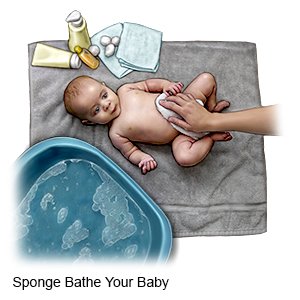
A sponge bath is when you bathe your baby without putting him or her in a tub. During a sponge bath, you lay your baby on a towel and clean him or her with a wet washcloth. You should sponge bathe your baby no more than 2 to 3 times each week. A sponge bath should take about 5 to 10 minutes to complete.
 |
What do I need to know about my baby's skin?
- Your baby's skin is sensitive and fragile. You may need to wash your baby only with warm water during the first month after birth. If you do use soap, use only gentle baby soap on areas that are dirty, such as his or her bottom. The soap you use on your baby should not contain any preservatives, alcohol, or perfumes. Ask your baby's provider what type of soap is best. Wash your baby's skin gently. Do not rub.
- If your baby was premature, his or her skin may be thinner and more sensitive than other babies. Your premature baby may not need a sponge bath as often because his or her skin may dry out faster. Soap may irritate your baby's skin.
How do I give my baby a sponge bath?
- Prepare an area. Clean the surface you plan to give the bath on and the bath supplies. Make sure you have everything you need within easy reach. This includes warm water, baby soap or shampoo, a soft washcloth, cotton balls or pads, and a towel. Always test the water temperature before bathing your baby. Drip some water onto your wrist or inner arm. The water should feel warm, not hot, on your skin. If you have a bath thermometer, the water temperature should be 98.6°F to 103.9°F (37°C to 39.9°C).
- Keep the room warm. The room should be warm and free of drafts. Close the door and windows and turn off fans to prevent drafts.
- Wash your hands before you start. Use soap and water. This will help prevent the spread of germs.
- Place a towel on a flat surface. Place your baby on the towel. Never leave your baby alone during a sponge bath, even for a few minutes. If you must leave the room, wrap your baby in a towel and take him or her with you.
- Start by washing your baby's face and head. Keep your baby wrapped in a blanket while you wash his or her face and head. Use a wet washcloth to wash behind and around your baby's ears. Clean your baby's neck, making sure to wash under the skin folds. Gently clean his or her eyelids with a damp cotton ball or pad. Wash your baby's head and hair 1 to 2 times a week with a gentle shampoo. Rinse his or her head with a wet washcloth to get rid of all the shampoo. Pat your baby's face and head dry before continuing on with the bath.
- Wash the rest of your baby's body. Start by washing his or her chest. Clean between his or her fingers and toes. Wash your baby's genitals and bottom last.
- Rinse the soap off and dry your baby. Soap left on your baby's skin can be irritating, so be sure to rinse off all of the soap. You can rinse your baby by squeezing water onto his or her skin. Pat your baby dry, and wrap him or her in a blanket. Do not rub his or her skin dry. Use gentle baby lotion to keep his or her skin moist. Dress your baby as soon as he or she is dry.
How do I clean my baby's umbilical cord?
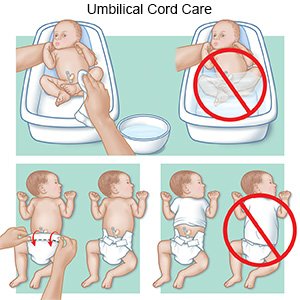
- Ask a healthcare provider if you should sponge bathe or tub bathe your baby while his or her umbilical cord is still attached.
- Wash the umbilical cord stump if it gets dirty with urine or bowel movement. Clean it with a cotton ball or cotton pad that is wet with warm water.
- Gently pat the stump dry with a clean, soft towel. Do not pull on the umbilical cord stump.
- Fold the front of the diaper below the stump so air can reach the stump and help it dry out faster. Choose clean, loose-fitting clothes for your baby to wear. Ask his or her provider for more information about cord care.
 |
How do I bathe my baby after his circumcision?
You can wash your baby's penis 3 to 4 days after the circumcision. Drip warm water gently over his penis to clean it. Put petroleum jelly inside his diaper so the diaper will not stick to his penis while it heals. If a plastic circumcision device was used, do not use petroleum jelly. Ask your baby's provider for more information.
What are the risks of sponge bathing?
- Your baby may get cold quickly during a sponge bath. You can damage his or her skin if you scrub it or rub it dry. If you use soap and do not rinse it off completely, it can dry and irritate your baby's skin.
- Even with regular diaper changes, your baby may have dried urine or bowel movement in his or her skin folds. If your baby is not sponge bathed to remove the dried urine or bowel movement, he or she may get a rash. The rash can become infected if it is not treated properly.
Care Agreement
You have the right to help plan your baby's care. Learn about your baby's health condition and how it may be treated. Discuss treatment options with your baby's healthcare providers to decide what care you want for your baby. The above information is an educational aid only. It is not intended as medical advice for individual conditions or treatments. Talk to your doctor, nurse or pharmacist before following any medical regimen to see if it is safe and effective for you.© Copyright Merative 2025 Information is for End User's use only and may not be sold, redistributed or otherwise used for commercial purposes.
Further information
Always consult your healthcare provider to ensure the information displayed on this page applies to your personal circumstances.