
Rib Fracture
Medically reviewed by Drugs.com. Last updated on Jun 30, 2025.
What is a rib fracture?
A rib fracture is a crack or break in a rib.
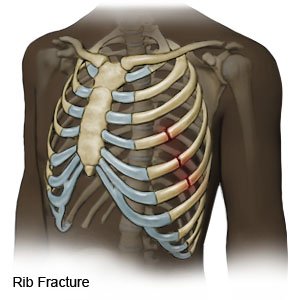 |
What else do I need to know about rib fractures?
- The most common cause is blunt trauma from a fall or car accident. Trauma can increase your risk for organ damage when your rib is fractured.
- Older age, osteoporosis, or a tumor can increase your risk for rib fractures.
- A stress fracture can happen in your upper or middle ribs. Stress fractures can happen when you have a forceful long-term cough. They can also be caused by forceful athletic movements, such as in golf, throwing, or rowing.
- A condition called flail chest occurs if 3 or more of your ribs are broken in 2 or more places. This condition may make it hard for you to breathe.
What are the signs and symptoms of a rib fracture?
- Chest wall pain that worsens when you breathe, move, or cough
- Bruising or swelling near your injury
- Shortness of breath or difficulty taking a deep breath
How is a rib fracture diagnosed?
Your healthcare provider will ask about your injury and examine you. He or she will look for any signs of bleeding or bruising. He or she will also ask about your breathing and pain. An x-ray or CT scan may show the fracture or other injuries. You may be given contrast liquid to help the fracture show up better in the pictures. Tell the healthcare provider if you have ever had an allergic reaction to contrast liquid.
How is a rib fracture treated?
- Medicines:
- NSAIDs , such as ibuprofen, help decrease swelling, pain, and fever. This medicine is available with or without a doctor's order. NSAIDs can cause stomach bleeding or kidney problems in certain people. If you take blood thinner medicine, always ask your healthcare provider if NSAIDs are safe for you. Always read the medicine label and follow directions.
- Prescription pain medicine may be given. Ask your healthcare provider how to take this medicine safely. Some prescription pain medicines contain acetaminophen. Do not take other medicines that contain acetaminophen without talking to your healthcare provider. Too much acetaminophen may cause liver damage. Prescription pain medicine may cause constipation. Ask your healthcare provider how to prevent or treat constipation.
- Intercostal nerve block may be given to numb the injured area for about 6 hours. It is given as a shot between 2 of your ribs in the fractured area. You may need this if your pain continues or is getting worse even after you take oral pain medicines.
- Surgery may be needed if your rib fracture is severe or several ribs are badly broken. Surgery is often needed for a flail chest.
How can I manage my symptoms?
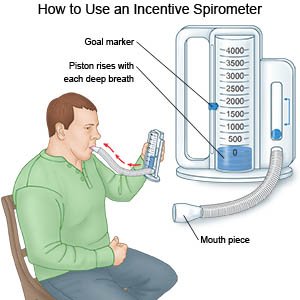
- Take deep breaths and cough 10 times each hour. This will decrease your risk for a lung infection. Hug a pillow on your injured side to decrease pain while you take deep breaths. Take a deep breath and hold it for as long as you can. Let the air out and then cough. Deep breaths help open your airway. You may be given an incentive spirometer to help you take deep breaths. Put the plastic piece in your mouth and take a slow, deep breath, then let the air out and cough. Repeat these steps 10 times every hour.
- Rest and limit activity as directed. Do not pull, push, or lift objects. Start to do more as your pain decreases. Ask your healthcare provider how much activity you can do.
- Apply ice on your chest near your fractured rib for 15 to 20 minutes every hour or as directed. Use an ice pack, or put crushed ice in a plastic bag. Cover it with a towel. Ice helps prevent tissue damage and decreases swelling and pain.
Call your local emergency number (911 in the US) if:
- You have trouble breathing.
- You have new or increased pain.
When should I seek immediate care?
- Your pain does not get better, even after treatment.
- You have a fever or a cough.
When should I call my doctor?
- You have questions or concerns about your condition or care.
Care Agreement
You have the right to help plan your care. Learn about your health condition and how it may be treated. Discuss treatment options with your healthcare providers to decide what care you want to receive. You always have the right to refuse treatment. The above information is an educational aid only. It is not intended as medical advice for individual conditions or treatments. Talk to your doctor, nurse or pharmacist before following any medical regimen to see if it is safe and effective for you.© Copyright Merative 2025 Information is for End User's use only and may not be sold, redistributed or otherwise used for commercial purposes.
Further information
Always consult your healthcare provider to ensure the information displayed on this page applies to your personal circumstances.