
Rh Factor Incompatibility
Medically reviewed by Drugs.com. Last updated on May 6, 2024.
What is Rh (rhesus) factor incompatibility?
Rh factor incompatibility is a condition that occurs when a mother is Rh negative (Rh-) and her baby is Rh positive (Rh+). Rh factor is a protein found on red blood cells. You are Rh+ if you have this protein and Rh- if you do not have it. Rh incompatibility usually has little effect on your first pregnancy, but can cause problems with future pregnancies.
What causes Rh factor incompatibility?
If you are Rh- and have an Rh+ baby, your body may make antibodies against the Rh protein. Antibodies are substances that protect the body from outside invaders. When you get pregnant again with an Rh+ baby, these antibodies will become active. An abnormal pregnancy, abortion, miscarriage, or abdominal injury can also make these antibodies active. These antibodies can cause serious problems in an unborn baby.
What are the signs and symptoms of Rh factor incompatibility?
No signs and symptoms will tell you if you have Rh factor incompatibility. Your baby may have the following signs and symptoms when he or she is born:
- Pale skin and mucous membranes (lining of the cheeks and gums)
- Limp and sleepy
- Jaundice (yellowing of the skin and eyes)
- Trouble breathing
- Swelling in his or her face, arms, and legs
How is Rh factor incompatibility diagnosed?
If you are Rh-, healthcare providers need to know if you have been pregnant before or if you have received a blood transfusion. The following tests may be done:
- Blood tests will show if you are Rh- or Rh+. The father's blood type and Rh factor may also be tested.
- Fetal blood sampling may be done to check your baby's blood type and risk for anemia. Healthcare providers take a sample of your baby's blood from the umbilical cord. With an ultrasound to guide them, a needle is put through your skin, into your uterus, and into the umbilical cord.
- Ultrasound pictures can help healthcare providers learn your baby's age and see how fast he or she is growing. The movement, heart rate, and other organs of your baby can be seen. Your placenta (tissue in the womb connecting the mother and baby) and amniotic fluid may be checked. A Doppler ultrasound may be used in place of an amniocentesis to see the blood flow in your baby's body. Healthcare providers may use this test to check if your baby has anemia.

How are Rh factor incompatibility problems treated?
You will not need treatment for Rh incompatibility problems, but your baby might. Rh incompatibility may be life-threatening to your baby. Treatment may include any of the following:
- Early delivery may be needed. Your healthcare provider will tell you more about inducing (starting) labor early.
- Phototherapy is done to help reduce jaundice. Your baby will be put into a light box to remove a buildup of a substance in the blood that causes jaundice.
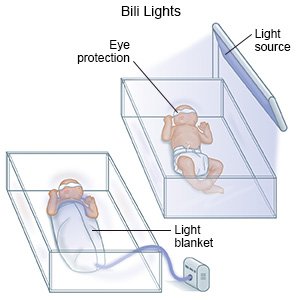
- Blood transfusions may be given through the umbilical cord and after birth to treat severe anemia.
- Immunoglobulin (RhIg) injections of antibodies help reduce the destruction of red blood cells.
Treatment options
The following list of medications are related to or used in the treatment of this condition.
How can Rh factor incompatibility be prevented?
- RhIg shots prevent your body from making Rh antibodies. RhIg shots are usually given in the 28th week of pregnancy and within 72 hours after you give birth. You may need another shot if you have not given birth within 12 weeks after the first shot. RhIg shots may also be given after an abortion, miscarriage, or abdominal trauma.
- RhIg shots are also given after any procedure that may cause your baby's blood to leak into your bloodstream. These procedures may include amniocentesis, fetal blood sampling, or a change in the baby's position in the womb before birth.
Where can I find support and more information?
- The American College of Obstetricians and Gynecologists
P.O. Box 70620
Washington , DC 20024-9998
Phone: 1- 202 - 638-5577
Phone: 1- 800 - 673-8444
Web Address: http://www.acog.org
When should I seek immediate care?
- You feel your baby is moving less or is not moving at all.
- You have trauma, especially to your abdomen, even if you do not feel like you were hurt.
- You have heavy vaginal bleeding.
When should I call my doctor or obstetrician?
- You have a fever.
- You have severe abdominal pain.
- You have questions or concerns about your condition or care.
Care Agreement
You have the right to help plan your care. Learn about your health condition and how it may be treated. Discuss treatment options with your healthcare providers to decide what care you want to receive. You always have the right to refuse treatment. The above information is an educational aid only. It is not intended as medical advice for individual conditions or treatments. Talk to your doctor, nurse or pharmacist before following any medical regimen to see if it is safe and effective for you.© Copyright Merative 2024 Information is for End User's use only and may not be sold, redistributed or otherwise used for commercial purposes.
Further information
Always consult your healthcare provider to ensure the information displayed on this page applies to your personal circumstances.
