
Renal Colic
Medically reviewed by Drugs.com. Last updated on Aug 4, 2025.
What is renal colic?
Renal colic is severe pain in your lower back or sides. The pain is usually on one side, but may be on both sides of your lower back. Renal colic may start quickly, come and go, and become worse over time.
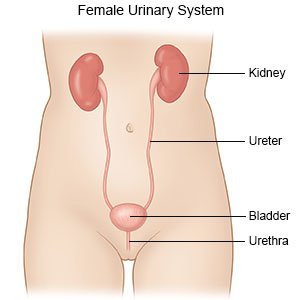 |
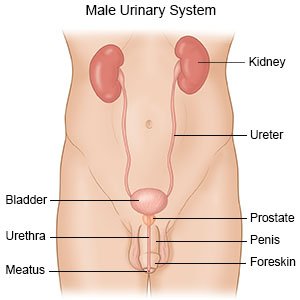 |
What causes renal colic?
Renal colic is caused by a blockage in your urinary tract. The urinary tract includes your kidneys, ureters, bladder, and urethra. Ureters carry urine from your kidneys to your bladder. The urethra carries urine to the outside when you urinate. The most common cause of a blockage in the urinary tract is a kidney stone. Blood clots, ureter spasms, and dead tissue may also block your urinary tract.
What other signs and symptoms may occur with renal colic?
- Severe low back, abdominal, or groin pain
- Pain when you urinate
- Nausea and vomiting
- Feeling the need to urinate often, or right away
- Urinating less than what is normal for you, or not at all
- Fever
How is renal colic diagnosed?
- Blood and urine tests may show infection or kidney function.
- An x-ray, ultrasound, CT, or MRI may show a kidney stone or other causes of your pain. You may be given contrast liquid to help your urinary tract show up better in the pictures. Tell the healthcare provider if you have ever had an allergic reaction to contrast liquid. Do not enter the MRI room with anything metal. Metal can cause serious injury. Tell the healthcare provider if you have any metal in or on your body.
How is renal colic treated?
- Medicines may help decrease pain and muscle spasms. You may also need medicine to calm your stomach and stop vomiting.
- Surgery may be needed to remove a blockage. Surgery may also be needed if your kidneys are not working properly.
How can I manage my symptoms?
- Drink liquids as directed. This will help decrease pain and flush blockages from your urinary tract. Ask how much liquid to drink each day and which liquids are best for you. You may need to drink about 3 liters (12 glasses) of liquids each day. Half of your total daily liquids should be water. Limit coffee, tea, and soda to 2 cups daily. Your urine should be pale and clear.
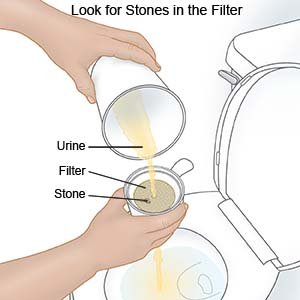
- Strain your urine every time you urinate. Urinate into a strainer (funnel with a fine mesh on the bottom) or glass jar to collect kidney stones. Give the kidney stones to your healthcare provider at your next visit.
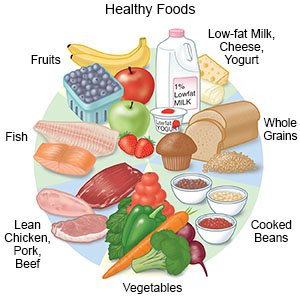
- Eat a variety of healthy foods. Healthy foods include fruits, vegetables, whole-grain breads, low-fat dairy products, beans, lean meats, and fish. You may need to increase the amount of citrus fruit you eat, such as oranges. Ask your healthcare provider how much salt, calcium, and protein you should eat.
- Avoid activity in hot temperatures. Heat may cause you to become dehydrated and urinate less.
When should I seek immediate care?
- You cannot stop vomiting.
- You see new or increased bleeding when you urinate.
- You are urinating less than usual, or not at all.
- Your pain is not getting better even after treatment.
When should I call my doctor?
- You have fever.
- You need to urinate more often than usual, or right away.
- You see a stone in your urine strainer after you urinate.
- You have questions or concerns about your condition or care.
Care Agreement
You have the right to help plan your care. Learn about your health condition and how it may be treated. Discuss treatment options with your healthcare providers to decide what care you want to receive. You always have the right to refuse treatment. The above information is an educational aid only. It is not intended as medical advice for individual conditions or treatments. Talk to your doctor, nurse or pharmacist before following any medical regimen to see if it is safe and effective for you.© Copyright Merative 2025 Information is for End User's use only and may not be sold, redistributed or otherwise used for commercial purposes.
Learn more about Renal Colic
Treatment options
Care guides
Further information
Always consult your healthcare provider to ensure the information displayed on this page applies to your personal circumstances.