Premature Rupture Of Membranes
WHAT YOU SHOULD KNOW:
Premature Rupture Of Membranes (Inpatient Care) Care Guide
- Premature Rupture Of Membranes
- Premature Rupture Of Membranes Aftercare Instructions
- Premature Rupture Of Membranes Discharge Care
- Premature Rupture Of Membranes Inpatient Care
- En Espanol
- Premature rupture of membranes (PROM) is a condition in which fluid leaks from your amniotic sac before labor begins. You may feel a trickle or gush of warm fluid from your vagina. Labor is when you begin having contractions (uterus tightens and relaxes) in order to deliver (push out) your baby. Your amniotic sac is located in your uterus (womb) and holds your unborn baby. There is fluid in the amniotic sac that cushions your baby and allows him to move around. The fluid also takes away his body waste and helps to protect him from infection. Usually the membranes (amniotic sac tissue) rupture and cause the fluid to leak out after labor has started. Ask your caregiver for more information about labor.
- PROM can happen very close to your due date, or it can happen earlier in your pregnancy. With PROM, you are likely to deliver your baby soon, often within a few hours or days. When PROM happens before 37 weeks, it is called preterm PROM (PPROM). PROM and PPROM can cause serious health problems for you, such as infection. It can also cause problems for your unborn baby, such as difficulty breathing. PROM that happens close to your due date may not cause any problems. Certain conditions, such as an infection or problems with your pregnancy, may make you more likely to have PROM. Caregivers may want to deliver your baby right away or they may want to delay the birth if your baby is not ready to be born. Treatment may help prevent problems for you and your baby and help you have a safe delivery.
CARE AGREEMENT:
You have the right to help plan your care. Learn about your health condition and how it may be treated. Discuss treatment options with your caregivers to decide what care you want to receive. You always have the right to refuse treatment.
RISKS:
- With PROM, you may get an infection in your womb. The infection may spread to your baby or to the rest of your body and cause serious health problems. The decreased amount of amniotic fluid may cause your unborn baby to press on his umbilical cord. This can cut off his blood supply and cause serious health problems. The placenta may separate from the walls of your uterus, causing bleeding. This blood loss may be life-threatening for you and your unborn baby. Part of your placenta may stay attached to your uterine wall. You may need a dilation and curettage (D and C) to remove parts of the placenta that do not come out.
- You may have an allergic reaction to medicines used to treat you. If you are on bed rest, you have a greater chance of getting a blood clot. You may get a blood clot in your leg or arm. This can cause pain and swelling, and it can stop blood from flowing where it needs to go in your body. The blood clot may break loose and travel to your lungs or brain. A blood clot in your lungs can cause chest pain and trouble breathing. A blood clot in your brain can cause a stroke. These problems can be life-threatening.
- Your baby may be born premature (before 37 weeks) and have health problems. If your baby is born before his lungs are formed, he may have trouble breathing. He may also have other problems with his lungs, such as pneumonia (lung infection). His intestines (gut) may not work normally. He may get an infection, have bleeding in his brain, or he may die. Your baby may not be in a head-down position, which can make it harder to deliver him. Caregivers may need to do a Cesarean section (C-section) to deliver your baby. Talk to your caregiver about questions or concerns that you have about your condition, care, or treatment.
WHILE YOU ARE HERE:
Informed consent:
A consent form is a legal document that explains the tests, treatments, or procedures that you may need. Informed consent means you understand what will be done and can make decisions about what you want. You give your permission when you sign the consent form. You can have someone sign this form for you if you are not able to sign it. You have the right to understand your medical care in words you know. Before you sign the consent form, understand the risks and benefits of what will be done. Make sure all your questions are answered.
IV:
An IV (intravenous) is a small tube placed in your vein that is used to give you medicine or liquids.
Pressure stockings:
These are long, tight stockings that put pressure on your legs to promote blood flow and prevent clots. You may need to wear pressure stockings before or after surgery or if you have poor circulation (blood flow).
Medicines:
The medicines you will need depend on your unborn baby's health condition and your condition. The medicines you need also depend on how far along you are in your pregnancy. You may need any of the following:
- Antibiotics: This medicine is given to help treat or prevent an infection caused by bacteria.
- Blood thinners: If you are on bed rest, you may need to take blood thinning medicine. This medicine helps to stop clots from forming in the blood. Clots can cause strokes, heart attacks, and death. Blood thinners may make it easier to bleed or bruise. While taking this medicine, use a soft toothbrush to prevent bleeding gums. If you shave, use an electric shaver.
- Oxytocin: This medicine may be used to start your labor by starting contractions. It can also help your contractions stay strong and regular so that your baby is born safely. It may be used at any time after your membranes have ruptured.
- Steroids: This medicine may help your unborn baby's lungs develop faster before he is born.
- Tocolytics: Tocolytics are medicines that stop contractions. You may need this medicine if your baby is not ready to be born and you are having contractions.
Tests:
Your caregiver will ask you about your medical history and your current symptoms. He may want to check you by gently feeling your stomach. Other tests may include the following:
- Amniocentesis: Caregivers may do an amniocentesis to check if you have an infection in your womb.
- Blood tests: You may need blood taken to give caregivers information about how your body is working. The blood may be taken from your hand, arm, or IV.
- Vaginal fluid swab: Caregivers use a swab to take a fluid sample from your vagina. A certain type of fluid begins to leak from your uterus (womb) as your body gets ready to deliver. Caregivers check the sample to find out if you are getting closer to delivering your baby.
- Cultures: Cultures may be done to check for urine or vaginal infections such as a urinary tract infection or chlamydia. If you have an infection, the cultures can show what germs are causing the infection. This will help caregivers decide what type of medicine you need.
- Fetal biophysical profile: A fetal biophysical profile is a test that combines the nonstress test and a special ultrasound of your unborn baby. The nonstress test measures changes in your baby's heartbeat during movement. The ultrasound will show your baby's movement, how his muscles are working, and the amount of fluid around him. It will also show if your baby's breathing muscles are working.
- Fetal monitoring: Caregivers may monitor your baby's heartbeat and the contractions of your uterus. Monitoring allows your caregiver to check your baby's heart rate. He can also tell if there may be a problem such as your baby pressing on the umbilical cord. Monitoring also allows your caregiver to see if you are having contractions that you do not feel.
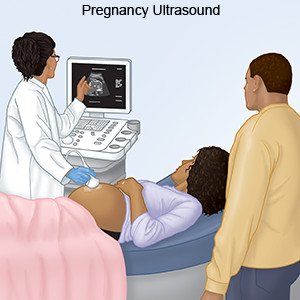
- Fetal ultrasound: This test uses sound waves to show pictures of your unborn baby inside your uterus. Jelly-like lotion is put on your abdomen, and a small handle is gently moved through the lotion. As this is done, pictures of your baby can be seen on a TV-like screen. Caregivers can check the growth and age of your baby. The movement, heart rate, and position of your baby can also be seen. Caregivers can see how much fluid is in your womb and check your placenta.
- Lung maturity test: Caregivers may check the development of your baby's lungs to see if he is ready to be born. Caregivers may do this by testing a small amount of the leaking amniotic fluid from your vagina. They can also test amniotic fluid from your womb by doing an amniocentesis.
- Nonstress test (NST): This test is a simple way for your caregiver to check how your baby is doing. It uses a fetal heart monitor to watch your baby's heart rate. A baby's heart rate usually increases when he moves around or when your uterus has a contraction. A contraction is when the muscles of your uterus tighten and loosen. You may sit in a reclining chair or with the head of your bed raised during this test. Your caregiver may ask you to stand up or move around during the test. You may need this test more than once.
- Vaginal exam: During a vaginal exam, feel free to ask for a woman to be present if one is not. Your caregiver will put a warmed speculum into your vagina. A speculum is a tool that opens your vagina so your caregiver can see your cervix (bottom part of your uterus). He can also see if your cervix is dilating (starting to open). He may also check your cervix with a gloved finger if he thinks you are in labor.
Treatment options:
Treatment depends on your unborn baby's age, his health, and how strong his lungs are. Your treatment may change after tests have been done. Caregivers will talk with you about the best treatment for you and your baby. Your caregiver may send you to a special hospital so that you can get the treatment you need. Treatment may include any of the following:
- Expectant management: Caregivers may wait to see if you start to have contractions and if labor begins. They will watch you and your unborn baby carefully during this time. Caregivers may do tests to monitor you and your baby to see how you are both doing. You may be on bed rest during this time, but you will be able to get up to use the bathroom. If you need to get out of bed, ask your caregiver first.
- Delivery:
- Vaginal delivery: You may begin to have contractions shortly after your membranes have broken, or contractions may start later. Caregivers may wait to see how you and your baby are doing and allow labor to continue naturally. They may give you medicine to slow down contractions, or they may need to induce (start) labor. Ask your caregiver for more information about induction of labor.
- Cesarean section: Caregivers may need to do a Cesarean section (C-section) to deliver your baby. A C-section is surgery to safely remove your baby through an incision (cut) in your abdomen. A C-section may be done if your labor is not progressing or if your baby has problems, such as decreased heartbeats. Ask your caregiver for more information about a C-section.
- Vaginal delivery: You may begin to have contractions shortly after your membranes have broken, or contractions may start later. Caregivers may wait to see how you and your baby are doing and allow labor to continue naturally. They may give you medicine to slow down contractions, or they may need to induce (start) labor. Ask your caregiver for more information about induction of labor.
Copyright © 2012. Thomson Reuters. All rights reserved. Information is for End User's use only and may not be sold, redistributed or otherwise used for commercial purposes.
The above information is an educational aid only. It is not intended as medical advice for individual conditions or treatments. Talk to your doctor, nurse or pharmacist before following any medical regimen to see if it is safe and effective for you.
Learn more about Premature Rupture Of Membranes (Inpatient Care)
Micromedex Care Notes: