Percutaneous Nephrolithotomy
WHAT YOU SHOULD KNOW:
Percutaneous Nephrolithotomy (Inpatient Care) Care Guide
- Percutaneous Nephrolithotomy Discharge Care
- Percutaneous Nephrolithotomy Inpatient Care
- Percutaneous Nephrolithotomy Precare
- En Espanol
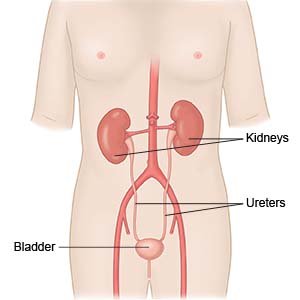
Percutaneous (per-ku-TAY-nee-us) nephrolithotomy (nef-roh-li-THOT-oh-me) or "PNL" is surgery to remove kidney stones. Kidney stones are also called renal calculi. Kidney stones are rock-like pieces that can form anywhere in the urinary system. This includes the kidneys, bladder, ureters and urethra (urine tubes). They form most often in the kidneys which are located one on each side in the back of your abdomen. Kidneys clean waste from the blood and make urine. PNL surgery may be done if you have a large stone in your kidney or upper part of the ureter. It may also be done if you have pain, and your stone cannot be treated with a procedure called lithotripsy.
![]() |
CARE AGREEMENT:
You have the right to help plan your care. Learn about your health condition and how it may be treated. Discuss treatment options with your caregivers to decide what care you want to receive. You always have the right to refuse treatment.
RISKS:
- There are always risks with surgery. You may get an infection, or you may bleed more than usual. If you bleed too much, you may need to have a blood transfusion. You could have trouble breathing. Organs such as the liver, lungs, and spleen could be damaged during surgery. Scars may grow where the stone was located. Caregivers may not be able to remove your kidney stone or may need to do more surgery.
- You may get a blood clot in your leg or arm. This can cause pain and swelling, and it can stop blood from flowing where it needs to go in your body. The blood clot can break loose and travel to your lungs or brain. A blood clot in your lungs can cause chest pain and trouble breathing. A blood clot in your brain can cause a stroke. These problems can be life-threatening.
- Kidney stones can stop urine from moving out of your kidney. This can cause kidney damage, kidney failure, and even death. Call your caregiver if you are worried or have questions about your PNL, medicine, or care.
WHILE YOU ARE HERE:
Before Your Surgery:
- Informed consent is a legal document that explains the tests, treatments, or procedures that you may need. Informed consent means you understand what will be done and can make decisions about what you want. You give your permission when you sign the consent form. You can have someone sign this form for you if you are not able to sign it. You have the right to understand your medical care in words you know. Before you sign the consent form, understand the risks and benefits of what will be done. Make sure all your questions are answered.
- Heart monitor: This is also called an ECG or EKG. Sticky pads placed on your skin record your heart's electrical activity.
- An IV (intravenous) is a small tube placed in your vein that is used to give you medicine or liquids.
- KUB x-ray: You may need a KUB x-ray before surgery. An x-ray machine is used to take pictures of your kidneys, ureters, and bladder. Your caregivers look at these pictures to see where the kidney stone is located before surgery.
- Pulse oximeter: A pulse oximeter is a device that measures the amount of oxygen in your blood. A cord with a clip or sticky strip is placed on your finger, ear, or toe. The other end of the cord is hooked to a machine. Never turn the pulse oximeter or alarm off. An alarm will sound if your oxygen level is low or cannot be read.
- Vital signs: Caregivers will check your blood pressure, heart rate, breathing rate, and temperature. They will also ask about your pain. These vital signs give caregivers information about your current health.
- Pre-Op care: You may be given medicine right before surgery. This medicine may make you feel sleepy and more relaxed. You will be taken on a cart to the room where your surgery will be done. Your caregiver will help you get comfortable on the bed. A belt may be put over your legs for safety. If you get cold, ask for more blankets.
- Anesthesia: This medicine is given to make you comfortable. You may not feel discomfort, pressure, or pain. An adult will need to drive you home and should stay with you for 24 hours. Ask your caregiver if you can drive or use machinery within 24 hours. Also ask if and when you can drink alcohol or use over-the-counter medicine. You may not want to make important decisions until 24 hours have passed.
- General anesthesia: Caregivers use this medicine to keep you asleep and free from pain during surgery. They give you anesthesia through your IV or as a gas. You may breathe in the gas through a mask or through a breathing tube placed down your throat. The tube may cause you to have a sore throat when you wake up.
- Regional anesthesia: Medicine is injected to numb the body area where the surgery or procedure will be done. You will remain awake during the surgery or procedure.
- General anesthesia: Caregivers use this medicine to keep you asleep and free from pain during surgery. They give you anesthesia through your IV or as a gas. You may breathe in the gas through a mask or through a breathing tube placed down your throat. The tube may cause you to have a sore throat when you wake up.
During Surgery:
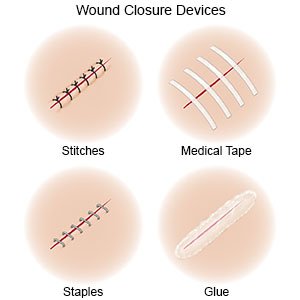
Caregivers may turn you on your side. Your skin is cleaned with soap and water. Sheets are put over you to keep the surgery area clean. A tiny incision (cut) is made in your back. A nephroscope is put through the incision and into your kidney near the stone. This scope is a long tube with a magnifying glass and a light on the end. Caregivers may use x-rays or ultrasound to help them guide the scope close to the kidney stone. The nephroscope and other tools are used to gently remove the stone. A machine such as a lithotriptor or ultrasound may be used to break the stones into smaller pieces. The stone is sent to the lab for tests. The incision is closed with stitches (thread) or steri-strips. You may have to stay in the hospital two to five days after surgery.
After Surgery:
You will be taken to the recovery room. You will stay there until you wake up, and then you will be taken back to your room. Do not get out of bed until your caregiver says it is OK. A bandage will cover your incision. This bandage keeps the area clean and dry to help prevent infection. It is normal for urine to leak out of the incision for a few days after surgery. A caregiver may remove the dressing soon after surgery to check the incision.
- Activity: You may need to walk around the same day of surgery, or the day after. Movement will help prevent blood clots. You may also be given exercises to do in bed. Do not get out of bed on your own until your caregiver says you can. Talk to caregivers before you get up the first time. They may need to help you stand up safely. When you are able to get up on your own, sit or lie down right away if you feel weak or dizzy. Then press the call light button to let caregivers know you need help.
- Prevent constipation: High-fiber foods, extra liquids, and regular exercise can help you prevent constipation. Examples of high-fiber foods are fruit and bran. Prune juice and water are good liquids to drink. Regular exercise helps your digestive system work. You may also be told to take over-the-counter fiber and stool softener medicines. Take these items as directed.
- Deep breathing and coughing: This will help decrease your risk for a lung infection after surgery.
- Hold a pillow tightly against your incision when you cough to help decrease pain. Take a deep breath and hold it for as long as you can. Deep breaths help open your airways. Let the air out and follow with a strong cough. Spit out any mucus you cough up. Repeat the steps 10 times every hour.
- You may be given an incentive spirometer to help you take deep breaths. Put the plastic piece into your mouth and take a slow, deep breath. Let out your breath and cough. Repeat the steps 10 times every hour.
- Hold a pillow tightly against your incision when you cough to help decrease pain. Take a deep breath and hold it for as long as you can. Deep breaths help open your airways. Let the air out and follow with a strong cough. Spit out any mucus you cough up. Repeat the steps 10 times every hour.
- Food and drink after surgery: You will be able to drink liquids and eat certain foods once your stomach function returns after surgery. You may be given ice chips at first. Then you will get liquids such as water, broth, juice, and clear soft drinks. If your stomach does not become upset, you may then be given soft foods, such as ice cream and applesauce. Once you can eat soft foods easily, you may slowly begin to eat solid foods.
- Drinking liquids: Follow your caregiver's advice on how much liquid you should drink. For most people, good liquids to drink are water, juices, and milk. Limit the amount of caffeine you drink. Caffeine may be found in coffee, tea, soda, and sports foods and drinks. It is very important to drink fluids after kidney stone surgery. This helps clean out any remaining small pieces of stone. Drink liquids in the evening to be sure that you will make urine through the night.
- Intake and output: Your caregivers may need to know the amount of liquid you are getting. They may also need to know how much you are urinating. Caregivers often call this "I&O".
- Ask your caregiver how much liquid you should be drinking. Write down how much you are drinking, and tell your caregiver.
- Caregivers may need to strain your urine to check for stones. Do not flush your urine down the toilet unless caregivers say it is OK.
- Ask your caregiver how much liquid you should be drinking. Write down how much you are drinking, and tell your caregiver.
- Medicines:
- Antibiotics: This medicine is given to help treat or prevent an infection caused by bacteria.
- Antinausea medicine: This medicine may be given to calm your stomach and to help prevent vomiting.
- Pain medicine: Caregivers may give you medicine to take away or decrease your pain.
- Do not wait until the pain is severe to ask for your medicine. Tell caregivers if your pain does not decrease. The medicine may not work as well at controlling your pain if you wait too long to take it.
- Pain medicine can make you dizzy or sleepy. Prevent falls by calling a caregiver when you want to get out of bed or if you need help.
- Do not wait until the pain is severe to ask for your medicine. Tell caregivers if your pain does not decrease. The medicine may not work as well at controlling your pain if you wait too long to take it.
- Stool softeners: This medicine makes it easier for you to have a bowel movement. You may need this medicine to treat or prevent constipation.
- Antibiotics: This medicine is given to help treat or prevent an infection caused by bacteria.
- Pressure stockings: These are long, tight stockings that put pressure on your legs to promote blood flow and prevent clots. You may need to wear pressure stockings before or after surgery or if you have poor circulation (blood flow).
- Ureteral stent: You may have a ureteral stent. This is a small bendable tube that is placed inside your ureter. The ureters are the tubes that take urine from your kidneys to your bladder. Your stent may come outside of your body and be connected to a urine collection bag. The stent helps urine and pieces of kidney stone to pass from the kidney to the bladder.
© 2013 Truven Health Analytics Inc. Information is for End User's use only and may not be sold, redistributed or otherwise used for commercial purposes. All illustrations and images included in CareNotes® are the copyrighted property of the Blausen Databases or Truven Health Analytics.
The above information is an educational aid only. It is not intended as medical advice for individual conditions or treatments. Talk to your doctor, nurse or pharmacist before following any medical regimen to see if it is safe and effective for you.