
Insulin Pens
Medically reviewed by Drugs.com. Last updated on Sep 23, 2025.
What is an insulin pen?
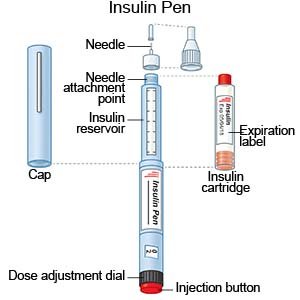
An insulin pen is a device used to inject insulin.
 |
What are the types of insulin pens?
- Most insulin pens are disposable. A disposable pen contains a prefilled amount of insulin. When this type of pen is empty, it is thrown away.
- A few insulin pens are reusable. A reusable pen contains an insulin cartridge that can be replaced. When the cartridge is empty, it is thrown away. Then a new, prefilled cartridge is put in. Always use a new needle every time you inject insulin.
How do I get the insulin ready to use?
- Check the label and color of the insulin. Check that you have the correct type and strength of insulin. Also check the expiration date on the label. Use a new cartridge or pen if the expiration date has passed. Use a new cartridge or pen if the insulin does not look right. Follow the pen manufacturer's instructions for inserting a new cartridge into a reusable pen.
- Mix cloudy insulin. Sometimes cloudy insulin separates. The insulin will remain cloudy after mixing, but it will all be cloudy. Gently roll the pen back and forth between the palms of your hands. Repeat this 10 times. Do not shake the pen. This can make the insulin clump together. Next, gently tip the pen up and down 10 times. Do not use the insulin if you see clumps in it after you mix it.
How do I get the pen ready to use?
No matter the type of pen you use, the steps for using it are the same:
- Remove a new pen from the refrigerator 30 minutes before you use it. Insulin should be injected at room temperature.
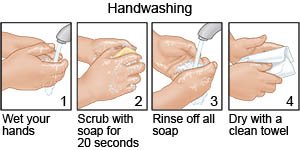
- Wash your hands. Use soap and water or an alcohol-based hand rub. This will help decrease your risk for an infection.
- Remove the cap from the pen. Wipe the needle attachment area with an alcohol swab.
- Attach a new needle to the pen. Remove the tab from the needle. Do not remove the outer cap on the needle. Push the needle straight onto the pen. Turn the needle clockwise until you cannot turn it more. Make sure the needle is straight.
- Remove the needle caps. Remove the outer cap and save it. Remove the inner cap and throw it away.
- Remove air from the pen. Air may cause pain during injection. Turn the dial to 2 units. For most insulin pens, you will hear a click for each unit of insulin that you dial. Hold the pen and point the needle up. Gently tap the pen to move air bubbles to the top of the pen. Press the injection button. You should see a drop of insulin on the tip of the pen. If you do not see a drop, change the needle and repeat this step. If you do not see a drop after you repeat this step 3 times, use a new pen.
- Select the correct dose on the pen. Turn the dial to the number of units you need to inject. The pointer on the side of your pen should line up with your dose. The dial can be turned in either direction to choose the correct dose. You cannot choose a dose larger than the number of units left in the pen. Use another pen if there is not enough insulin. Instead you can inject part of your dose with the insulin that is left. Next, you can use a new pen to inject the rest of your dose.
Where do I inject insulin?
- You can inject insulin into your abdomen, upper arm, buttocks, hip, or the front or side of the thigh. Insulin works fastest when it is injected into the abdomen. Do not inject insulin within 2 inches of your belly button or into any stretch marks.
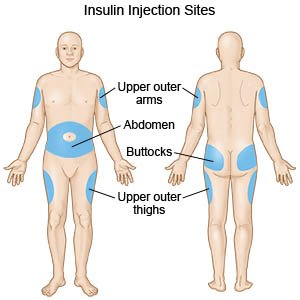
- Do not inject insulin into areas where you have a wound or a bruise. Insulin injected into wounds or bruises may not get into your body correctly. Do not inject insulin through your clothes. Injecting through clothes can contaminate the needle and may cause an infection.
- Use a different area within the site each time you inject insulin. For example, inject insulin into different areas in your abdomen. Insulin injected into the same area can cause lumps, swelling, or thickened skin.
How do I inject insulin with a pen?
- Clean the skin where you will inject the insulin. You can use an alcohol pad or a cotton swab dipped in alcohol. Let the area dry before you inject. This will decrease pain.
- Grab a fold of your skin. Gently pinch the skin and fat between your thumb and first finger.
- Insert the needle straight into your skin. Do not hold the syringe at an angle. Make sure the needle is all the way into the skin. Let go of the pinched tissue.
- Push the injection button to inject the insulin. Continue to press on the injection button. Keep the needle in place for 10 seconds.
- Pull the needle out. Replace the needle cap. Press on your injection site for 5 to 10 seconds. Do not rub. This will keep insulin from leaking out.
- Remove the needle from the pen. Twist the capped needle counter clockwise. Place the needle in a heavy-duty laundry detergent bottle or a metal coffee can. The container should have a cap or lid that fits securely.
- Replace the pen cap. Store the pen as directed.
What should I do with my used needles?
Ask your local waste authority if you need to follow certain rules for getting rid of your needles. Bring your used needles home with you when you travel. Pack them in a plastic or metal container with a secure lid.
How do I store an insulin pen?
Follow the storage directions that came with the insulin. The following are general directions:
- Unopened pens can be stored in the refrigerator until you are ready to use them.
- Most insulin pens can be opened and kept at room temperature. Store your pen in a cool, dry place. Throw away pens that have been frozen or exposed to temperatures above 85°F (30°C). If you travel, keep the pen in a cool pack.
- Do not keep your pen in direct sunlight or in your car.
- Do not store your pen with a needle attached.
When should I call my doctor or diabetes care team provider?
- You feel or see hard lumps in your skin where you inject your insulin.
- You think you gave yourself too much or not enough insulin.
- Your injections are very painful.
- You see blood or clear fluid on your injection site more than once after you inject insulin.
- You have questions about how to give the injection.
- You cannot afford to buy your diabetes supplies.
- You have questions or concerns about your condition or care.
Care Agreement
You have the right to help plan your care. Learn about your health condition and how it may be treated. Discuss treatment options with your healthcare providers to decide what care you want to receive. You always have the right to refuse treatment. The above information is an educational aid only. It is not intended as medical advice for individual conditions or treatments. Talk to your doctor, nurse or pharmacist before following any medical regimen to see if it is safe and effective for you.© Copyright Merative 2025 Information is for End User's use only and may not be sold, redistributed or otherwise used for commercial purposes.
Further information
Always consult your healthcare provider to ensure the information displayed on this page applies to your personal circumstances.