Open Live Donor Nephrectomy
What you should know
Open Live Donor Nephrectomy (Precare) Care Guide
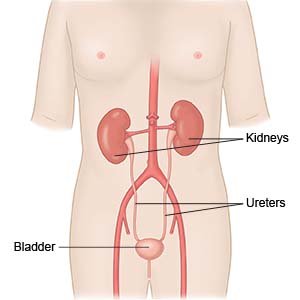
- Open live donor nephrectomy (ne-FREK-to-me) is surgery to remove a kidney. The kidney is then placed in another person who has kidney disease or damage. A person who donates (gives) a kidney is called a donor. The person who receives the kidney is called a recipient. The kidneys are two bean-shaped organs found under the ribs on each side of the upper abdomen. The kidneys remove wastes and other unwanted chemicals from the body. These wastes are flushed out of the body in urine. When kidneys are badly damaged, these wastes build up in a person's body. The waste build-up causes symptoms such as dizziness, headaches, seizures, confusion, fainting, and may even lead to death.

- To be a kidney donor, you must be in good health, and between 18 and 70 years old. To be a donor, you must know and understand what can happen to you. You must also have thought carefully about giving your kidney to someone else. Your kidney can replace the damaged kidney, and help the recipients body to get rid of wastes as it should. Being a kidney donor may help the person who is the kidney recipient live longer.
Care Agreement
You have the right to help plan your care. Learn about your health condition and how it may be treated. Discuss treatment options with your caregivers to decide what care you want to receive. You always have the right to refuse treatment.
Risks
Risks with surgery include infection, bleeding, and trouble breathing. Nerves, blood vessels, muscles, intestines, and other organs may be damaged. Your ureter (tube for urine) may be damaged and cause urine to leak out into your body. You may get a blood clot in your leg or arm. This can cause pain and swelling, and it can stop blood from flowing where it needs to go in your body. The blood clot can break loose and travel to your lungs or brain. A blood clot in your lungs can cause chest pain and trouble breathing. A blood clot in your brain can cause a stroke. These problems can be life-threatening. Call your caregiver if you are worried or have questions about your condition, treatment, or care.
Getting Ready
The week before your surgery:
- Informed consent: Giving a kidney is a serious decision, and you must think about it very carefully. No one should force or pressure you to give your kidney. You must be giving it willingly. Your caregiver will tell you what will happen before, during, and after surgery in words that you know. You will be told what tests, treatments, or procedures may need to be done. Your caregiver will tell you the risks of having this surgery. He will also tell you how your kidney can help someone else. Before giving your consent, make sure all your questions have been answered and that you understand what may happen. If you have consented (agreed) to giving your kidney, you have the right to change your mind.
- After deciding to give your kidney, your caregiver will do tests to check your health. He will check for conditions such as cancer, diabetes, infections, or kidney disease. He will make sure that your kidney is working well and can be used by the person needing it. You may need to have x-rays, computerized tomography (CT) scans, magnetic resonance imaging (MRI), or a test called renal arteriography. Ask your caregiver for more information about these and other tests that you may need. Write down the date, time, and location of each test.
- Ask your caregiver if you need to stop using aspirin or any other prescribed or over-the-counter medicine before your procedure or surgery.
- Bring your medicine bottles or a list of your medicines when you see your caregiver. Tell your caregiver if you are allergic to any medicine. Tell your caregiver if you use any herbs, food supplements, or over-the-counter medicine.
- You may need a blood transfusion if you lose a large amount of blood during surgery. Some people are worried about getting AIDS, hepatitis, or the West Nile virus from a blood transfusion. The risk of this happening is very low. Blood banks test all donated blood for AIDS, hepatitis, and the West Nile virus. You may be able to donate your own blood before surgery. This is called autologous blood donation. This must be done no later than three days before surgery. You may also ask a family member or friend with the same blood type to donate blood for you. This is called directed blood donation.
- If you are a woman, tell your caregiver if you know or think you might be pregnant.
The night before your surgery:
- You may be given medicine to help you sleep.
- Ask caregivers about directions for eating and drinking.
- Bowel preparation: You will need to empty your bowel to get ready for this surgery. Your caregiver may ask you to do one or more of the following:
- You may need medicine called an enema. An enema uses warm water that is put into your rectum to help empty your bowel. Ask your caregiver how to do this, and follow the directions on the package.
- You may be given 8 to 12 (eight-ounce) cups of bowel preparation medicine to drink. Drink one eight-ounce cup of the medicine every 10 minutes until your urine is clear. Ask your caregiver for more information about this medicine.
- You may need medicine called an enema. An enema uses warm water that is put into your rectum to help empty your bowel. Ask your caregiver how to do this, and follow the directions on the package.
The day of your surgery:
- Write down the correct date, time, and location of your surgery.
- What to bring: You may want to bring items such as a toothbrush and bathrobe.
- Ask your caregiver before taking any medicine on the day of your surgery. These medicines include high blood pressure pills, or heart pills. Bring all the medicines you are taking, including the pill bottles, with you to the hospital.
- Bowel preparation:
- Do not eat or drink anything on the morning of your surgery. Your bowel needs to be empty during your surgery. If you need to take medicines, you may have them the morning of your surgery with few small sips of water.
- You may need a warm water enema on the morning of your surgery.
- You may be asked to drink 4 to 8 (eight-ounce) cups of bowel preparation medicine. This may need to be done if you drank the medicine the night before.
- Do not eat or drink anything on the morning of your surgery. Your bowel needs to be empty during your surgery. If you need to take medicines, you may have them the morning of your surgery with few small sips of water.
- If you wear contact lenses, do not wear them on the day of your procedure or surgery. Glasses may be worn.
- Caregivers may insert an intravenous tube (IV) into your vein. A vein in the arm is usually chosen. Through the IV tube, you may be given liquids and medicine.
- An anesthesiologist may talk to you before your surgery. This caregiver may give you medicine to make you sleepy before your procedure or surgery. Tell your caregiver if you or anyone in your family has had a problem using anesthesia in the past.
Treatment
What will happen:
You will be taken on a stretcher to the room where the surgery will be done. General anesthesia medicine will be given to keep you asleep during the surgery. You will be placed lying on your side. Your skin will be washed and covered with clean sheets. Your caregiver will make an incision (cut) on your side. A small piece of your lowest rib may be cut to help your caregiver see and reach your kidney. Your caregiver will tie, clamp, or cut blood vessels and tissues. He will remove your kidney and check around for other problems. The incisions will be closed with stitches and covered with a bandage.
After your surgery:
You may be taken to a recovery room until you are fully awake. Caregivers will watch you closely for any problems. Do not get out of bed until your caregiver says it is OK. When caregivers see that you are OK, you will be taken back to your hospital room. The bandages used to cover your stitches keep the area clean and dry to help prevent infection. A caregiver may remove the bandages to check your wound.
Waiting area:
This is an area where your family and friends can wait until you are able to have visitors. Ask your visitors to provide a way to reach them if they leave the waiting area.
Contact a caregiver if
- You cannot make it to your appointment on time.
- You have a fever.
Copyright © 2011. Thomson Reuters. All rights reserved. Information is for End User's use only and may not be sold, redistributed or otherwise used for commercial purposes.
The above information is an educational aid only. It is not intended as medical advice for individual conditions or treatments. Talk to your doctor, nurse or pharmacist before following any medical regimen to see if it is safe and effective for you.