Consumer Information
Carenotes > Open Cholecystectomy (Discharge Care)

Open Cholecystectomy

Advertisement

WHAT YOU SHOULD KNOW:

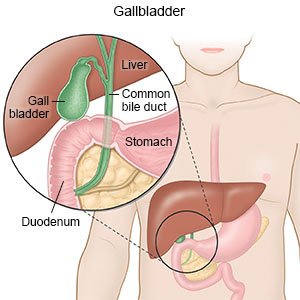
  • Open cholecystectomy (koe-le-sis-TEK-toe-mee) is surgery to treat gallbladder and bile duct diseases. These diseases include cholecystitis (swelling of the gallbladder) and cholelithiasis (stones in the gallbladder or bile ducts). The gallbladder is a pear-shaped organ found under your liver on the right side of your upper abdomen (stomach). It stores bile that comes from the liver and helps in the digestion of food. Bile is carried by the bile duct to the intestines. If left untreated, gallstones or biliary sludge may block the flow of bile. This can cause more swelling, infection, and abdominal pain.
    Gallbladder, Liver and Pancreas


  • With open cholecystectomy, the gallbladder is removed through an incision (cut) in the abdomen. Sometimes, your caregiver will do open surgery after having problems during a laparoscopic cholecystectomy. Laparoscopic cholecystectomy is surgery that uses several small incisions and special instruments to remove your gallbladder. With open cholecystectomy, your symptoms may be relieved and further damage to other organs prevented.

AFTER YOU LEAVE:

Medicines:

  • Keep a list of your medicines: Keep a written list of the medicines you take, the amounts, and when and why you take them. Bring the list of your medicines or the pill bottles when you see your caregivers. Do not take any medicines, over-the-counter drugs, vitamins, herbs, or food supplements without first talking to caregivers.

  • Take your medicine as directed: Always take your medicine as directed by caregivers. Call your caregiver if you think your medicines are not helping or if you feel you are having side effects. Do not quit taking your medicines until you discuss it with your caregiver.

  • Antibiotics: This medicine is given to fight or prevent an infection caused by bacteria. Always take your antibiotics exactly as ordered by your caregiver. Keep taking this medicine until it is completely gone, even if you feel better. Stopping antibiotics without your caregiver's OK may make the medicine unable to kill all of the germs. Never "save" antibiotics or take leftover antibiotics that were given to you for another illness.

  • Pain medicine: You may be given medicine to take at home to take away or decrease pain. Your caregiver will tell you how much to take and how often to take it. Take the medicine exactly as directed by your caregiver. Do not wait until the pain is too bad before taking your medicine. The medicine may not work as well at controlling your pain if you wait too long to take it. Tell caregivers if the pain medicine does not help, or if your pain comes back too soon.

  • Stool softeners: You may be given stool softeners to soften your bowel movements, making them easier to pass.

Ask your caregiver when to return for a follow-up visit. Keep all appointments. Write down any questions you may have. This way you will remember to ask these questions during your next visit.

Ask your caregiver when you need to return to have your incision checked. You will also need to have stitches or drains removed.

Diet: Eat a variety of healthy foods from all the food groups every day. Include whole grain bread, cereal, rice and pasta. Eat a variety of fruits and vegetables, including dark green and orange vegetables and legumes (dry beans). Include dairy products such as low-fat milk, yogurt and cheese. Choose protein sources such as lean meat and poultry (chicken), fish, beans, eggs and nuts. Ask your caregiver how many servings of fats, oils, and sweets you may have each day, and if you need to be on a special diet.

Bathing: When you are allowed to bathe or shower, carefully wash your stitches or staples with soap and water. Afterwards, put on a clean, new bandage. Change your bandage any time it gets wet or dirty. If you cannot reach the bandage, ask someone else to help you change it. You may have steri-strips (thin strips of tape) on your incision. Keep them clean and dry. As they start to peel off, let them fall off by themselves. Do not pull them off.

Wellness hints:

  • Eating and drinking:

    • Eat a variety of healthy foods such as fruits, vegetables, whole-grain breads, low-fat dairy products, beans, lean meat and fish. Eating healthy foods may help you have more energy and heal faster. Ask your caregiver if you need to be on a special diet.

    • Men 19 years old and older should drink about 3.0 Liters of liquid each day (close to 13 eight-ounce cups). Women 19 years old and older should drink about 2.2 Liters of liquid each day (close to 9 eight-ounce cups). Follow your caregiver's advice if you must change the amount of liquid you drink. For most people, good liquids to drink are water, juices, and milk. If you are used to drinking liquids that contain caffeine, such as coffee, these can also be counted in your daily liquid amount. Try to drink enough liquid each day, and not just when you feel thirsty.

  • Start exercising: Talk to your caregiver before you start exercising. Together you can plan the best exercise program for you. It is best to start slowly and do more as you get stronger. Exercising can help make your heart stronger, lower your blood pressure, and keep you healthy.

  • Quit smoking: It is never too late to quit smoking. Smoking harms the heart, lungs, and the blood. You are more likely to have a heart attack, lung disease, and cancer if you smoke. You will help yourself and those around you by not smoking. Ask your caregiver for more information about how to stop smoking if you are having trouble quitting.

  • Avoid stress: Stress may slow healing and cause illness. Since it is hard to avoid stress, learn to control it. Learn new ways to relax, such as deep breathing. Talk to your caregiver about things that upset you.

CONTACT A CAREGIVER IF:

  • You have chills, a cough, a sore throat, or feel weak and achy.

  • You have nausea (upset stomach) or vomiting (throwing up).

  • You have trouble having a bowel movement or passing urine.

  • You cannot make it to your next appointment.

  • You have questions or concerns about your condition, treatment, or care.

SEEK CARE IMMEDIATELY IF:

  • You have a fever (increased body temperature).

  • You feel so full and cannot burp or vomit (throw up).

  • Your vomit is greenish in color, looks like coffee grounds, or has blood in it.

  • You have abdominal pain that does not go away or gets worse.

  • You have trouble breathing or chest pain all of a sudden.

  • Your bandage becomes soaked with blood.

  • Your incision is swollen, red, has pus coming from it, or if it starts to come apart.

Copyright © 2008 Thomson Healthcare Inc. All rights reserved. Information is for End User's use only and may not be sold, redistributed or otherwise used for commercial purposes.

The above information is an educational aid only. It is not intended as medical advice for individual conditions or treatments. Talk to your doctor, nurse or pharmacist before following any medical regimen to see if it is safe and effective for you.


MedNotes
Advertisement

(web2)