
Kidney Stones
Medically reviewed by Drugs.com. Last updated on Sep 1, 2024.
What is a kidney stone?
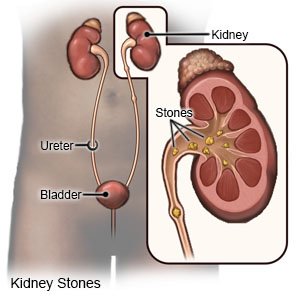
Kidney stones form in the urinary system when the water and waste in your urine are out of balance. When this happens, certain types of waste crystals separate from the urine. The crystals build up and form kidney stones. Kidney stones can be made of uric acid, calcium, phosphate, or oxalate crystals. You may have more than one kidney stone.
 |
What increases my risk for kidney stones?
- Not drinking enough liquids (especially water) each day
- Having urinary tract infections often
- Too much of certain foods, such as meat, salt, nuts, and chocolate
- Obesity
- Certain medicines, such as diuretics, steroids, and antacids
- A family history of kidney stones
- Being born with a kidney or bowel disorder
What are the signs and symptoms of kidney stones?
- Pain in the middle of your back that moves across to your side or that may spread to your groin
- Nausea and vomiting
- Urge to urinate often, burning feeling when you urinate, or pink or red urine
- Tenderness in your lower back, side, or stomach
How are kidney stones diagnosed?
Your healthcare provider will ask about your health and usual foods. He or she may refer you to a urologist. You may need tests to find out what type of kidney stones you have. Tests can show the size of your kidney stones and where they are in your urinary system. You may need more than one of the following:
- Urine tests may show if you have blood in your urine. They may also show high amounts of the substances that form kidney stones, such as uric acid.
- Blood tests show how well your kidneys are working. They may also be used to check the levels of calcium or uric acid in your blood.
- X-ray or ultrasound pictures may be taken of your kidneys, bladder, and ureters. You may be given contrast liquid before an x-ray to help these show up better in the pictures. You may need to have more than one x-ray. Tell the healthcare provider if you have ever had an allergic reaction to contrast liquid.
How are kidney stones treated?
- NSAIDs , such as ibuprofen, help decrease swelling, pain, and fever. This medicine is available with or without a doctor's order. NSAIDs can cause stomach bleeding or kidney problems in certain people. If you take blood thinner medicine, always ask your healthcare provider if NSAIDs are safe for you. Always read the medicine label and follow directions.
- Acetaminophen decreases pain and fever. It is available without a doctor's order. Ask how much to take and how often to take it. Follow directions. Read the labels of all other medicines you are using to see if they also contain acetaminophen, or ask your doctor or pharmacist. Acetaminophen can cause liver damage if not taken correctly.
- Prescription pain medicine may be given. Ask your healthcare provider how to take this medicine safely. Some prescription pain medicines contain acetaminophen. Do not take other medicines that contain acetaminophen without talking to your healthcare provider. Too much acetaminophen may cause liver damage. Prescription pain medicine may cause constipation. Ask your healthcare provider how to prevent or treat constipation.
- Medicines to balance your electrolytes may be needed.
- A procedure or surgery to remove the kidney stones may be needed if they do not pass on their own. Your treatment will depend on the size and location of your kidney stones.
Treatment options
The following list of medications are related to or used in the treatment of this condition.
What can I do to manage kidney stones?
- Drink more liquids. Your healthcare provider may tell you to drink at least 8 to 12 (eight-ounce) cups of liquids each day. This helps flush out the kidney stones when you urinate. Water is the best liquid to drink.
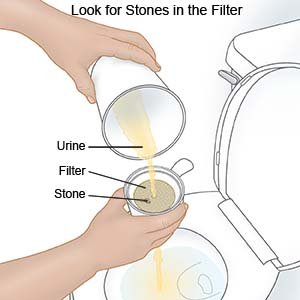
- Strain your urine every time you go to the bathroom. Urinate through a strainer or a piece of thin cloth to catch the stones. Take the stones to your healthcare provider so they can be sent to the lab for tests. This will help your healthcare providers plan the best treatment for you.
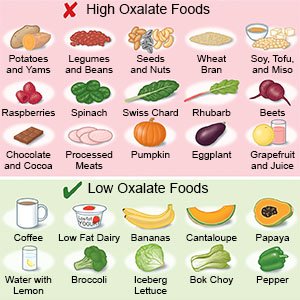
- Ask if you should avoid any foods. You may need to limit oxalate. Oxalate is a chemical found in some plant foods. The most common type of kidney stone is made up of crystals that contain calcium and oxalate. Your healthcare provider or dietitian may recommend that you limit oxalate if you get this type of kidney stone often. You may need to limit how much sodium (salt) or protein you eat. Ask for information about the best foods for you.
- Be physically active as directed. Your stones may pass more easily if you stay active. Physical activity can also help you manage your weight. Ask about the best activities for you.

When should I seek immediate care?
- You are vomiting and it is not relieved with medicine.
When should I call my doctor?
- You have a fever.
- You have trouble urinating.
- You see blood in your urine.
- You have severe pain.
- You have any questions or concerns about your condition or care.
Care Agreement
You have the right to help plan your care. Learn about your health condition and how it may be treated. Discuss treatment options with your healthcare providers to decide what care you want to receive. You always have the right to refuse treatment. The above information is an educational aid only. It is not intended as medical advice for individual conditions or treatments. Talk to your doctor, nurse or pharmacist before following any medical regimen to see if it is safe and effective for you.© Copyright Merative 2024 Information is for End User's use only and may not be sold, redistributed or otherwise used for commercial purposes.
Learn more about Kidney Stones
Treatment options
Care guides
Symptoms and treatments
Medicine.com guides (external)
Further information
Always consult your healthcare provider to ensure the information displayed on this page applies to your personal circumstances.