
Myomectomy
Medically reviewed by Drugs.com. Last updated on May 6, 2024.
What do I need to know about a myomectomy?
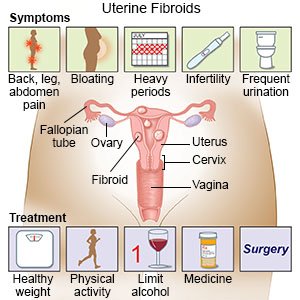
A myomectomy is surgery to remove one or more myomas from your uterus. Myomas are also called fibroids or leiomyomas. A myomectomy can be done in several ways. Your surgeon will talk to you about the best way for you. This may depend on your age, health, how many fibroids you have, and where they are located.
 |
How do I prepare for a myomectomy?
- Your surgeon will talk to you about how to prepare for surgery. You may need to stop taking blood thinners or aspirin several days before your procedure. This will help decrease your risk for bleeding. Arrange for someone to drive you home after your procedure.
- Your provider will tell you what medicines to take or not take on the day of your procedure. You may be given an antibiotic to prevent infection. Tell healthcare providers if you have ever had an allergic reaction to an antibiotic. You may be told not to eat or drink anything after midnight on the day of your procedure.
What will happen during a myomectomy?
- Depending on the kind of surgery you have, you may need general or local anesthesia. General anesthesia will keep you asleep and free from pain during surgery. With local anesthesia, you may feel some pressure or pushing, but you should not feel any pain.
- A tissue removal system may be used for a small fibroid. This procedure may be right for you if you want to keep having regular monthly periods and plan to become pregnant in the future. Your provider will guide a wand through your vagina and into your uterus. One side of the wand is made to cut the fibroid into pieces. Suction is used to pull the small pieces into the wand to remove them from your uterus. When all the pieces have been removed, the wand will be removed.
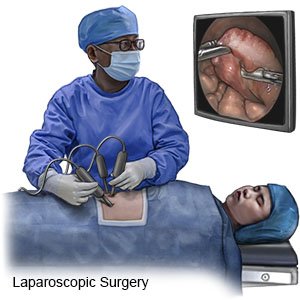
- For a laparoscopic myomectomy, your surgeon will make smaller incisions in your abdomen. He or she will put tools through these incisions to open your uterus and locate the fibroid. Your surgeon will then cut the fibroid into smaller pieces. The fibroid will be removed through one of the smaller incisions or through a larger incision made on your abdomen. Your surgeon will close the incisions with medical tape. Bandages will cover your wounds to keep them clean.
- You may need an open myomectomy for a larger fibroid, or for several fibroids. For an open myomectomy, your surgeon will make an incision across your abdomen. He or she will open your uterus and find the fibroid. The fibroid will be removed from your uterus. Your surgeon will close the incisions with stitches. Bandages will cover your stitches to keep them clean.
What should I expect after a myomectomy?
You may be able to go home the same day, or you may need to stay in the hospital. Depending on the type of procedure of surgery you had, you may have mild cramping or pain. You may have 1 large scar or a few small scars if you had a laparoscopic or open procedure. Scars should fade over time. You may also have some spotting. This usually lasts a few days, but it is normal for spotting to last up to 6 weeks.
What are the risks of a myomectomy?
You may get an infection in your wound. Your bowel, blood vessels, or uterus may be damaged. You may bleed more than expected and need a blood transfusion or a hysterectomy (surgery to remove your uterus). If you have a hysterectomy, you cannot get pregnant. After surgery, you may have trouble urinating or having a bowel movement. You may get fibroids again, even if your surgery is successful. You may have scar tissue that causes pain or makes it harder for you to get pregnant. You may get a blood clot in your leg or arm. This may become life-threatening.
Care Agreement
You have the right to help plan your care. Learn about your health condition and how it may be treated. Discuss treatment options with your healthcare providers to decide what care you want to receive. You always have the right to refuse treatment. The above information is an educational aid only. It is not intended as medical advice for individual conditions or treatments. Talk to your doctor, nurse or pharmacist before following any medical regimen to see if it is safe and effective for you.© Copyright Merative 2024 Information is for End User's use only and may not be sold, redistributed or otherwise used for commercial purposes.
Further information
Always consult your healthcare provider to ensure the information displayed on this page applies to your personal circumstances.
