Minimally Invasive Maze Procedure
WHAT YOU SHOULD KNOW:
Minimally Invasive Maze Procedure (Inpatient Care) Care Guide
- Minimally Invasive Maze Procedure Aftercare Instructions
- Minimally Invasive Maze Procedure Discharge Care
- Minimally Invasive Maze Procedure Inpatient Care
- Minimally Invasive Maze Procedure Precare
- En Espanol
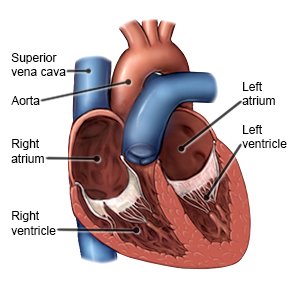
- Minimally invasive maze procedure is an endoscopic surgery done to treat atrial fibrillation. Atrial fibrillation, also called AF or A-fib, is the most common irregular heart rhythm (beat) problem. Normally, an electrical impulse (stimulus) is triggered by the sino-atrial node in the atria (top chambers of the heart). This impulse travels to the atrium and down the ventricles (lower chambers) of the heart in an orderly way. With AF, there are abnormally fast and disorganized impulses stimulating the atria. These impulses begin all together and go in different directions causing irregular, rapid, disordered, and ineffective heartbeats. When your heart beats this way, you may have problems with the flow of blood in your body. Blood clots may form and cause angina (chest pain), heart attack, or a stroke.
- During a minimally invasive maze procedure, small incisions (cuts) are made in your chest. Caregivers will insert special tools and an endoscope through these incisions to do the procedure. An endoscope is a long metal tube with a light and tiny video camera on the end. This gives caregivers a clear view of your heart while watching the images on a monitor. During this procedure, a maze is created where the electrical impulse will take only one path. This maze is done by making and sewing incisions on the left and right atrium to form scar tissues. These scar tissues will stop abnormal electrical signals from stimulating the atrium. Your caregiver may also use freezing substances, or radiowave, microwave, or ultrasound energy to make these scars. Once the abnormal impulses are blocked or redirected, a normal heart rhythm may be restored. With minimally invasive maze procedure, atrial fibrillation may be treated and quality of life improved.
CARE AGREEMENT:
You have the right to help plan your care. Learn about your health condition and how it may be treated. Discuss treatment options with your caregivers to decide what care you want to receive. You always have the right to refuse treatment.
RISKS:
- Your symptoms, such as a fast heartbeat, troubled breathing, getting tired easily, and other heart problems, may worsen without treatment. A reduced blood flow or a formed blood clot may lead to serious and life-threatening conditions. These conditions may include angina (chest pain), heart attack, or a stroke.
- Problems may happen during your minimally invasive maze procedure that may lead to an open chest surgery. During your procedure, your heartbeat may stop and cause further problems. This may decrease the blood flow further and may lead to a heart attack. The atria or blood vessel used for the procedure may get injured, causing a large amount of blood loss. You could also have trouble breathing, an infection, or too much bleeding after surgery. Even after having this surgery, there remains a chance that you will have another atrial fibrillation. Ask your caregiver if you have questions about your minimally invasive maze procedure.
WHILE YOU ARE HERE:
Before your procedure:
- Informed consent is a legal document that explains the tests, treatments, or procedures that you may need. Informed consent means you understand what will be done and can make decisions about what you want. You give your permission when you sign the consent form. You can have someone sign this form for you if you are not able to sign it. You have the right to understand your medical care in words you know. Before you sign the consent form, understand the risks and benefits of what will be done. Make sure all your questions are answered.
- Vital signs: Caregivers will check your blood pressure, heart rate, breathing rate, and temperature. They will also ask about your pain. These vital signs give caregivers information about your current health.
- An IV (intravenous) is a small tube placed in your vein that is used to give you medicine or liquids.
- Pulmonary artery catheter: This is a balloon-tipped catheter (thin tube) inserted through a vein in your neck or groin. The pulmonary artery (PA) catheter goes into the right side of your heart and continues to your pulmonary artery. The balloon is inflated to wedge the catheter in place. The PA catheter has a device in it that measures the pressure in your heart and lungs. The catheter is attached to a monitor that shows the pressure measurements. The measurements can also show caregivers how your heart responds to certain heart medicines.
- Foley catheter: This is a tube caregivers put into your bladder to drain your urine into a bag. Keep the bag below your waist. This will help prevent infection and other problems caused by urine flowing back into your bladder. Do not pull on the catheter, because this may cause pain and bleeding, and the catheter could come out. Keep the catheter tubing free of kinks so your urine will flow into the bag. Caregivers will remove the catheter as soon as possible, to help prevent infection.
- Tests: You may need any of the following:
- Blood tests: You may need blood taken to give caregivers information about how your body is working. The blood may be taken from your hand, arm, or IV.
- Cardiac catheterization: This is a procedure done to find the cause of and treat a heart condition. A thin, bendable tube inserted into an arm, neck, or groin vein is moved into your heart. Your caregiver may use an x-ray to guide the tube to the right place. Dye (contrast) may be put into your vein so the pictures show up better on a monitor.
- Heart monitor: This is also called an ECG or EKG. Sticky pads placed on your skin record your heart's electrical activity.
- Transesophageal echocardiogram:
- A transesophageal echocardiogram (TEE) is a type of ultrasound that shows pictures of the size and shape of your heart. It also looks at how your heart moves when it is beating. These pictures are seen on a TV-like screen. You may need a TEE if your heart does not show up very well in a regular echocardiogram. You may also need a TEE to check for certain problems such as blood clots or infection inside the heart.
- You will be given medicine to relax you during a TEE. Caregivers put a tube in your mouth that is moved down into your esophagus (food pipe). The tube has a small ultrasound sensor on the end. Since your esophagus is right next to your heart, your caregiver can see your heart clearly.
- A transesophageal echocardiogram (TEE) is a type of ultrasound that shows pictures of the size and shape of your heart. It also looks at how your heart moves when it is beating. These pictures are seen on a TV-like screen. You may need a TEE if your heart does not show up very well in a regular echocardiogram. You may also need a TEE to check for certain problems such as blood clots or infection inside the heart.
- Blood tests: You may need blood taken to give caregivers information about how your body is working. The blood may be taken from your hand, arm, or IV.
- Pre-op care: You may be given medicine right before your procedure or surgery. This medicine may make you feel relaxed and sleepy. You are taken on a stretcher to the room where your procedure or surgery will be done, and then you are moved to a table or bed.
- General anesthesia: Caregivers use this medicine to keep you asleep and free from pain during surgery. They give you anesthesia through your IV or as a gas. You may breathe in the gas through a mask or through a breathing tube placed down your throat. The tube may cause you to have a sore throat when you wake up.
During your procedure:
- The hair on your chest and other parts of the body may be shaved if that is needed. Soap and water will be used to clean your chest and sheets will be put over you.
- During your procedure, your caregiver will make a small incision on your chest to insert the endoscope through. Two smaller incisions in between the ribs are made to insert the other instruments. Small incisions are made and then sewn in the right and left atria. This will form scar tissue and a maze where the impulses can travel in only one direction. Your caregiver may also use freezing substances, or radiowave, microwave, or ultrasound energy to create this scar tissue. You may be connected to an external pacemaker. The openings and incisions in your chest are closed with stitches (threads) and staples. A bandage is placed over your incision to control bleeding.
After your procedure:
You may be transferred to a recovery room or a cardiac care unit after your procedure. Caregivers will watch you closely for problems that can happen after a procedure. The catheter inserted for the procedure may be removed and a tight pressure bandage will cover the incision. A caregiver may remove the bandages soon after your surgery to check your wound. Ask your caregiver for more information about ways to prevent bleeding and take care of your incision.
- Activity: You will need to lie flat and still in bed for a few hours. Caregivers will help you roll from side to side. If an artery in your groin was used for the procedure, you must keep your leg straight. Do not bend it until your caregiver tells you it is OK. Your caregiver will also tell you when it is OK to get out of bed. Call your caregiver before getting up for the first time. If you feel weak or dizzy after getting up, sit or lie down right away and call your caregiver.
- Medicines: You may have any of the following:
- Antibiotics: This medicine is given to help treat or prevent an infection caused by bacteria.
- Antinausea medicine: This medicine may be given to calm your stomach and to help prevent vomiting.
- Clot busters: This medicine helps break apart blood clots, which may increase blood flow to your heart muscle. It is given in your IV and may be given at the same time as other blood thinners. This medicine may decrease the amount of damage to your heart muscle, and may even save your life. You will bleed and bruise more easily after getting clot busters.
- Diuretics: This medicine is given to decrease edema (excess fluid) that collects in a part of your body, such as your legs. Diuretics can also remove excess fluid from around your heart or lungs and decrease your blood pressure. It is often called water pills. You may urinate more often when you take this medicine.
- Heart medicine: This medicine is given to strengthen or regulate your heartbeat. It also may help your heart in other ways. Talk with your caregiver to find out what your heart medicine is and why you are taking it.
- Pain medicine: Caregivers may give you medicine to take away or decrease your pain. Tell caregivers right away if you start feeling discomfort, pressure, burning, or tightness in your chest. Tell caregivers right away if you start sweating, have trouble breathing, or feel discomfort in your arm, back, neck, or jaw. Any of these may be a sign that your heart is not getting enough oxygen, and may need medicine to help.
- Antibiotics: This medicine is given to help treat or prevent an infection caused by bacteria.
- Monitoring: Caregivers may check for your pulses on your arms or feet. This may help the caregiver to learn if you have problems with blood flow after your procedure. You may also have the following:
- Heart monitor: This is also called an ECG or EKG. Sticky pads placed on your skin record your heart's electrical activity.
- Pulse oximeter: A pulse oximeter is a device that measures the amount of oxygen in your blood. A cord with a clip or sticky strip is placed on your finger, ear, or toe. The other end of the cord is hooked to a machine. Never turn the pulse oximeter or alarm off. An alarm will sound if your oxygen level is low or cannot be read.
- Heart monitor: This is also called an ECG or EKG. Sticky pads placed on your skin record your heart's electrical activity.
- Oxygen and a ventilator: You may need extra oxygen when waking up and for a day or two after surgery. Caregivers may leave an endotracheal tube (ET tube) in your throat. Oxygen can be given through the ET tube by a breathing machine called a ventilator. After the ET tube is taken out, you may still need oxygen. The oxygen may be given through a plastic mask over your mouth and nose. Oxygen may also be given through nasal prongs (short, thin tubes in your nose).
- Pneumatic boots: Inflatable boots are put on your legs. The boots are connected to an air pump. The pump tightens and loosens different areas of the boots. This helps improve blood flow to prevent clots.
- Temporary pacemaker:
- This is a machine that helps your heart beat at a normal speed and in a regular rhythm. A temporary pacemaker may use large patches placed on your chest and back. These are connected to a special monitor. Sometimes, your caregiver may need to put small wires through your skin and into your heart muscle instead. The wires may then be connected to a small pacemaker box outside of your body.
- The temporary pacemaker "reads" what your heart is doing. If your heart is beating in a different way than it should, the pacemaker takes over and controls your heartbeat. It does this by sending small electric signals to the heart muscle. This tells your heart when to beat. You may feel these signals, especially if your temporary pacemaker uses large patches on the skin. If this causes pain, use your call light and tell your caregiver. Do not get out of bed without first asking your caregiver if it is OK. You may need a pacemaker just for a short time. In some cases, you may need it for the rest of your life. If so, your caregiver may replace your temporary pacemaker with a permanent one.
- This is a machine that helps your heart beat at a normal speed and in a regular rhythm. A temporary pacemaker may use large patches placed on your chest and back. These are connected to a special monitor. Sometimes, your caregiver may need to put small wires through your skin and into your heart muscle instead. The wires may then be connected to a small pacemaker box outside of your body.
© 2013 Truven Health Analytics Inc. Information is for End User's use only and may not be sold, redistributed or otherwise used for commercial purposes. All illustrations and images included in CareNotes® are the copyrighted property of the Blausen Databases or Truven Health Analytics.
The above information is an educational aid only. It is not intended as medical advice for individual conditions or treatments. Talk to your doctor, nurse or pharmacist before following any medical regimen to see if it is safe and effective for you.