
Lower Limb Prosthesis
Medically reviewed by Drugs.com. Last updated on Apr 2, 2024.
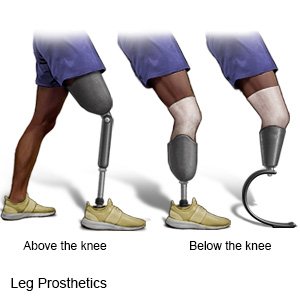
A lower limb prosthesis is a device made to replace all or part of your leg or foot. A lower limb prosthesis is made for your height, weight, and type or level of activity. All types include a foot and socket. The socket is the part of the prosthesis that connects to your stump (the end of your lower limb).
 |
DISCHARGE INSTRUCTIONS:
Follow up with your healthcare provider or specialist as directed:
You may need to return to have the fit of your prosthesis checked and adjusted. Never try to fix or adjust your prosthesis on your own. Write down your questions so you remember to ask them during your visits.
Self-care:
- Check your stump daily: Look for redness, blisters, or swelling. If you see any of these changes, stop using your prosthesis and contact your healthcare provider right away. Stop using the prosthesis and contact your healthcare provider if it causes pain.
- Clean inside the socket daily: You may use a damp soapy cloth to remove sweat and dirt, then a clean damp cloth to remove the soap. Dry the socket well with a dry cloth.
- Wear your prosthesis as directed: You may need to wear your prosthesis all the time during the first few months after you get it.
For more information:
- Amputee Coalition
900 E. Hill Ave, Ste 290
Knoxville, , TN 37915
Phone: 1- 888 - 267-5669
Web Address: www.amputee-coalition.org
Contact your healthcare provider or specialist if:
- You have a fever.
- You have problems using your prosthesis, such as trouble moving, walking, or running.
- You have trouble attaching or removing your prosthesis.
- Your skin is itchy, swollen, or has a rash.
- You have questions or concerns about your condition or care.
Seek care immediately or call 911 if:
- You have pain or swelling around your stump, especially after using your prosthesis.
- You have trouble breathing all of a sudden.
- Your prosthesis gets damaged.
- The skin on your stump turns blue or white or it feels cold, numb, or tingly.
© Copyright Merative 2024 Information is for End User's use only and may not be sold, redistributed or otherwise used for commercial purposes.
The above information is an educational aid only. It is not intended as medical advice for individual conditions or treatments. Talk to your doctor, nurse or pharmacist before following any medical regimen to see if it is safe and effective for you.
Further information
Always consult your healthcare provider to ensure the information displayed on this page applies to your personal circumstances.
