
Low Oxalate Diet
Medically reviewed by Drugs.com. Last updated on May 6, 2024.
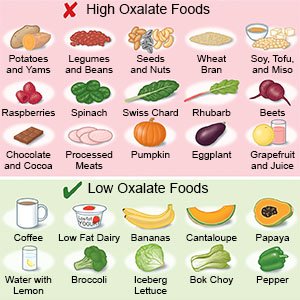
Oxalate is a chemical found in plant foods. You may need to eat foods that are low in oxalate to help clear kidney stones or prevent them from forming. People who have had kidney stones are at a higher risk of forming kidney stones again. The most common type of kidney stone is made up of crystals that contain calcium and oxalate. Your healthcare provider or dietitian may recommend that you limit oxalate if you get this type of kidney stone often.
 |
DISCHARGE INSTRUCTIONS:
Foods to include:
Include the following foods that have a low to medium amount of oxalate.
- Grains:
- Egg noodles
- Graham crackers
- Pancakes and waffles
- Cooked and dry cereals without nuts or bran
- White or wild rice
- White bread, cornbread, bagels, and white English muffins (medium oxalate)
- Saltine or soda crackers and vanilla wafers (medium oxalate)
- Brown rice, spaghetti, and other noodles and pastas (medium oxalate)
- Fruit:
- Apples, bananas, grapes
- Cranberries
- Peaches, nectarines, apricots, and pears
- Papayas and strawberries
- Melons and pineapples
- Blackberries, blueberries, mangoes, and prunes (medium oxalate)
- Vegetables:
- Artichokes, asparagus, and brussels sprouts
- Broccoli and cauliflower
- Kale, endive, cabbage, and lettuce
- Cucumbers, peas, and zucchini
- Mushrooms, onions, and peppers
- Corn
- Carrots, celery, and green beans (medium oxalate)
- Parsnips, summer squash, tomatoes, and turnips (medium oxalate)
- Dairy:
- American cheese, Swiss cheese, cottage cheese, ricotta cheese, and cheddar cheese
- Milk and buttermilk
- Yogurt
- Protein foods:
- Meat, fish, shellfish, chicken, and turkey
- Lunch meat and ham (medium oxalate)
- Hot dogs, bratwurst, bacon, and sausage (medium oxalate)
- Drinks and desserts:
- Coffee
- Fruit punch and lemonade or limeade without added vitamin C
- Desserts:
- Cookies, cakes, and ice cream
- Pudding without chocolate
Foods to limit or avoid:
Limit the following foods that are high in oxalate.
- Grains:
- Wheat bran, wheat germ, and barley
- Grits and bran cereal
- White corn flour and buckwheat flour
- Whole wheat bread
- Fruit:
- Dried apricots
- Red currants, figs, and rhubarb
- Kiwi
- Grapefruit
- Vegetables:
- Potatoes and yams
- Collard greens, leeks, okra, and spinach
- Wax beans
- Eggplant
- Beets and beet greens
- Swiss chard, escarole, parsley, and rutabagas
- Tomato paste
- Protein foods:
- Baked beans with tomato sauce
- Nut butters and nuts (peanuts, almonds, pecans, cashews, hazelnuts)
- Soy burgers
- Miso
- Dried beans
- Desserts:
- Fruitcake
- Chocolate
- Carob and marmalade
- Beverages:
- Chocolate drink mixes
- Soy milk
- Instant iced tea
- Other foods:
- Sesame seeds and tahini (paste made of sesame seeds)
- Poppy seeds
Other dietary guidelines:
- Drink about 12 to 16 (eight-ounce) cups of liquid each day. Liquids help clear kidney stones and prevent them from forming again. Water is the best liquid to drink. You may need more liquid if you are physically active. Ask your healthcare provider or dietitian how much liquid you need to drink each day.
- Your healthcare provider may suggest that you make other diet changes to help prevent kidney stones. This may include decreasing the amount of sodium you eat each day.
© Copyright Merative 2024 Information is for End User's use only and may not be sold, redistributed or otherwise used for commercial purposes.
The above information is an educational aid only. It is not intended as medical advice for individual conditions or treatments. Talk to your doctor, nurse or pharmacist before following any medical regimen to see if it is safe and effective for you.
Further information
Always consult your healthcare provider to ensure the information displayed on this page applies to your personal circumstances.
