
Laceration
Medically reviewed by Drugs.com. Last updated on Aug 4, 2025.
What is a laceration?
A laceration is an injury to the skin and the soft tissue underneath it. Lacerations can happen anywhere on the body.
What are the signs and symptoms of a laceration?
- Injury or wound to skin and tissue of any shape or size that looks like a cut, tear, or gash
- Edges of the wound may be close together or wide apart
- Pain, bleeding, bruising, or swelling
- Numbness around the wound
- Decreased movement in an area below the wound
How is a laceration diagnosed?
Tell your healthcare provider how you got your laceration. Your provider will examine your wound and decide what treatment you need. An x-ray, ultrasound, CT, or MRI may show foreign objects in the wound. Foreign objects include metal, gravel, and glass. The tests may also show damage to deeper tissues. You may be given contrast liquid to help the injured area show up better in the pictures. Tell the healthcare provider if you have ever had an allergic reaction to contrast liquid. Do not enter the MRI room with anything metal. Metal can cause serious injury. Tell the healthcare provider if you have any metal in or on your body.
How will my laceration be treated?
Treatment depends on how large and deep your laceration is, and where it is located. It also depends on whether you have damage to deeper tissues. You may need any of the following:
- Pressure may be applied to the wound to stop bleeding.
- Wound cleaning may help remove dirt or debris. This will decrease the risk for infection. Your healthcare provider may need to look inside your wound for foreign objects. Your provider may give you medicine to numb the area and decrease pain. You may also be given medicine to help you relax.
- Wound closure with stitches, staples, tissue glue, or medical strips may be needed. These may help the wound heal and prevent infection. Your provider may give you medicine to numb the area and decrease pain. You may also be given medicine to help you relax. Stitches may decrease the amount of scarring you have. Some lacerations may heal better without stitches.
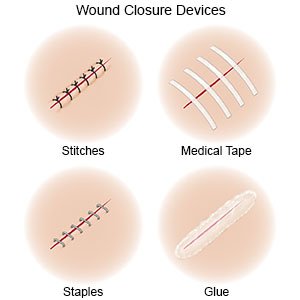
- Medicine to treat pain or prevent infection may be given. You may also be given a tetanus shot. Your provider will decide if you need a tetanus shot. Wounds at high risk for tetanus infection include wounds with dirt or saliva in them. You should get a tetanus shot within 72 hours of getting a laceration or wound. Tell your provider if you have had the tetanus vaccine or a booster within the last 5 years.
- Surgery may be needed if your laceration needs a lot of cleaning or removal of foreign objects.
When should I seek immediate care?
- You have heavy bleeding or bleeding that does not stop after 10 minutes of holding firm, direct pressure over the wound.
- Your wound reopens.
- You have tingling, weakness, or numbness near the wound.
- You have trouble moving the area near the wound.
When should I call my doctor?
- You have a fever or chills.
- Your laceration is red, warm, or swollen.
- You have red streaks on your skin coming from your wound.
- You have white or yellow drainage from the wound that smells bad.
- You have pain that gets worse, even after treatment.
- You have questions or concerns about your condition or care.
Care Agreement
You have the right to help plan your care. Learn about your health condition and how it may be treated. Discuss treatment options with your healthcare providers to decide what care you want to receive. You always have the right to refuse treatment. The above information is an educational aid only. It is not intended as medical advice for individual conditions or treatments. Talk to your doctor, nurse or pharmacist before following any medical regimen to see if it is safe and effective for you.© Copyright Merative 2025 Information is for End User's use only and may not be sold, redistributed or otherwise used for commercial purposes.
Learn more about Laceration
Treatment options
Care guides
Further information
Always consult your healthcare provider to ensure the information displayed on this page applies to your personal circumstances.