
Ingrown Nail
Medically reviewed by Drugs.com. Last updated on Sep 1, 2024.
What is an ingrown nail?
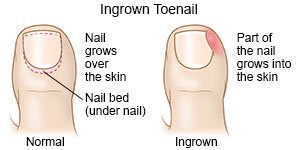
An ingrown nail is when the edge of your fingernail or toenail grows into the skin next to it. The most common cause is when nails are trimmed too short.
 |
What increases my risk for an ingrown nail?
- Shoes, socks, or panty hose that are too tight or do not fit well
- Trauma or injury to your nail
- Nails that are naturally more curved, thick, or covered with skin
- A fungal infection
- Feet that sweat a lot or poor hygiene (do not wash feet regularly)
What are the signs and symptoms of an ingrown nail?
- Painful, red, and swollen skin around the edge or corner of your nail
- Sharp pain when you walk
- Pus or liquid drainage from the nail
How is an ingrown nail treated?
- Medicines:
- Acetaminophen decreases pain and can be bought without a doctor's order. Ask how much to take and how often to take it. Follow directions. Acetaminophen can cause liver damage if not taken correctly.
- NSAIDs , such as ibuprofen, help decrease swelling, pain, and fever. This medicine is available with or without a doctor's order. NSAIDs can cause stomach bleeding or kidney problems in certain people. If you take blood thinner medicine, always ask your healthcare provider if NSAIDs are safe for you. Always read the medicine label and follow directions.
- Antibiotics help treat or prevent a bacterial infection. They may be given as an ointment, pill, or both.
- Partial nail avulsion is a procedure used to remove the part of the nail that has grown into your skin. A liquid solution or electric charge may be applied to your nail. This keeps your nail from growing into the skin again.
- Matricectomy is a procedure where part of your nail matrix is destroyed so that a small section of your nail stops growing. Your nail matrix is the area that your nail grows from. It is the pale or white color at the base of your nail. Most of the matrix cannot be seen because it lies underneath the skin. A chemical, laser, or instrument may be used to destroy the nail matrix.
How can I manage my symptoms?
- Soak and lift the nail. Soak your ingrown nail in warm water for 20 minutes, 2 to 3 times each day. Then gently lift the edge of the ingrown nail away from the skin. Wedge a small piece of cotton or gauze under the corner of the nail. You can also put dental floss under the nail to lift the edge away from the skin. This may help keep the nail from growing into the skin.
- Keep your nails clean and dry. Wash your hands and feet with soap and water. Pat dry with a clean towel. Dry in between each toe. Do not put lotion between your toes.
How can I help prevent an ingrown nail?
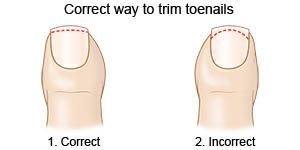
- Carefully trim your nails. Cut your nails straight across. Do not cut them too short. Lightly file the nail corners if you have sharp edges. Do not round your nails. Do not rip or tear off the tips of your nails. This may cause your nail edge to grow into the skin. Use clippers, not nail scissors.
- Wear shoes and socks that fit well. Make sure they are not too tight. You may need to wear a shoe with the toe cut out, such as sandals, until your ingrown toenail heals. Do not wear shoes that have pointed toes or heels that are more than 2 inches high. Do not wear tight hose or socks. Wear socks that pull moisture away from your feet, such as cotton-acrylic blends.
- Inspect your nails daily. Look for signs of an ingrown nail. Manage problems early so the nail does not become infected.
When should I seek immediate care?
- You have a red streak running up your leg or arm.
When should I contact my healthcare provider?
- Your pain is getting worse.
- Your nail and skin are more swollen or start to drain pus.
- You have a fever or chills.
- Your ingrown nail is not better in 7 days.
- You have questions or concerns about your condition or care.
Care Agreement
You have the right to help plan your care. Learn about your health condition and how it may be treated. Discuss treatment options with your healthcare providers to decide what care you want to receive. You always have the right to refuse treatment. The above information is an educational aid only. It is not intended as medical advice for individual conditions or treatments. Talk to your doctor, nurse or pharmacist before following any medical regimen to see if it is safe and effective for you.© Copyright Merative 2024 Information is for End User's use only and may not be sold, redistributed or otherwise used for commercial purposes.
Further information
Always consult your healthcare provider to ensure the information displayed on this page applies to your personal circumstances.