
How to Use an Incentive Spirometer
Medically reviewed by Drugs.com. Last updated on May 6, 2024.
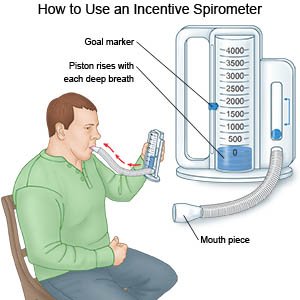
An incentive spirometer is a device that measures how deeply you can inhale (breathe in). It helps you take slow, deep breaths to expand and fill your lungs with air. This helps prevent lung problems, such as pneumonia. The incentive spirometer is made up of a breathing tube, an air chamber, and an indicator. The breathing tube is connected to the air chamber and has a mouthpiece at the end. The indicator is found inside the device.
DISCHARGE INSTRUCTIONS:
Reasons to use an incentive spirometer:
An incentive spirometer is most commonly used after surgery. People who are at increased risk of airway or breathing problems may also use one. These include people who smoke or have lung disease. This may also include people who are not active or cannot move well.
How to use an incentive spirometer:
Sit up as straight as possible. Do not bend your head forward or backward. Hold the incentive spirometer in an upright position. Place the target pointer to the level that you need to reach or that your healthcare provider has suggested. Exhale (breathe out) normally and then do the following:
- Put the mouthpiece in your mouth and close your lips tightly around it. Do not block the mouthpiece with your tongue.
- Inhale slowly and deeply through the mouthpiece to raise the indicator. Try to make the indicator rise up to the level of the goal marker.
- When you cannot inhale any longer, remove the mouthpiece and hold your breath for at least 3 seconds.
- Exhale normally.
- Repeat these steps 10 to 12 times every hour when you are awake, or as often as directed.
- Clean the mouthpiece with soap and water after each use. Do not use a disposable mouthpiece for longer than 24 hours.
- Keep a log of the highest level you are able to reach each time. This will help healthcare providers see if your lung function improves.
Follow up with your doctor as directed:
Write down your questions so you remember to ask them during your visits.
Contact your healthcare provider if:
- You feel dizzy or lightheaded.
- You have a wound that is painful every time you breathe deeply.
- You have questions or concerns about how to use your IS.
Seek care immediately or call 911 if:
- You have chest pain or shortness of breath.
- You feel faint.
© Copyright Merative 2024 Information is for End User's use only and may not be sold, redistributed or otherwise used for commercial purposes.
The above information is an educational aid only. It is not intended as medical advice for individual conditions or treatments. Talk to your doctor, nurse or pharmacist before following any medical regimen to see if it is safe and effective for you.
Further information
Always consult your healthcare provider to ensure the information displayed on this page applies to your personal circumstances.
