
How to Turn A Person in Bed
Medically reviewed by Drugs.com. Last updated on Jun 30, 2025.
What do I need to know about turning a person in bed?
Turn the person at least every 2 hours if he or she is unable to move. This will help prevent pressure sores, blood clots, and breathing problems, such as pneumonia. It will also help improve the person's comfort in bed.
What safety guidelines do I need to follow?
If possible, the head of the bed should be flat before you turn the person. The following can help keep you and the person safe when you turn him or her:
- Use correct form. It is important to protect your lower back when you turn a person in bed. Keep your feet a little wider than your shoulder width. Stand close to the person so you do not have to reach too far during the turn. Keep the person's head, torso, and legs in line during the turn.
- Ask for help if needed. Ask the person to help as much as possible. Ask someone to help you if needed. You and your helpers can count out loud to 3 to coordinate efforts.
- Move the person smoothly, without sudden movements. Quick changes in position can cause falls, injuries, or pain. You can also tear the person's skin if a movement is too quick or forceful.
- Check medical equipment. You may need to move or secure tubes, medicine pumps, or monitors. Make sure nothing will come loose or break when you turn the person. Do not remove any equipment from the person unless the person's healthcare provider tells you to.
How do I turn a person in bed?
- Cross the person's arms over his or her chest. This prevents them from getting trapped under his or her body during the turn.
- Stand at the side of the bed, lower the bed rail (if needed), and face the person. Put a pillow between the person's knees.
- If possible, ask the person to grab the opposite bed rail to help pull himself or herself onto his or her side.
- Roll the edge of the sheet on your side and grab it. Pull the sheet up so the person slowly rolls from his or her back to his or her side.
- Place pillows behind the person's back and buttocks to help keep him or her on his or her side comfortably.
- Smooth the sheets so they are not wrinkled. Pull the bed rail up so it locks in place.
- Make sure the person is comfortable and breathing easily. The person should not be in a position that cuts off circulation or is uncomfortable. You may to adjust the person's position. You also may need to add or adjust pillows.
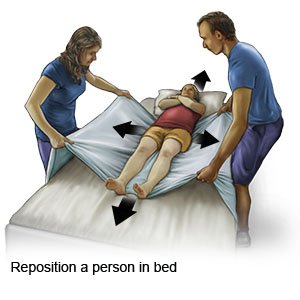
- Help the person move into a comfortable resting position in the bed, if needed. If you placed a slide sheet under the person, you can use it to change the person's position. Have someone help you by standing on the other side of the person's bed. You will each hold the slide sheet at the person's shoulder and knee levels. Move the sheet up, down, or to the side as needed so the person is comfortable.
- Check all medical equipment to make sure it is running correctly. Make sure any alarms are turned on. Check for tubes or other equipment that needs to be adjusted after the turn.
Care Agreement
You have the right to help plan your care. Learn about your health condition and how it may be treated. Discuss treatment options with your healthcare providers to decide what care you want to receive. You always have the right to refuse treatment. The above information is an educational aid only. It is not intended as medical advice for individual conditions or treatments. Talk to your doctor, nurse or pharmacist before following any medical regimen to see if it is safe and effective for you.© Copyright Merative 2025 Information is for End User's use only and may not be sold, redistributed or otherwise used for commercial purposes.
Further information
Always consult your healthcare provider to ensure the information displayed on this page applies to your personal circumstances.