
Ganglion Cyst
Medically reviewed by Drugs.com. Last updated on Sep 1, 2024.
What is a ganglion cyst?
A ganglion cyst is an abnormal buildup of fluid under the skin. They are most common on the wrists, feet, or ankles, but can be found anywhere on the body. The cause is not known. You may have a higher risk for a ganglion cyst if you injure your joint.
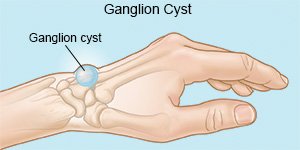 |
What are the signs and symptoms of a ganglion cyst?
- A round, firm lump
- A lump that changes size and may disappear or reappear
- Numbness, swelling, or muscle weakness around the joint where you have the cyst
- Pain in a joint that has the cyst
How is a ganglion cyst diagnosed?
Your healthcare provider will examine the cyst and ask how long you have had it. The provider will move your joint around to feel the cyst and see if it moves. Tell the provider if the cyst keeps you from doing your daily activities. You may need any of the following:
- An ultrasound uses sound waves to show pictures of your cyst on a monitor.
- An MRI takes pictures of your joint to show the cyst. You may be given contrast liquid to help the joint show up better. Tell the healthcare provider if you have ever had an allergic reaction to contrast liquid. Do not enter the MRI room with anything metal. Metal can cause serious injury. Tell the healthcare provider if you have any metal in or on your body.
How is a ganglion cyst treated?
A ganglion cyst will usually go away on its own. You may need any of the following:
- Steroid medicine may be injected into the cyst to decrease inflammation.
- Aspiration may be done to drain the cyst with a needle.
- Surgery may be needed to remove the cyst.
How can I manage a ganglion cyst?
- Do not try to pop or break the cyst yourself. This can cause it to return.
- Go to hand therapy, if needed. A hand therapist teaches you exercises to help improve movement and strength, and to decrease pain.
- Wear a splint as directed to support and protect the joint that has the cyst. This will limit movement and help your cyst get smaller.
When should I call my doctor or orthopedist?
- You continue to have pain, even after treatment.
- Your cyst returns or gets larger.
- Your limb that has the cyst gets weak, numb, stiff, or unstable.
- You have questions or concerns about your condition or care.
Care Agreement
You have the right to help plan your care. Learn about your health condition and how it may be treated. Discuss treatment options with your healthcare providers to decide what care you want to receive. You always have the right to refuse treatment. The above information is an educational aid only. It is not intended as medical advice for individual conditions or treatments. Talk to your doctor, nurse or pharmacist before following any medical regimen to see if it is safe and effective for you.© Copyright Merative 2024 Information is for End User's use only and may not be sold, redistributed or otherwise used for commercial purposes.
Further information
Always consult your healthcare provider to ensure the information displayed on this page applies to your personal circumstances.