
Epididymo-Orchitis
Medically reviewed by Drugs.com. Last updated on May 6, 2024.
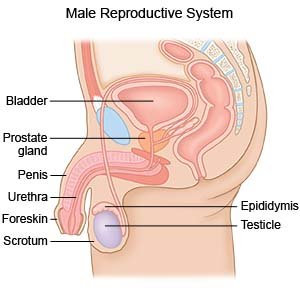
Epididymo-orchitis is inflammation of your epididymis and testicle. The epididymis is a coiled tube inside your scrotum. It stores and carries sperm from your testicles to your penis. Epididymo-orchitis usually affects the epididymis and testicle on one side, but it may affect both sides.
 |
DISCHARGE INSTRUCTIONS:
Return to the emergency department if:
- You have severe pain in your testicles.
- Your symptoms become worse even after you start treatment with medicine.
Contact your healthcare provider if:
- Your symptoms do not get better within 3 days of treatment or come back after treatment.
- You have a hot, red, tender area on your testicles.
- You have questions or concerns about your condition or care.
Medicines:
- Antibiotics help treat a bacterial infection.
- NSAIDs , such as ibuprofen, help decrease swelling, pain, and fever. This medicine is available with or without a doctor's order. NSAIDs can cause stomach bleeding or kidney problems in certain people. If you take blood thinner medicine, always ask if NSAIDs are safe for you. Always read the medicine label and follow directions. Do not give these medicines to children younger than 6 months without direction from a healthcare provider.
- Acetaminophen decreases pain and fever. It is available without a doctor's order. Ask how much to take and how often to take it. Follow directions. Read the labels of all other medicines you are using to see if they also contain acetaminophen, or ask your doctor or pharmacist. Acetaminophen can cause liver damage if not taken correctly.
- Prescription pain medicine may be given. Ask your healthcare provider how to take this medicine safely. Some prescription pain medicines contain acetaminophen. Do not take other medicines that contain acetaminophen without talking to your healthcare provider. Too much acetaminophen may cause liver damage. Prescription pain medicine may cause constipation. Ask your healthcare provider how to prevent or treat constipation.
- Take your medicine as directed. Contact your healthcare provider if you think your medicine is not helping or if you have side effects. Tell your provider if you are allergic to any medicine. Keep a list of the medicines, vitamins, and herbs you take. Include the amounts, and when and why you take them. Bring the list or the pill bottles to follow-up visits. Carry your medicine list with you in case of an emergency.
Self-care:
- Apply ice on your testicles for 15 to 20 minutes every hour or as directed. Use an ice pack, or put crushed ice in a plastic bag. Cover it with a towel. Ice helps prevent tissue damage and decreases swelling and pain.
- Rest in bed as directed. Elevate your scrotum when you sit or lie down to help reduce swelling and pain. You may be asked to do this by placing a rolled-up towel under your scrotum.
- Scrotal support may be recommended. An athletic supporter provides scrotal support and may make you more comfortable when you stand. Ask your healthcare provider how to use an athletic supporter.
- Do not lift heavy objects. You can make swelling worse if you lift heavy objects or strain.
Follow up with your doctor as directed:
Write down your questions so you remember to ask them during your visits.
© Copyright Merative 2024 Information is for End User's use only and may not be sold, redistributed or otherwise used for commercial purposes.
The above information is an educational aid only. It is not intended as medical advice for individual conditions or treatments. Talk to your doctor, nurse or pharmacist before following any medical regimen to see if it is safe and effective for you.
Learn more about Epididymo-Orchitis
Treatment options
Care guides
Further information
Always consult your healthcare provider to ensure the information displayed on this page applies to your personal circumstances.
