
Dental Abscess
Medically reviewed by Drugs.com. Last updated on Aug 4, 2025.
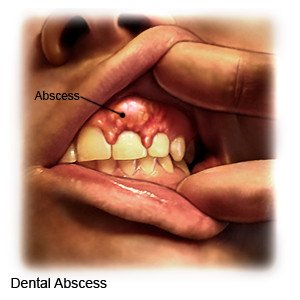
A dental abscess is a collection of pus in or around a tooth. A dental abscess is caused by bacteria. The bacteria can enter the tooth when the enamel (outer part of the tooth) is damaged by tooth decay. Bacteria can also enter the tooth through a chip in the tooth or a cut in the gum. Food particles that are stuck between the teeth for a long time may also lead to an abscess.
 |
DISCHARGE INSTRUCTIONS:
Return to the emergency department if:
- You have severe pain in your tooth or jaw.
- You have trouble breathing because of pain or swelling.
Call your doctor if:
- Your symptoms get worse, even after treatment.
- Your mouth is bleeding.
- You cannot eat or drink because of pain or swelling.
- Your abscess returns.
- You have an injury that causes a crack in your tooth.
- You have questions or concerns about your condition or care.
Medicines:
You may need any of the following:
- Antibiotics help treat a bacterial infection.
- NSAIDs , such as ibuprofen, help decrease swelling, pain, and fever. This medicine is available with or without a doctor's order. NSAIDs can cause stomach bleeding or kidney problems in certain people. If you take blood thinner medicine, always ask your healthcare provider if NSAIDs are safe for you. Always read the medicine label and follow directions.
- Acetaminophen decreases pain and fever. It is available without a doctor's order. Ask how much to take and how often to take it. Follow directions. Read the labels of all other medicines you are using to see if they also contain acetaminophen, or ask your doctor or pharmacist. Acetaminophen can cause liver damage if not taken correctly.
- Prescription pain medicine may be given. Ask your healthcare provider how to take this medicine safely. Some prescription pain medicines contain acetaminophen. Do not take other medicines that contain acetaminophen without talking to your healthcare provider. Too much acetaminophen may cause liver damage. Prescription pain medicine may cause constipation. Ask your healthcare provider how to prevent or treat constipation.
- Take your medicine as directed. Contact your healthcare provider if you think your medicine is not helping or if you have side effects. Tell your provider if you are allergic to any medicine. Keep a list of the medicines, vitamins, and herbs you take. Include the amounts, and when and why you take them. Bring the list or the pill bottles to follow-up visits. Carry your medicine list with you in case of an emergency.
Treatment options
The following list of medications are related to or used in the treatment of this condition.
Self-care:
- Rinse your mouth every 2 hours with salt water. This will help keep the area clean.
- Gently brush your teeth twice a day with a soft tooth brush. This will help keep the area clean.
- Eat soft foods as directed. Soft foods may cause less pain. Examples include applesauce, yogurt, and cooked pasta. Ask your healthcare provider how long to follow this instruction.
- Apply a warm compress to your tooth or gum. Use a cotton ball or gauze soaked in warm water. Remove the compress in 10 minutes or when it becomes cool. Repeat 3 times a day.
Prevent another abscess:
- Brush your teeth at least 2 times a day with fluoride toothpaste.
- Use dental floss at least once a day to clean between your teeth.
- Rinse your mouth with water or mouthwash after meals and snacks. Chew sugarless gum.
- Avoid sugary and starchy food that can stick between your teeth. Limit drinks high in sugar, such as soda or fruit juice.
- See your dentist every 6 months for dental cleanings and oral exams.
Follow up with your doctor or dentist in 24 hours, or as directed:
Your healthcare provider will need to check your teeth and gums. Write down your questions so you remember to ask them during your visits.
© Copyright Merative 2025 Information is for End User's use only and may not be sold, redistributed or otherwise used for commercial purposes.
The above information is an educational aid only. It is not intended as medical advice for individual conditions or treatments. Talk to your doctor, nurse or pharmacist before following any medical regimen to see if it is safe and effective for you.
Learn more about Dental Abscess
Treatment options
Care guides
Medicine.com guides (external)
Further information
Always consult your healthcare provider to ensure the information displayed on this page applies to your personal circumstances.