Thomson Reuters Micromedex

Cystoscopy

What you should know

  • A cystoscopy is a procedure to look inside your urinary bladder using a cystoscope. A cystoscope is a long metal tube with a lens and light on its end. The scope may be attached to a camera or monitor, and pictures may be taken. The scope may be flexible (bendable) or rigid (hard), and may have a fluorescent (special blue color) light. The fluorescent light helps abnormal areas show up better when a special dye is put into your bladder. The kind of scope that is used for your cystoscopy may depend on why you need the procedure. You may need a cystoscopy if you have pain or trouble passing urine, or blood in your urine. You may also need a cystoscopy if you have pain in your lower abdomen (stomach).
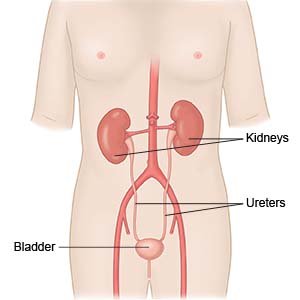
    Picture of the urinary system


  • A cystoscopy may be done to check for problems in your urinary tract (where urine passes). Urine normally flows from your kidneys into your bladder through your ureters. From your bladder, urine flows out of your body through your urethra. With a cystoscopy, your caregiver can check for bladder damage or narrowing of your urine tubes or bladder. Your caregiver may look for bladder stones, cancer, or for an enlarged prostate (male gland). Your caregiver may monitor your bladder after treatment for bladder cancer by doing a cystoscopy during your follow-up visits. Having a cystoscopy may help find the reason for your bladder problems and pain. Cystoscopy can also show if your treatment for bladder cancer is working.

Care Agreement

You have the right to help plan your care. Learn about your health condition and how it may be treated. Discuss treatment options with your caregivers to decide what care you want to receive. You always have the right to refuse treatment.

Risks

  • Medicines used during your procedure may cause an allergic response. You may feel pain or discomfort when a rigid scope is used during your procedure. Small or flat tumors may not be seen with a rigid or flexible scope. Inflamed (swollen) cells may be mistaken for tumors when using a fluorescent cystoscope. Dye used for fluorescence cystoscopy may cause damage to your skin. The lining of your urinary tract may be damaged, causing it to swell. The swelling may block the passage of urine causing your urine to flow back into your ureters and kidneys.

  • After your cystoscopy, you may have headaches, dizziness, and you may feel tired. You may lose your appetite, have an upset stomach, or throw up. You may have trouble having a bowel movement (BM) for a few days. You may have pain or trouble urinating, or you may feel the need to urinate right away. You may have bladder pain, get an infection, or have blood in your urine. If you do not have the cystoscopy, the cause of your bladder problems may not be found or treated. Your signs and symptoms may not resolve, and may get worse. Call your caregiver if you have questions or concerns about your procedure, medicine, or care.

Getting Ready

Before your procedure:

  • Bring your medicine bottles or a list of your medicines when you see your caregiver. Tell your caregiver if you are allergic to any medicine. Tell your caregiver if you use any herbs, food supplements, or over-the-counter medicine.

  • If you smoke, your caregiver may tell you not to smoke for at least 12 hours before your procedure. You may also need to avoid drinks with alcohol and caffeine. Alcohol is found in beer, wine, vodka, whiskey, and other adult drinks. Caffeine is found in some coffee, teas, sodas, and chocolates.

  • If you have a urinary infection, you may need to take antibiotic medicine before your procedure. Antibiotic medicine helps kill the bacteria (germs) that caused your infection. Ask your caregiver if you need to take this kind of medicine.

  • You may need to have blood and urine tests done before your procedure. Ask your caregiver for more information about these and other tests that you may need. Write down the date, time, and location of each test.

Night before your procedure:

  • Ask caregivers about directions for eating and drinking.

Day of your procedure:

  • Write down the correct date, time, and location of your procedure.

  • You or a close family member will be asked to sign a legal document called a consent form. It gives caregivers permission to do the procedure or surgery. It also explains the problems that may happen, and your choices. Make sure all your questions are answered before you sign this form.

  • Caregivers may insert an intravenous tube (IV) into your vein. A vein in the arm is usually chosen. Through the IV tube, you may be given liquids and medicine.

  • If you need a fluorescent cystoscopy, your caregiver will put a special dye into your bladder. The dye will need to be in your bladder for a short period of time before starting your procedure. Tell your caregiver if you are allergic to shellfish (shrimp, lobster, or crab). You may also be allergic to some dyes if you are allergic to shellfish.

  • An anesthesiologist may talk to you before your surgery. This caregiver may give you medicine to make you sleepy before your procedure or surgery. Tell your caregiver if you or anyone in your family has had a problem using anesthesia in the past.

Treatment

What will happen:

  • You will be taken to the room where your procedure will be done. You will be given anesthesia medicine to make you comfortable during your procedure. You may also have numbing medicine put into your urethra to decrease pain. During your procedure, you will either be fully asleep, or drowsy and numb in your hips and legs.

  • Your caregiver will put a cystoscope through your urethra and into your bladder. Your caregiver will carefully check your bladder for problems or abnormal growths. Dye may be put into your urethra so your caregiver can take samples of your bladder cells. The dye will make the bladder cells show up better under a microscope. Your caregiver may take tissue samples from your bladder and send them to a lab for tests. He may remove stones or abnormal growths in your bladder. He may place or remove a stent, which is a bendable tube put into your urethra. When your procedure is finished, your caregiver will carefully remove the scope.

After your procedure:

You will be taken to a room where you can rest. You will stay there until you are fully awake, and feeling returns in your numbed hips and legs. Caregivers will watch you closely for any problems. Do not get out of bed until your caregiver says it is OK. When caregivers see that you are OK, you may be able to go home. If you are staying in the hospital, you will be taken back to your room.

Waiting area:

This is an area where your family and friends can wait until you are able to have visitors. Ask your visitors to provide a way to reach them if they leave the waiting area.

Contact a caregiver if

  • You cannot make it to your procedure.

  • You get sick (a cold or the flu).

Copyright © 2012. Thomson Reuters. All rights reserved. Information is for End User's use only and may not be sold, redistributed or otherwise used for commercial purposes.

The above information is an educational aid only. It is not intended as medical advice for individual conditions or treatments. Talk to your doctor, nurse or pharmacist before following any medical regimen to see if it is safe and effective for you.

Advertisement
Close

Recommended

(web4)