
Contusion in Adults
Medically reviewed by Drugs.com. Last updated on Sep 1, 2024.
What is a contusion?
A contusion is a bruise that appears on your skin after an injury. A bruise happens when small blood vessels tear but skin does not. Blood leaks into nearby tissue, such as soft tissue or muscle.
What increases my risk for a contusion?
- A disorder that makes you bleed more easily
- Kidney or liver disease, or an infection
- Medicines such as blood thinners or certain over-the-counter medicines and herbal medicines
- Weakened skin and muscles from older age or nutrition problems
What are the signs and symptoms of a contusion?
- An area that may be black, blue, red, or darker than the skin around it
- Pain that increases when you touch the bruise, walk, or use the area around the bruise
- Swelling or a lump at the site of the bruise or near it
- Stiffness or problems moving the bruised area of your body
How is a contusion diagnosed?
Your healthcare provider may ask about any injuries, infections, or bleeding problems you had in the past. Your provider will check the skin over the injured area. Your provider may touch it to see where it hurts. Your provider may also check for problems you may have when you move your bruised area. You may also need any of the following:
- Blood tests may be used to check for blood disorders or to see how long it takes for your blood to clot.
- Ultrasound pictures may show how deep the bruise is and if any of your organs, such as your liver, are injured.
- MRI pictures may show if a hematoma (pooling of blood) has started to form. You may be given contrast liquid to help the pictures show up better. Tell the healthcare provider if you have ever had an allergic reaction to contrast liquid. Do not enter the MRI room with anything metal. The MRI machine uses a powerful magnet. Metal can cause serious injury from the magnet. Tell the healthcare provider if you have any metal in or on your body.
How is a contusion treated?
A contusion may heal without any treatment. The bruise may become lighter or change to green or yellow as it heals. Treatment depends on the part of your body that is injured, and how serious your injury is. You may need any of the following:
- Medicine may be needed to treat or prevent pain or swelling.
- Aspiration is a procedure to drain pooled blood in your muscle. This prevents increased pressure in the muscle.
- Surgery may be done to repair a tear in the muscle or relieve pressure in the muscle caused by swelling.
What can I do to help my contusion heal?
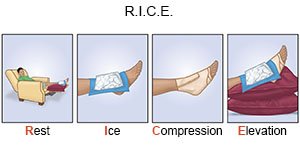
- Rest the injured area or use it less than usual. If you bruised your leg or foot, you may need crutches or a cane to help you walk. This will help you keep weight off your injured body part.
- Apply ice to decrease swelling and pain. Ice may also help prevent tissue damage. Use an ice pack, or put crushed ice in a plastic bag. Cover it with a towel and place it on your bruise for 15 to 20 minutes every hour or as directed.
- Use compression to support the area and decrease swelling. Wrap an elastic bandage around the area over the bruised muscle. Make sure the bandage is not too tight. You should be able to fit 1 finger between the bandage and your skin.
- Elevate (raise) your injured body part above the level of your heart to help decrease pain and swelling. Use pillows, blankets, or rolled towels to elevate the area as often as you can.
- Do not drink alcohol as directed. Alcohol may slow healing.
- Do not stretch injured muscles right after your injury. Ask your healthcare provider when and how you may safely stretch after your injury. Gentle stretches can help increase your flexibility.
- Do not massage the area or put heating pads on the bruise right after your injury. Heat and massage may slow healing. Your healthcare provider may tell you to apply heat after several days. At that time, heat will start to help the injury heal.
 |
How can I prevent a contusion?
- Stretch and warm up before you play sports or exercise.
- Wear protective gear when you play sports. Examples are shin guards and padding.
- If you begin a new physical activity, start slowly to give your body a chance to adjust.
When should I seek immediate care?
- You have new trouble moving the injured area.
- You have tingling or numbness in or near the injured area.
- Your hand or foot below the bruise gets cold or turns pale.
When should I call my doctor?
- You find a new lump in the injured area.
- Your symptoms do not improve with treatment after 4 to 5 days.
- You have questions or concerns about your condition or care.
Care Agreement
You have the right to help plan your care. Learn about your health condition and how it may be treated. Discuss treatment options with your healthcare providers to decide what care you want to receive. You always have the right to refuse treatment. The above information is an educational aid only. It is not intended as medical advice for individual conditions or treatments. Talk to your doctor, nurse or pharmacist before following any medical regimen to see if it is safe and effective for you.© Copyright Merative 2024 Information is for End User's use only and may not be sold, redistributed or otherwise used for commercial purposes.
Learn more about Contusion
Care guides
Further information
Always consult your healthcare provider to ensure the information displayed on this page applies to your personal circumstances.