
Chronic Pericarditis
Medically reviewed by Drugs.com. Last updated on Sep 1, 2024.
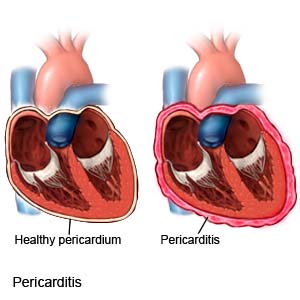
Chronic pericarditis is inflammation of the pericardium for longer than 3 months. The pericardium is the thin sac that surrounds your heart. A small amount of clear fluid between the heart and the sac allows the heart to beat easily. The amount of fluid increases and may contain pus. This can cause problems with the way that your heart beats.
 |
DISCHARGE INSTRUCTIONS:
Seek care immediately if:
- You have shortness of breath that is worse when you lie down.
- Your chest pain gets worse or does not get better.
Call your doctor if:
- You have a fever.
- You have questions or concerns about your condition or care.
Medicines:
You may need any of the following:
- NSAIDs help decrease swelling and pain or fever. This medicine is available with or without a doctor's order. NSAIDs can cause stomach bleeding or kidney problems in certain people. If you take blood thinner medicine, always ask your healthcare provider if NSAIDs are safe for you. Always read the medicine label and follow directions.
- Antibiotics help prevent or treat a bacterial infection.
- Steroid medicine helps lower inflammation.
- Take your medicine as directed. Contact your healthcare provider if you think your medicine is not helping or if you have side effects. Tell your provider if you are allergic to any medicine. Keep a list of the medicines, vitamins, and herbs you take. Include the amounts, and when and why you take them. Bring the list or the pill bottles to follow-up visits. Carry your medicine list with you in case of an emergency.
Self-care:
- Eat a variety of healthy foods. This may help you have more energy and heal faster. Healthy foods include fruits, vegetables, whole-grain breads, low-fat dairy products, beans, lean meat, and fish. Ask if you need to be on a special diet.

- Drink liquids as directed. Adults should drink between 9 and 13 eight-ounce cups of liquid every day. Ask what amount is best for you. For most people, good liquids to drink are water, juice, and milk.
- Get plenty of exercise. Talk to your provider about the best exercise plan for you. Exercise can decrease your blood pressure and improve your health.

- Do not smoke. Nicotine and other chemicals in cigarettes and cigars can cause lung damage. Ask your provider for information if you currently smoke and need help to quit. E-cigarettes or smokeless tobacco still contain nicotine. Talk to your provider before you use these products.
- Manage stress. Stress may slow healing and cause illness. Learn new ways to relax, such as deep breathing.
Treatment options
The following list of medications are related to or used in the treatment of this condition.
Prevent infections:
The following can help prevent the spread of viruses and bacteria that can cause acute pericarditis or make it worse:
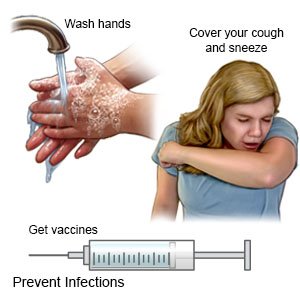 |
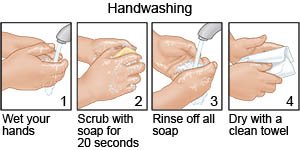
- Wash your hands often. Wash your hands several times each day. Wash after you use the bathroom, change a child's diaper, and before you prepare or eat food. Use soap and water every time. Rub your soapy hands together, lacing your fingers. Wash the front and back of your hands, and in between your fingers. Use the fingers of one hand to scrub under the fingernails of the other hand. Wash for at least 20 seconds. Rinse with warm, running water for several seconds. Then dry your hands with a clean towel or paper towel. Use hand sanitizer that contains alcohol if soap and water are not available. Do not touch your eyes, nose, or mouth without washing your hands first.
- Cover a sneeze or cough. Use a tissue that covers your mouth and nose. Throw the tissue away in a trash can right away. Use the bend of your arm if a tissue is not available. Wash your hands well with soap and water or use a hand sanitizer.
- Clean surfaces often. Clean doorknobs, countertops, cell phones, and other surfaces that are touched often. Use a disinfecting wipe, a single-use sponge, or a cloth you can wash and reuse. Use disinfecting cleaners if you do not have wipes. You can create a disinfecting cleaner by mixing 1 part bleach with 10 parts water.
- Ask about vaccines you may need. Vaccines help protect against viruses and bacteria that cause certain diseases. Your provider can tell you which vaccines you may need and when to get them.
- Get the influenza (flu) vaccine as soon as recommended each year. The flu vaccine is usually available starting in September or October. Flu viruses change, so it is important to get a flu vaccine every year.
- Get the pneumonia vaccine if recommended. This vaccine is usually recommended every 5 years. Your provider will tell you when to get this vaccine, if needed.
Follow up with your doctor as directed:
Write down your questions so you remember to ask them during your visits.
© Copyright Merative 2024 Information is for End User's use only and may not be sold, redistributed or otherwise used for commercial purposes.
The above information is an educational aid only. It is not intended as medical advice for individual conditions or treatments. Talk to your doctor, nurse or pharmacist before following any medical regimen to see if it is safe and effective for you.
Learn more about Chronic Pericarditis
Treatment options
- Medications for Constrictive Pericarditis
- Medications for Infectious Pericarditis
- Medications for Pericarditis
Care guides
Symptoms and treatments
Further information
Always consult your healthcare provider to ensure the information displayed on this page applies to your personal circumstances.