
Cervical Facet Block
Medically reviewed by Drugs.com. Last updated on Apr 2, 2024.
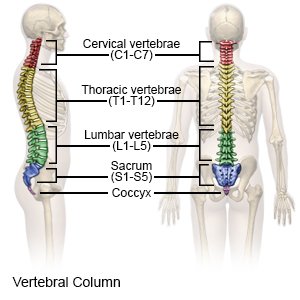
A cervical facet block is a procedure to inject medicine at the facet joints in your cervical (neck) spine. Facet joints are found at the back of each vertebrae.
 |
WHILE YOU ARE HERE:
Before your procedure:
- Informed consent is a legal document that explains the tests, treatments, or procedures that you may need. Informed consent means you understand what will be done and can make decisions about what you want. You give your permission when you sign the consent form. You can have someone sign this form for you if you are not able to sign it. You have the right to understand your medical care in words you know. Before you sign the consent form, understand the risks and benefits of what will be done. Make sure all your questions are answered.
- Local anesthesia is medicine injected into the skin. It is used to numb the area and dull your pain during your procedure. You may still feel pressure or pushing during the procedure.
- An IV is a small tube placed in your vein that is used to give you medicine or liquids.
During your procedure:
- You will lie on your stomach, with your head and body slightly turned to the side. Your healthcare provider will insert a thin needle near your cervical spine and into the facet joint. He or she will use an x-ray with contrast liquid or a CT scan to help guide the needle.
- Your provider will place the needle tip inside or just outside the facet joint and inject the medicine. The medicine may include steroids and anesthesia. Your healthcare provider may inject medicine into more than one area.
- Bandages will be placed over the areas where the needles were inserted.
After your procedure:
You will be taken to a recovery room to rest. Healthcare providers will watch you closely for any problems. Do not get out of bed until your healthcare provider says it is okay. When healthcare providers see that you are okay, you may be able to go home.
- Bandages will cover the procedure area. The bandages keep the area clean and dry to prevent infection. A healthcare provider may remove the bandages soon after your procedure to check the injection sites.
- Medicines may be given to treat pain, swelling, or fever, or to prevent an infection.
RISKS:
You may have bleeding at the injection site. Nerves, blood vessels, ligaments, muscles, and bones near your spine may be damaged. The medicine may spread past the facet joint and cause numbness in other areas. You may have trouble breathing. Even after you have this procedure, you may still have shoulder or back pain. You may also develop a headache from the procedure.
CARE AGREEMENT:
You have the right to help plan your care. Learn about your health condition and how it may be treated. Discuss treatment options with your healthcare providers to decide what care you want to receive. You always have the right to refuse treatment.© Copyright Merative 2024 Information is for End User's use only and may not be sold, redistributed or otherwise used for commercial purposes.
The above information is an educational aid only. It is not intended as medical advice for individual conditions or treatments. Talk to your doctor, nurse or pharmacist before following any medical regimen to see if it is safe and effective for you.
Further information
Always consult your healthcare provider to ensure the information displayed on this page applies to your personal circumstances.
