
Earwax Blockage
Medically reviewed by Drugs.com. Last updated on Aug 4, 2025.
What is earwax blockage?
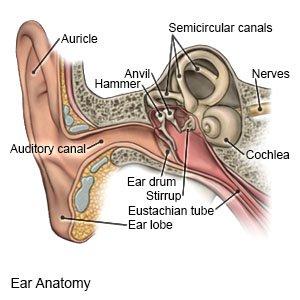
Earwax can build up in your ear canal and cause a blockage. Earwax blockage happens when your ear makes earwax faster than your body can remove it.
 |
What causes earwax blockage?
- Narrow or abnormally shaped ear canals
- Overgrowth of bone in your ear canal
- Skin disease, such as eczema
- Autoimmune disease, such as lupus
- An injury that causes your body to make more earwax
- Foreign objects in the ear
- Using cotton swabs to clean your ears
- Use of a hearing aid or ear plugs
What are the signs and symptoms of earwax blockage?
- Trouble hearing
- Earache
- Ear fullness or a feeling that something is plugging up your ear
- Itching or ringing in your ear
- Dizziness
How is earwax blockage treated?
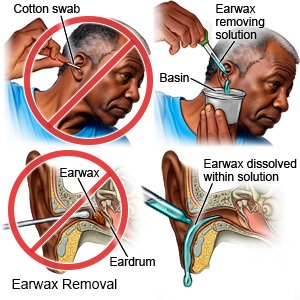
- Medicines placed in the ear canal can soften the earwax so it will come out.
- Flushing your ear canal with warm water may flush out the earwax.
- Small medical tools may be used to remove the earwax.
How can I prevent earwax blockage?
Do not stick anything into your ears to clean them. Use cotton swabs on the outside of your ear only. Ask your healthcare provider for more information on ways to prevent blockage.
 |
When should I seek immediate care?
- You feel dizzy.
- You have discharge or blood coming out of your ear.
- Your ear pain does not go away or gets worse.
When should I call my doctor?
- You have a fever.
- You have trouble hearing or hear ringing noises.
- You have questions or concerns about your condition or care.
Care Agreement
You have the right to help plan your care. Learn about your health condition and how it may be treated. Discuss treatment options with your healthcare providers to decide what care you want to receive. You always have the right to refuse treatment. The above information is an educational aid only. It is not intended as medical advice for individual conditions or treatments. Talk to your doctor, nurse or pharmacist before following any medical regimen to see if it is safe and effective for you.© Copyright Merative 2025 Information is for End User's use only and may not be sold, redistributed or otherwise used for commercial purposes.
Further information
Always consult your healthcare provider to ensure the information displayed on this page applies to your personal circumstances.