
Burn Prevention in Children
Medically reviewed by Drugs.com. Last updated on Jun 30, 2025.
A burn injury happens when skin is exposed to too much heat or a harsh chemical. Burn injuries are common among children. Severe burns can be life-threatening. You can prevent burn injuries by learning about the causes and how to keep your child safe.
DISCHARGE INSTRUCTIONS:
Call 911 for any of the following:
- Your child has a burn on his face, neck, or chest.
- A large area of your child's skin is burned.
- Your child has trouble breathing.
Return to the emergency room if:
- Your child's skin is red, moist, painful, or develops blisters.
Contact your child's healthcare provider if:
- You have questions or concerns about your child's condition or care.
Causes of burn injuries:
Contact burns often happen when children reach for objects without knowing that they are hot. The most common causes of burns are hot objects such as an iron, a skillet, cigarettes, or fireworks. Children may also get burned when they play with matches or lighters. Some other causes of burn injuries include the following:
- Harsh chemicals, such as cleaning products, chlorine, or car battery acid
- Electric currents from lightning, electrical outlets, cords, or wires
- Steam, hot food, grease spills, boiling water, or other hot liquids
- Exposure to the sun for long periods of time
Prevent contact burns:
- Keep irons, curling irons, and other hot devices out of your child's reach.
- Use protective screens or child safety guards around fireplaces, ovens, space heaters, and radiators.
- Do not eat, drink, or carry anything hot while you hold your child.
- Do not leave a lit cigarette. Keep cigarette lighters and matches in a safe place where children cannot reach them.
Prevent burns caused by hot liquids or steam:
- Do not heat your baby's bottle in the microwave. Always test the temperature of the liquid before you give it to your baby to hold or drink.
- Check the water temperature before you put your child into the bathtub. Do not let your child touch the faucet handles in the bathtub. Place anti-scald devices on your faucets to check the water temperature. Lower your hot water heater setting to low or medium (90°F to 120°F, or 32°C to 48°C).
- Do not leave cups, mugs, or bowls that have hot liquids in them at the edge of a table. Keep pot handles turned away from the stove front.
Prevent other types of burns:
- Put sunscreen on your child's skin 30 minutes before he goes outside. Reapply sunscreen every 2 hours or after he swims or has been sweating. You can also set time limits when you allow your child to stay out in the sun.
- Do not let your child handle lit firecrackers or sparklers. These can cause serious injuries or burns.
- Keep your child away from electrical cords and outlets. Cover unused electrical outlets with childproof covers and replace torn or worn cords.
- Have your child wear pajamas made of flame-resistant fabric. Do not let him wear clothing with fuzzy or napped surfaces, or clothing that is loosely woven, or loose-fitting. Halloween costumes can also catch fire easily since they have loose, flowing material. Choose clothing for your child that fits snugly against his skin.
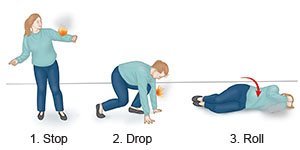
- Teach your child how to stop, drop, and roll. Children will often run if their clothes are on fire. This can make the fire spread. Teach your child how to stop, drop to the ground, and roll around if his clothing catches on fire. This will help protect his face from flames and will help put the fire out.
Improve fire safety in your home:
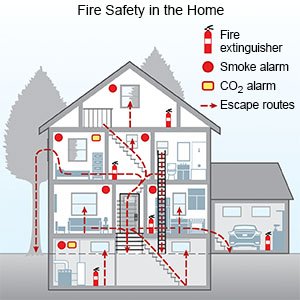
- Keep a working fire extinguisher in your home. Teach family members how and when to use it.
- Lock up liquids that may catch on fire, such as gasoline and kerosene. Leave the liquid in the container it came in, and label the container.
- Put a smoke detector on every floor in your house, and by each bedroom. Check them regularly to make sure they are working. Replace the batteries 2 times each year.
- Plan how to get out of each room of your house quickly if there is a fire. Teach your children how to get out and where to go. Have fire drills.
Follow up with your child's healthcare provider as directed:
Write down your questions so you remember to ask them during your visits.
© Copyright Merative 2025 Information is for End User's use only and may not be sold, redistributed or otherwise used for commercial purposes.
The above information is an educational aid only. It is not intended as medical advice for individual conditions or treatments. Talk to your doctor, nurse or pharmacist before following any medical regimen to see if it is safe and effective for you.
Further information
Always consult your healthcare provider to ensure the information displayed on this page applies to your personal circumstances.