
The originating document has been archived. We cannot confirm the completeness, accuracy, or currency of the content.
Abdominal Aortic Aneurysm Repair
Medically reviewed by Drugs.com. Last updated on Feb 21, 2024.
An abdominal aortic aneurysm (AAA) occurs when your aorta weakens and bulges out like a balloon. The aorta is a large blood vessel that extends from your heart to your abdomen. An aneurysm that is too big may burst and need repair. Abdominal aortic aneurysm (AAA) repair is surgery to fix an aneurysm in your abdominal aorta.
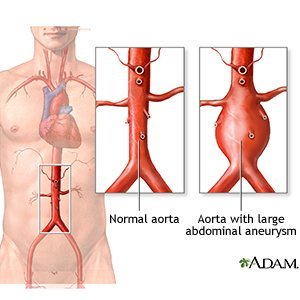 |
DISCHARGE INSTRUCTIONS:
Take your medicine as directed.
Contact your healthcare provider if you think your medicine is not helping or if you have side effects. Tell him of her if you are allergic to any medicine. Keep a list of the medicines, vitamins, and herbs you take. Include the amounts, and when and why you take them. Bring the list or the pill bottles to follow-up visits. Carry your medicine list with you in case of an emergency.
Follow up with your healthcare provider as directed:
Write down your questions so you remember to ask them during your visits.
Self-care:
- Check your blood pressure as directed: High blood pressure can cause problems after your surgery. Ask your healthcare provider what your blood pressure should be.
- Do not smoke: If you smoke, it is never too late to quit. Ask for information about how to stop smoking if you need help.
Contact your healthcare provider if:
- You are sick to your stomach or throwing up.
- You have a fever or chills.
- You have trouble having a bowel movement or you have diarrhea.
- You have blood in your bowel movement.
- You have questions about your condition or care.
Return to the emergency department if:
- Your stitches come apart.
- Your bandage becomes soaked with blood, or your incision is swollen, red, or has pus coming from it.
- Your feet become very cold or turn pale or blue.
- You have pain in your chest, abdomen, back, or side.
- You urinate less than before or not at all.
- Your arm or leg feels warm, tender, and painful. It may look swollen and red.
- You cough up blood.
- You feel lightheaded, short of breath, and have chest pain. You cough up blood.
- You feel lightheaded, short of breath, and have chest pain.
Further information
Always consult your healthcare provider to ensure the information displayed on this page applies to your personal circumstances.
