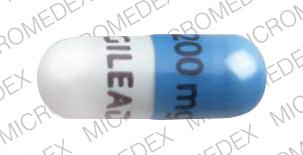
Emtriva Dosage
Generic name: EMTRICITABINE 200mg
Dosage form: capsule, oral solution
Drug class: Nucleoside reverse transcriptase inhibitors (NRTIs)
Medically reviewed by Drugs.com. Last updated on Jun 19, 2023.
Testing Prior to Initiation of Treatment with EMTRIVA
Prior to or when initiating EMTRIVA, test patients for hepatitis B virus infection [see Warnings and Precautions (5.1)].
Recommended Dosage
EMTRIVA is taken by mouth once daily and may be taken without regard to food [see Clinical Pharmacology (12.3)].
Recommended Dosage in Adult Patients (18 years of age and older)
EMTRIVA capsules: One 200 mg capsule administered once daily orally.
EMTRIVA oral solution: 240 mg (24 mL) administered once daily orally.
Recommended Dosage in Pediatric Patients (0–3 months of age)
EMTRIVA oral solution: 3 mg per kg administered once daily orally.
Recommended Dosage in Pediatric Patients (3 months through 17 years of age)
EMTRIVA oral solution: 6 mg per kg up to a maximum of 240 mg (24 mL) administered once daily orally.
EMTRIVA capsules: For pediatric patients weighing more than 33 kg who can swallow an intact capsule, one 200 mg capsule administered once daily orally.
Dosage Adjustment in Patients with Renal Impairment
Table 1 provides dosage interval adjustment for patients with renal impairment. No dosage adjustment is necessary for patients with mild renal impairment (creatinine clearance 50–80 mL/min). The safety and effectiveness of dose adjustment recommendations in patients with moderate to severe renal impairment (creatinine clearance below 50 mL/min) have not been clinically evaluated. Therefore, clinical response to treatment and renal function should be closely monitored in these patients [see Warnings and Precautions (5.4), Use in Specific Populations (8.6)].
| Creatinine Clearance (mL/min) | ||||
|---|---|---|---|---|
| Formulation | ≥50 mL/min | 30–49 mL/min | 15–29 mL/min | <15 mL/min or on hemodialysis* |
|
||||
| Capsule (200 mg) |
200 mg every 24 hours | 200 mg every 48 hours | 200 mg every 72 hours | 200 mg every 96 hours |
| Oral Solution (10 mg/mL) |
240 mg every 24 hours (24 mL) |
120 mg every 24 hours (12 mL) |
80 mg every 24 hours (8 mL) |
60 mg every 24 hours (6 mL) |
There are insufficient data available to make dosage recommendations in pediatric patients with renal impairment.
Frequently asked questions
- Truvada vs Descovy: How do they compare for HIV and PrEP?
- What is the difference between HIV treatments Odefsey and Complera?
- Genvoya vs Stribild for HIV - How do they compare?
- What drugs are contained in the HIV treatment Symtuza?
More about Emtriva (emtricitabine)
- Check interactions
- Compare alternatives
- Pricing & coupons
- Drug images
- Side effects
- During pregnancy
- Generic availability
- Drug class: nucleoside reverse transcriptase inhibitors (NRTIs)
- Breastfeeding
- En español
Patient resources
Professional resources
Related treatment guides
Further information
Always consult your healthcare provider to ensure the information displayed on this page applies to your personal circumstances.