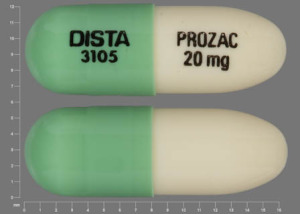
Prozac Disease Interactions
There are 12 disease interactions with Prozac (fluoxetine).
- Depression
- Diabetes
- Hyponatremia
- Glaucoma
- Liver disease
- Mania
- Platelet function
- QT prolongation
- Seizure disorders
- SIADH
- Renal dysfunction
- Weight loss
SSRI antidepressants (applies to Prozac) depression
Major Potential Hazard, Moderate plausibility. Applicable conditions: Psychosis
Adult and pediatric patients with depression and other psychiatric disorders may experience worsening of their symptoms and may have the emergence of suicidal thoughts and behavior. Patients should be monitored appropriately and observed closely for worsening of their symptoms, suicidality or changes in their behavior, especially during the first few months of treatment, and at times of dose changes. Families and caregivers should be advised of the need for close observation and communication with the treating physician. Discontinuing the medication should be considered if symptoms are persistently worse, or abrupt in onset. It may be prudent to refrain from dispensing large quantities of medication to these patients.
References
- "Product Information. Zoloft (sertraline)." Roerig Division PROD (2001):
- "Product Information. Prozac (fluoxetine)." Dista Products Company PROD (2001):
- "Product Information. Paxil (paroxetine)." GlaxoSmithKline PROD (2001):
- "Product Information. Luvox (fluvoxamine)." Solvay Pharmaceuticals Inc PROD (2001):
- "Product Information. Celexa (citalopram)." Forest Pharmaceuticals PROD (2001):
- "Product Information. Lexapro (escitalopram)." Forest Pharmaceuticals (2002):
Fluoxetine (applies to Prozac) diabetes
Moderate Potential Hazard, Moderate plausibility. Applicable conditions: Diabetes Mellitus
Fluoxetine may alter blood glucose control in patients with diabetes. Hypoglycemia may occur during therapy with fluoxetine, and hyperglycemia may occur following discontinuation of the drug. Dosage adjustments in insulin and/or oral hypoglycemic medications may be necessary in patients with diabetes whenever fluoxetine therapy is initiated or discontinued.
References
- "Product Information. Prozac (fluoxetine)." Dista Products Company PROD (2001):
SSRI (applies to Prozac) hyponatremia
Moderate Potential Hazard, Moderate plausibility.
Treatment with SSRI antidepressants can cause hyponatremia. Caution should be used when treating patients with hyponatremia or at greater risk of hyponatremia such as the elderly, patients taking diuretics or who are volume depleted.
References
- "Product Information. Zoloft (sertraline)." Roerig Division PROD (2001):
- "Product Information. Prozac (fluoxetine)." Dista Products Company PROD (2001):
- "Product Information. Paxil (paroxetine)." GlaxoSmithKline PROD (2001):
- "Product Information. Luvox (fluvoxamine)." Solvay Pharmaceuticals Inc PROD (2001):
- "Product Information. Celexa (citalopram)." Forest Pharmaceuticals PROD (2001):
- "Product Information. Lexapro (escitalopram)." Forest Pharmaceuticals (2002):
SSRIs (applies to Prozac) glaucoma
Moderate Potential Hazard, Moderate plausibility. Applicable conditions: Glaucoma (Narrow Angle)
Some SSRI antidepressants such as fluoxetine, paroxetine and sertraline may have an effect on pupil size causing dilation. This effect can potentially narrow the eye angle resulting in increased intraocular pressure and angle closure glaucoma, especially in predisposed patients. These drugs should be used with caution in patients with angle-closure glaucoma or history of glaucoma.
References
- "Product Information. Zoloft (sertraline)." Roerig Division PROD (2001):
- "Product Information. Prozac (fluoxetine)." Dista Products Company PROD (2001):
- "Product Information. Paxil (paroxetine)." GlaxoSmithKline PROD (2001):
SSRIs (applies to Prozac) liver disease
Moderate Potential Hazard, High plausibility.
Selective serotonin reuptake inhibitors (SSRIs) are primarily metabolized by the liver. The plasma concentrations of SSRIs and their metabolites may be increased and the half-lives prolonged in patients with impaired hepatic function. Dosage adjustments may be necessary in accordance with the individual product package labeling.
References
- Schenker S, Bergstrom RF, Wolen RL, Lemberger L "Fluoxetine disposition and elimination in cirrhosis." Clin Pharmacol Ther 44 (1988): 353-9
- Doogan DP, Caillard V "Sertraline: a new antidepressant." J Clin Psychiatry 49 (1988): 46-51
- Guthrie SK "Sertraline: a new specific serotonin reuptake blocker." DICP 25 (1991): 952-61
- Murdoch D, McTavish D "Sertraline. A review of its pharmacodynamic and pharmacokinetic properties, and therapeutic potential in depression and obsessive- compulsive disorder." Drugs 44 (1992): 604-24
- "Product Information. Zoloft (sertraline)." Roerig Division PROD (2001):
- "Product Information. Prozac (fluoxetine)." Dista Products Company PROD (2001):
- Lund J, Thayssen P, Mengel H, Pedersen OL, Kristensen CB, Gram LF "Paroxetine: pharmacokinetics and cardiovascular effects after oral and intravenous single doses in man." Acta Pharmacol Toxicol (Copenh) 51 (1982): 351-7
- Krastev Z, Terziivanov D, Vlahov V, Maleev A, Greb WH, Eckl KM, Dierdorf HD, Wolf D "The pharmacokinetics of paroxetine in patients with liver cirrhosis." Acta Psychiatr Scand Suppl 350 (1989): 91-2
- Kaye CM, Haddock RE, Langley PF, Mellows G, Tasker TC, Zussman BD, Greb WH "A review of the metabolism and pharmacokinetics of paroxetine in man." Acta Psychiatr Scand Suppl 350 (1989): 60-75
- "Product Information. Paxil (paroxetine)." GlaxoSmithKline PROD (2001):
- Benfield P, Ward A "Fluvoxamine. A review of its pharmacodynamic and pharmacokinetic properties, and therapeutic efficacy in depressive illness." Drugs 32 (1986): 313-34
- Wilde MI, Plosker GL, Benfield P "Fluvoxamine. An updated review of its pharmacology, and therapeutic use in depressive illness." Drugs 46 (1993): 895-924
- "Product Information. Luvox (fluvoxamine)." Solvay Pharmaceuticals Inc PROD (2001):
- Finley PR "Selective serotonin reuptake inhibitors: pharmacologic profiles and potential therapeutic distinctions." Ann Pharmacother 28 (1994): 1359-69
- van Harten J "Clinical pharmacokinetics of selective serotonin reuptake inhibitors." Clin Pharmacokinet 24 (1993): 203-20
- "Product Information. Celexa (citalopram)." Forest Pharmaceuticals PROD (2001):
- "Product Information. Lexapro (escitalopram)." Forest Pharmaceuticals (2002):
SSRIs (applies to Prozac) mania
Moderate Potential Hazard, Moderate plausibility. Applicable conditions: Bipolar Disorder, Depression
Selective serotonin reuptake inhibitors (SSRIs), like other antidepressants, may occasionally cause or activate mania or hypomania. The reported incidence ranged from 0.1% to 2% in premarketing testing of several SSRIs. Patients with bipolar disorder are generally more likely to experience mania from antidepressants. Therapy with SSRIs should be administered cautiously in patients with a history of mania or bipolar disorder. Prior to initiating treatment, it is recommended to adequately screen patients for bipolar disorder, including a family history of suicide, bipolar disorder, and depression.
References
- Vieta E, Bernardo M "Antidepressant-induced mania in obsessive-compulsive disorder." Am J Psychiatry 149 (1992): 1282-3
- Beal DM, Harris D, Bartos M, Korsak C, Splane G, Quant R, Starke J "Safety and efficacy of fluoxetine." Am J Psychiatry 148 (1991): 1751
- Achamallah NS, Decker DH "Mania induced by fluoxetine in an adolescent patient." Am J Psychiatry 148 (1991): 1404
- Lensgraf SJ, Favazza AR "Antidepressant-induced mania." Am J Psychiatry 147 (1990): 1569
- Piredda SG, Rubinstein SL "Hypomania induced by fluoxetine?" Biol Psychiatry 32 (1992): 107
- Guthrie SK "Sertraline: a new specific serotonin reuptake blocker." DICP 25 (1991): 952-61
- Murdoch D, McTavish D "Sertraline. A review of its pharmacodynamic and pharmacokinetic properties, and therapeutic potential in depression and obsessive- compulsive disorder." Drugs 44 (1992): 604-24
- Laporta M, Chouinard G, Goldbloom D, Beauclair L "Hypomania induced by sertraline, a new serotonin reuptake inhibitor." Am J Psychiatry 144 (1987): 1513-4
- Mundo E, Ronchi P, Bellodi L "Drug-induced mania." Hosp Community Psychiatry 44 (1993): 689-90
- "Product Information. Zoloft (sertraline)." Roerig Division PROD (2001):
- "Product Information. Prozac (fluoxetine)." Dista Products Company PROD (2001):
- Boyer WF, Blumhardt CL "The safety profile of paroxetine." J Clin Psychiatry 53 Suppl (1992): 61-6
- "Product Information. Paxil (paroxetine)." GlaxoSmithKline PROD (2001):
- Berthier ML, Kulisevsky J "Fluoxetine - induced mania in a patient with poststroke depression." Br J Psychiatry 163 (1993): 698-9
- Messiha FS "Fluoxetine - adverse effects and drug-drug interactions." J Toxicol Clin Toxicol 31 (1993): 603-30
- Peet M "Induction of mania with selective serotonin re-uptake inhibitors and tricyclic antidepressants." Br J Psychiatry 164 (1994): 549-50
- Burrai C, Bocchetta A, del Zompo M "Mania and fluvoxamine." Am J Psychiatry 148 (1991): 1263-4
- Dorevitch A, Frankel Y, Bar-Halperin A, Aronzon R, Zilberman L "Fluvoxamine-associated manic behavior: a case series." Ann Pharmacother 27 (1993): 1455-7
- Edwards JG, Inman WH, Wilton L, Pearce GL "Prescription-event monitoring of 10,401 patients treated with fluvoxamine." Br J Psychiatry 164 (1994): 387-95
- Wagner W, Plekkenpol B, Gray TE, Vlaskamp H, Essers H "Review of fluvoxamine safety database." Drugs 43 Suppl 2 (1992): 48-53;disc. 53-4
- Jefferson JW, Greist JH, Perse TL, Rosenfeld R "Fluvoxamine-associated mania/hypomania in patients with obsessive- compulsive disorder." J Clin Psychopharmacol 11 (1991): 391-2
- Diaferia G, Mundo E, Bianchi Y, Ronchi P "Behavioral side effects in obsessive-compulsive patients treated with fluvoxamine: a clinical description." J Clin Psychopharmacol 14 (1994): 78-9
- "Product Information. Luvox (fluvoxamine)." Solvay Pharmaceuticals Inc PROD (2001):
- Marshall RD, Printz D, Cardenas D, Abbate L, Liebowitz MR "Adverse events in PTSD patients taking fluoxetine." Am J Psychiatry 152 (1995): 1238-9
- Howland RH "Induction of mania with serotonin reuptake inhibitors." J Clin Psychopharmacol 16 (1996): 425-7
- "Product Information. Celexa (citalopram)." Forest Pharmaceuticals PROD (2001):
- "Product Information. Lexapro (escitalopram)." Forest Pharmaceuticals (2002):
SSRIs (applies to Prozac) platelet function
Moderate Potential Hazard, High plausibility. Applicable conditions: Bleeding, Coagulation Defect, Thrombocytopathy, Thrombocytopenia, Vitamin K Deficiency
The use of selective serotonin reuptake inhibitors (SSRIs) has been associated with altered platelet function. Petechiae, purpura, ecchymosis, increased bleeding times, epistaxis and gastrointestinal hemorrhage have been reported. Therapy with SSRIs should be administered cautiously in patients with severe active bleeding or a hemorrhagic diathesis.
References
- Aranth J, Lindberg C "Bleeding, a side effect of fluoxetine." Am J Psychiatry 149 (1992): 412
- Yaryura-Tobias JA, Kirschen H, Ninan P, Mosberg HJ "Fluoxetine and bleeding in obsessive-compulsive disorder." Am J Psychiatry 148 (1991): 949
- Humphries JE, Wheby MS, VandenBerg SR "Fluoxetine and the bleeding time." Arch Pathol Lab Med 114 (1990): 727-8
- Alderman CP, Moritz CK, Ben-Tovim DI "Abnormal platelet aggregation associated with fluoxetine therapy." Ann Pharmacother 26 (1992): 1517-9
- "Product Information. Zoloft (sertraline)." Roerig Division PROD (2001):
- "Product Information. Prozac (fluoxetine)." Dista Products Company PROD (2001):
- "Product Information. Paxil (paroxetine)." GlaxoSmithKline PROD (2001):
- Messiha FS "Fluoxetine - adverse effects and drug-drug interactions." J Toxicol Clin Toxicol 31 (1993): 603-30
- Ottervanger JP, Stricker BH, Huls J, Weeda JN "Bleeding attributed to the intake of paroxetine." Am J Psychiatry 151 (1994): 781-2
- "Product Information. Luvox (fluvoxamine)." Solvay Pharmaceuticals Inc PROD (2001):
- Krivy J, Wiener J "Sertraline and platelet counts in idiopathic thrombocytopenia purpura." Lancet 345 (1995): 132
- Skop BP, Brown TM "Potential vascular and bleeding complications of treatment with selective serotonin reuptake inhibitors." Psychosomatics 37 (1996): 12-6
- Pai VB, Kelly MW "Bruising associated with the use of fluoxetine." Ann Pharmacother 30 (1996): 786-8
- Alderman CP, Seshadri P, Ben-Tovim DI "Effects of serotonin reuptake inhibitors on hemostasis." Ann Pharmacother 30 (1996): 1232-4
- Leung M, Shore R "Fluvoxamine-associated bleeding." Can J Psychiatry 41 (1996): 604-5
- "Product Information. Celexa (citalopram)." Forest Pharmaceuticals PROD (2001):
- Settle EC "Antidepressant drugs: disturbing and potentially dangerous adverse effects." J Clin Psychiatry 59 Suppl 16 (1998): 25-30
- Hergovich N, Aigner M, Eichler HG, Entlicher J, Drucker C, Jilma B "Paroxetine decreases platelet serotonin storage and platelet function in human beings." Clin Pharmacol Ther 68 (2000): 435-42
SSRIs (applies to Prozac) QT prolongation
Moderate Potential Hazard, Moderate plausibility. Applicable conditions: Long QT Syndrome, Ventricular Arrhythmia
Some SSRI antidepressants such as fluoxetine and citalopram have shown to cause QT interval prolongation and ventricular arrhythmias including Torsade de Pointes. These drugs should be used with caution in patients with congenital QT syndrome, a previous personal or family history of QT prolongation, and ventricular arrhythmia. Consider periodic EKG assessment on these patients. Treatment should be discontinued and a cardiac evaluation should be considered if a patient develops signs or symptoms of ventricular arrhythmia.
References
- "Product Information. Prozac (fluoxetine)." Dista Products Company PROD (2001):
- "Product Information. Celexa (citalopram)." Forest Pharmaceuticals PROD (2001):
SSRIs (applies to Prozac) seizure disorders
Moderate Potential Hazard, Moderate plausibility. Applicable conditions: Seizures
Selective serotonin reuptake inhibitors (SSRIs) may trigger seizures in approximately 0.2% of patients, and some of them are not recommended in patients with unstable epilepsy. Therapy with SSRIs should be administered cautiously in patients with seizure disorders.
References
- Hargrave R, Martinez D, Bernstein AJ "Fluoxetine-induced seizures." Psychosomatics 33 (1992): 236-9
- Doogan DP, Caillard V "Sertraline: a new antidepressant." J Clin Psychiatry 49 (1988): 46-51
- Guthrie SK "Sertraline: a new specific serotonin reuptake blocker." DICP 25 (1991): 952-61
- Murdoch D, McTavish D "Sertraline. A review of its pharmacodynamic and pharmacokinetic properties, and therapeutic potential in depression and obsessive- compulsive disorder." Drugs 44 (1992): 604-24
- "Product Information. Zoloft (sertraline)." Roerig Division PROD (2001):
- "Product Information. Prozac (fluoxetine)." Dista Products Company PROD (2001):
- Boyer WF, Blumhardt CL "The safety profile of paroxetine." J Clin Psychiatry 53 Suppl (1992): 61-6
- "Product Information. Paxil (paroxetine)." GlaxoSmithKline PROD (2001):
- Messiha FS "Fluoxetine - adverse effects and drug-drug interactions." J Toxicol Clin Toxicol 31 (1993): 603-30
- Levine R, Kenin M, Hoffman JS, Dayknepple E "Grand mal seizures associated with the use of fluoxetine." J Clin Psychopharmacol 14 (1994): 145-6
- Madi L, Obrien AAJ, Fennell J "Status epilepticus secondary to fluoxetine." Postgrad Med J 70 (1994): 383-4
- Nemeroff CB "The clinical pharmacology and use of paroxetine, a new selective serotonin reuptake inhibitor." Pharmacotherapy 14 (1994): 127-38
- Spivey KM, Wait CM "Perioperative seizures and fluvoxamine." Br J Anaesth 71 (1993): 321
- Deahl M, Trimble M "Serotonin reuptake inhibitors, epilepsy and myoclonus." Br J Psychiatry 159 (1991): 433-5
- Edwards JG, Inman WH, Wilton L, Pearce GL "Prescription-event monitoring of 10,401 patients treated with fluvoxamine." Br J Psychiatry 164 (1994): 387-95
- Wagner W, Plekkenpol B, Gray TE, Vlaskamp H, Essers H "Review of fluvoxamine safety database." Drugs 43 Suppl 2 (1992): 48-53;disc. 53-4
- "Product Information. Luvox (fluvoxamine)." Solvay Pharmaceuticals Inc PROD (2001):
- Marshall RD, Printz D, Cardenas D, Abbate L, Liebowitz MR "Adverse events in PTSD patients taking fluoxetine." Am J Psychiatry 152 (1995): 1238-9
- "Product Information. Celexa (citalopram)." Forest Pharmaceuticals PROD (2001):
- Kim KY, Craig JM, Hawley JM "Seizure possibly associated with fluvoxamine." Ann Pharmacother 34 (2000): 1276-8
- "Product Information. Lexapro (escitalopram)." Forest Pharmaceuticals (2002):
SSRIs (applies to Prozac) SIADH
Moderate Potential Hazard, Moderate plausibility. Applicable conditions: Dehydration, Hyponatremia
The use of selective serotonin reuptake inhibitors (SSRIs) has rarely been associated with hyponatremia, sometimes secondary to development of the syndrome of inappropriate secretion of antidiuretic hormone (SIADH). These events have generally been reversible following discontinuation of SSRI therapy and/or medical intervention. SSRI-related hyponatremia may be more common in elderly female patients and those who are volume-depleted or receiving concomitant diuretic therapy. Caution may be warranted when SSRI therapy is administered in these patients and patients with preexisting hyponatremia or SIADH. Serum electrolytes, especially sodium as well as BUN and plasma creatinine, should be monitored regularly.
References
- Abbott R "Hyponatremia due to antidepressant medications." Ann Emerg Med 12 (1983): 708-10
- Vishwanath BM, Navalgund AA, Cusano W, Navalgund KA "Fluoxetine as a cause of SIADH." Am J Psychiatry 148 (1991): 542-3
- Staab JP, Yerkes SA, Cheney EM, Clayton AH "Transient SIADH associated with fluoxetine." Am J Psychiatry 147 (1990): 1569-70
- Cohen BJ, Mahelsky M, Adler L "More cases of SIADH with fluoxetine." Am J Psychiatry 147 (1990): 948-9
- Kazal LA, Jr Hall DL, Miller LG, Noel ML "Fluoxetine-induced SIADH: a geriatric occurrence?" J Fam Pract 36 (1993): 341-3
- Crews JR, Potts NL, Schreiber J, Lipper S "Hyponatremia in a patient treated with sertraline." Am J Psychiatry 150 (1993): 1564
- Blacksten JV, Birt JA "Syndrome of inappropriate secretion of antidiuretic hormone secondary to fluoxetine." Ann Pharmacother 27 (1993): 723-4
- "Product Information. Zoloft (sertraline)." Roerig Division PROD (2001):
- "Product Information. Prozac (fluoxetine)." Dista Products Company PROD (2001):
- Chua TP, Vong SK "Hyponatraemia associated with paroxetine." BMJ 306 (1993): 143
- Goddard C, Paton C "Hyponatraemia associated with paroxetine." BMJ 305 (1992): 1332
- "Product Information. Paxil (paroxetine)." GlaxoSmithKline PROD (2001):
- Doshi D, Borison R "Association of transient SIADH with sertraline." Am J Psychiatry 151 (1994): 779-80
- Pillans PI, Coulter DM "Fluoxetine and hyponatraemia - a potential hazard in the elderly." N Z Med J 107 (1994): 85-6
- Baliga RR, McHardy KC "Syndrome of inappropriate antidiuretic hormone secretion due to fluvoxamine therapy [published erratum appears in Br J Clin Pract 1993 May-Jun;47(3):119]." Br J Clin Pract 47 (1993): 62-3
- "Product Information. Luvox (fluvoxamine)." Solvay Pharmaceuticals Inc PROD (2001):
- Llorente MD, Gorelick M, Silverman MA "Sertraline as the cause of inappropriate antidiuretic hormone secretion." J Clin Psychiatry 55 (1994): 543-4
- Thornton SL, Resch DS "SIADH associated with sertraline therapy." Am J Psychiatry 152 (1995): 809
- Jackson C, Carson W, Markowitz J, Mintzer J "SIADH associated with fluoxetine and sertraline therapy." Am J Psychiatry 152 (1995): 809-10
- Ayonrinde OT, Reutens SG, Sanfilippo FM "Paroxetine-induced SIADH." Med J Aust 163 (1995): 390
- Kessler J, Samuels SC "Sertraline and hyponatremia." N Engl J Med 335 (1996): 524
- Bradley ME, Foote EF, Lee EN, Merkle L "Sertraline-associated syndrome of inappropriate antidiuretic hormone: case report and review of the literature." Pharmacotherapy 16 (1996): 680-3
- "Selective serotonin reuptake inhibitors and SIADH." Med J Aust 164 (1996): 562
- Robinson D, Brooks J, Mahler E, Sheikh JI "SIADH--compulsive drinking or SSRI influence?" Ann Pharmacother 30 (1996): 885
- Schattner A, Skurnik Y "Fluoxetine-induced SIADH." J Am Geriatr Soc 44 (1996): 1413
- Woo MH, Smythe MA "Association of SIADH with selective serotonin reuptake inhibitors." Ann Pharmacother 31 (1997): 108-10
- Bouman WP, Johnson H, TrescoliSerrano C, Jones RG "Recurrent hyponatremia associated with sertraline and lofepramine." Am J Psychiatry 154 (1997): 580
- Girault C, Richard JC, Chevron V, Goulle JP, Droy JM, Bonmarchand G, Leroy J "Syndrome of inappropriate secretion of antidiuretic hormone in two elderly women with elevated serum fluoxetine." J Toxicol Clin Toxicol 35 (1997): 93-5
- Ayonrinde OT, Sanfilippo FM "SSRI antidepressants and SIADH." Aust N Z J Psychiatry 31 (1997): 306-7
- Liu BA, Mittmann N, Knowles SR, Shear NH "Hyponatremia and the syndrome of inappropriate secretion of antidiuretic hormone associated with the use of selective serotoni reuptake inhibitors: a review of spontaneous reports [publishe erratum appears in Can Med Assoc J 1996 Oct 15;155(8):1043." CMAJ 155 (1996): 519-27
- "Product Information. Celexa (citalopram)." Forest Pharmaceuticals PROD (2001):
- Settle EC "Antidepressant drugs: disturbing and potentially dangerous adverse effects." J Clin Psychiatry 59 Suppl 16 (1998): 25-30
- "Product Information. Lexapro (escitalopram)." Forest Pharmaceuticals (2002):
- Palmer BF, Gates JR, Lader M "Causes and management of hyponatremia." Ann Pharmacother 37 (2003): 1694-702
- Twardowschy CA, Bertolucci CB, Gracia Cde M, Brandao MA "Severe hyponatremia and the syndrome of inappropriate secretion of antidiuretic hormone (SIADH) associated with fluoxetine: case report." Arq Neuropsiquiatr 64 (2006): 142-5
Fluoxetine (applies to Prozac) renal dysfunction
Minor Potential Hazard, Low plausibility.
Fluoxetine is primarily metabolized by the liver. All but one metabolites are inactive, and they are excreted by the kidney. The clearance of norfluoxetine, the active metabolite, is not dependent on renal function. Dosage adjustments are generally not deemed necessary in patients with impaired renal function, although the clinical significance of possible metabolite accumulation is unknown. Caution may be warranted when fluoxetine therapy is administered in patients with severe renal dysfunction.
References
- Aronoff GR, Bergstrom RF, Pottratz ST, Sloan RS, Wolen RL, Lemberger L "Fluoxetine kinetics and protein binding in normal and impaired renal function." Clin Pharmacol Ther 36 (1984): 138-44
- "Product Information. Prozac (fluoxetine)." Dista Products Company PROD (2001):
SSRIs (applies to Prozac) weight loss
Minor Potential Hazard, Moderate plausibility. Applicable conditions: Weight Loss/Failure to Thrive, Malnourished, Anorexia/Feeding Problems
The use of selective serotonin reuptake inhibitors (SSRIs) may occasionally cause significant weight loss, which may be undesirable in patients suffering from anorexia, malnutrition or excessive weight loss. Anorexia may occur in approximately 5% to 10% of patients. Weight change should be monitored during therapy if an SSRI is used in these patients.
References
- Oliveros SC, Iruela LM, Caballero L, Baca E "Fluoxetine-induced anorexia in a bulimic patient." Am J Psychiatry 149 (1992): 1113-4
- "Product Information. Zoloft (sertraline)." Roerig Division PROD (2001):
- "Product Information. Prozac (fluoxetine)." Dista Products Company PROD (2001):
- "Product Information. Paxil (paroxetine)." GlaxoSmithKline PROD (2001):
- Vaz FJ, Salcedo MS "Fluoxetine-induced anorexia in a bulimic patient with antecedents of anorexia nervosa." J Clin Psychiatry 55 (1994): 118-9
- Meyerowitz W, Jaramillo JDC "Sertraline treatment and weight loss." Curr Ther Res Clin Exp 55 (1994): 1176-81
- Fernstrom MH, Massoudi M, Kupfer DJ "Fluvoxamine and weight loss." Biol Psychiatry 24 (1988): 948-9
- Wagner W, Plekkenpol B, Gray TE, Vlaskamp H, Essers H "Review of fluvoxamine safety database." Drugs 43 Suppl 2 (1992): 48-53;disc. 53-4
- "Product Information. Luvox (fluvoxamine)." Solvay Pharmaceuticals Inc PROD (2001):
- Fichtner CG, Braum BG "Hyperphagia and weight loss during fluoxetine treatment." Ann Pharmacother 28 (1994): 1350-2
- "Product Information. Celexa (citalopram)." Forest Pharmaceuticals PROD (2001):
Prozac drug interactions
There are 668 drug interactions with Prozac (fluoxetine).
Prozac alcohol/food interactions
There is 1 alcohol/food interaction with Prozac (fluoxetine).
Report options

More about Prozac (fluoxetine)
- Prozac consumer information
- Check interactions
- Compare alternatives
- Pricing & coupons
- Reviews (1,211)
- Drug images
- Side effects
- Dosage information
- Patient tips
- During pregnancy
- Generic availability
- Support group
- Drug class: selective serotonin reuptake inhibitors
- Breastfeeding
- En español
Related treatment guides
Drug Interaction Classification
| Highly clinically significant. Avoid combinations; the risk of the interaction outweighs the benefit. | |
| Moderately clinically significant. Usually avoid combinations; use it only under special circumstances. | |
| Minimally clinically significant. Minimize risk; assess risk and consider an alternative drug, take steps to circumvent the interaction risk and/or institute a monitoring plan. | |
| No interaction information available. |
Further information
Always consult your healthcare provider to ensure the information displayed on this page applies to your personal circumstances.