
How to Strain your Urine
Medically reviewed by Drugs.com. Last updated on Apr 2, 2024.
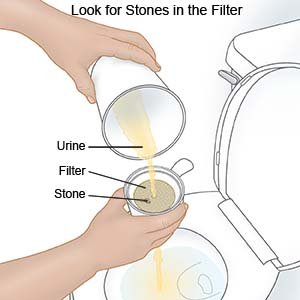
Urinate into a strainer (funnel with a fine mesh on the bottom) or glass jar to collect kidney stones.
 |
DISCHARGE INSTRUCTIONS:
Medicines:
- Pain medicine may be needed. Do not wait until your pain is severe before you take this medicine. The medicine may not work as well at controlling your pain if you wait too long to take it. Pain medicine can make you dizzy or sleepy. Prevent falls by asking for help when you want to get out of bed.
- NSAIDs: These medicines decrease swelling, pain, and fever. NSAIDs are available without a doctor's order. Ask which medicine is right for you. Ask how much to take and when to take it. Take as directed. NSAIDs can cause stomach bleeding and kidney problems if not taken correctly.
- Nausea medicine: This medicine calms your stomach and prevents or controls vomiting.
- Take your medicine as directed. Contact your healthcare provider if you think your medicine is not helping or if you have side effects. Tell your provider if you are allergic to any medicine. Keep a list of the medicines, vitamins, and herbs you take. Include the amounts, and when and why you take them. Bring the list or the pill bottles to follow-up visits. Carry your medicine list with you in case of an emergency.
Drink liquids as directed:
Drink about 3 liters of liquids each day, or as directed. That equals about 12 glasses of water or fruit juice. Half of your total daily liquids should be water. Limit coffee, tea, and soda to 2 cups daily. Your urine will be pale and clear if you are drinking enough liquid.
Self-care:
- Activity: Exercise, such as walking, may help decrease your pain.
- Avoid heat: Heat may cause you to sweat, urinate less, and become dehydrated.
Follow up with your healthcare provider or urologist as directed:
Write down your questions so you remember to ask them during your visits.
Contact your healthcare provider or urologist if:
- You have a fever and chills.
- Your urine looks cloudy or has a bad smell.
- You have burning pain when you urinate.
- You have trouble urinating.
- You are vomiting and it does not get better, even after you take medicine.
- You have questions or concerns about your condition or care.
Return to the emergency department if:
- You are not able to urinate.
- You have severe pain in your lower abdomen or side.
- Your heart flutters or beats faster than usual.
© Copyright Merative 2024 Information is for End User's use only and may not be sold, redistributed or otherwise used for commercial purposes.
The above information is an educational aid only. It is not intended as medical advice for individual conditions or treatments. Talk to your doctor, nurse or pharmacist before following any medical regimen to see if it is safe and effective for you.
Further information
Always consult your healthcare provider to ensure the information displayed on this page applies to your personal circumstances.
