How To Instill Eye Drops
GENERAL INFORMATION:
What is it? Eye drops contain medicine that may be used to treat glaucoma, infections, dry eyes, or several other conditions. Eye drops must be used correctly so the right amount of medicine will get into your eye or eyes to do the most good. Some eye drops may contain medicine that you might be allergic (uh-LER-jik) to. Discuss your allergies with your caregiver before using your eye drops.
How do I use my eye drops? There are many kinds of eye drops. Follow your caregiver’s advice on how much and how often to use your eye drops. Read instructions carefully before using your drops. Store your eye drops at room temperature and away from heat, moisture (wetness), and direct light. Do not use the drops if they change color from what they were, or turn cloudy. Do not use the drops if they have small bits floating in them. It may be easier to put in the eye drops if you use a mirror or have someone else give them to you. Do not keep medicine with a date on it that has passed, or medicine that you no longer need. Do not wear contact lenses while you are using your eye drops unless your caregiver says it is OK. Keep the drops out of reach of children. Follow these steps to put in eye drops correctly:
- Wash your hands with soap and water. Rinse and dry your hands.
- If the eye drops are cloudy, gently shake the bottle well before using them.
- Make sure there are no chips or cracks at the end of the eye dropper.
- Hold the dropper tip down all the time. This stops the drops from flowing back into the bulb where there may be germs that can get into the medicine.
- The eye drops must be kept clean. Avoid touching the dropper against the eye or anything else.
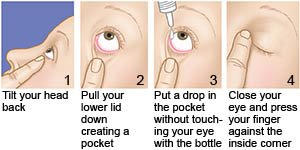
- Lie down or tilt your head back. If you are giving the drops to someone else, have them lie down or tilt back their head.
- With your index (pointer) finger, pull down the lower lid of your eye to form a pocket.

- Hold the dispenser close to your eye with the opposite hand.
- Brace (hold) the remaining fingers of this hand against your nose or cheek to prevent shaking.
- Drop the correct number of drops (wait about 1 minute between each drop) into the pocket made between your lower lid and eyeball. Do not squeeze the bulb too hard. Placing drops on the surface of the eyeball (cornea) may cause stinging.
- If you are giving the drops to someone else, follow the same steps.
- Replace the cap or dropper in the medicine bottle right away. Do not rinse or wipe it off.
- Gently close your eyes. Press your index finger against the inside corner of your eye next to your nose for 1 minute. This allows the medicine to start working in the eye. Help the person you have given the drops to do this.
- Gently wipe away any extra liquid with a tissue. Do not rub your eyes. If you have given the drops to someone else, do not let them rub their eyes.
- Wash your hands to remove any medicine.
- If you are using more than one type of eye drop medicine, wait before using the next type. You should wait 10 to 15 minutes before using the next type of eye drops.
What do I do if I miss a dose?
- Apply the missed dose as soon as possible.
- Skip the missed dose if it is almost time for your next regular dose.
- Do not double the dose to catch up.
Call if: You have any of these problems after using your eye drops:
- Eye pain.
- Changes in vision.
- Signs of infection such as redness, swelling, drainage, or pus.
- Very bad eye irritation, redness, and watering.
- Rash or hives (raised, red areas on your skin).
- No change or worsening of symptoms after 3 days of treatment.
- You have questions or concerns about your illness, medicine, or how to use your eye drops.
CARE AGREEMENT:
You have the right to help plan your care. To help with this plan, you must learn about your eye condition and how to properly use eye drops. You can then discuss treatment options with your caregivers. Work with them to decide what care will be used to treat you. You always have the right to refuse treatment.
Copyright © 2008 Thomson Healthcare Inc. All rights reserved. Information is for End User's use only and may not be sold, redistributed or otherwise used for commercial purposes.
The above information is an educational aid only. It is not intended as medical advice for individual conditions or treatments. Talk to your doctor, nurse or pharmacist before following any medical regimen to see if it is safe and effective for you.
| Link to Page | Print Page | Email Page |