Consumer Information
Carenotes > Gastrointestinal Bleeding (Discharge Care)

Gastrointestinal Bleeding

Advertisement

WHAT YOU SHOULD KNOW:

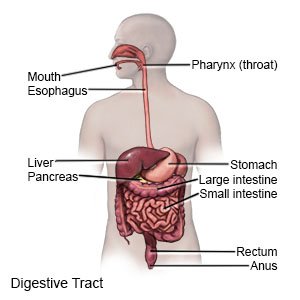
Gastrointestinal (gas-troh-in-TES-ti-nal) bleeding may happen when you have another disease or condition. Gastrointestinal (GI) bleeding can occur anywhere in your esophagus (e-SOF-ah-gus), stomach, and the large and small intestines (in-TES-tins). It is important to find and treat the cause of your bleeding, even if it stops on its own. The cause of your bleeding may be a minor problem. GI bleeding can also be a sign of a more serious condition.

Picture of a normal digestive system

AFTER YOU LEAVE:

Medicines:

  • Keep a written list of the medicines you take, the dose, and when and why you take them. Bring the list of your medicines or the pill bottles when you see your caregivers. Learn why you take each medicine. Ask your caregiver for information about your medicine.

  • There are many medicines that may cause GI bleeding. Do not take any medicines, over-the-counter drugs, vitamins, herbs, or food supplements without first talking to caregivers. Do not take any medicine that has aspirin, naproxen, or ibuprofen in it without first asking your caregivers.

  • Always take your medicine as directed by caregivers. Call your caregiver if you think your medicines are not helping, or if you feel you are having side effects. Do not quit taking your medicines until you discuss it with your caregiver. If you are taking antibiotics (an-ti-bi-AH-tiks), take them until they are all gone even if you feel better.

  • If you are taking medicine that makes you drowsy, do not drive or use heavy equipment.

  • If you have other medical conditions such as high blood pressure, you need to control them. Take medicines as directed. Some medical conditions may increase your risk of GI bleeding, especially if they are not well-controlled.

When is my next doctor's appointment?

Ask your caregiver when to return for a follow-up visit. Keep all appointments. Write down any questions you may have. This way you will remember to ask these questions during your next visit.

Activity:

  • You may feel like resting more as you recover from your GI bleed. Slowly start to do more each day. Rest when you feel it is needed.

  • Ask your caregiver how long you need to wait before starting your usual activities.

  • Ask your caregiver when you can return to work.

  • Avoid lifting heavy objects.

How can I live a healthy lifestyle? Living a more healthy lifestyle may decrease your risk of having GI bleeding in the future. Ask your caregiver about things you can do to decrease your bleeding risk.

  • Alcohol: Ask your caregiver if you should stop drinking alcohol or decrease the amount of alcohol you drink. Drinking too much alcohol can damage your brain, heart, and liver. Drinking alcohol can also make your illness worse.

  • Constipation: If you are constipated, you may have a hard time having a bowel movement (BM) Do not try to push the BM out if it is too hard. Walking is the best way to get your bowels moving. Eat foods high in fiber to make it easier to have a BM. Good examples are high fiber cereals, beans, vegetables, and whole grain breads. Prune juice may help make the BM softer. Caregivers may give you fiber medicine or a stool softener to help make your BMs softer and more regular. You can also buy these medicines at a grocery or drug store.

  • Diet: Eat a healthy variety of foods: fruits, vegetables, breads, meats and fish, and dairy products. Eating healthy foods may help you feel better and have more energy. It may also help you heal faster. Ask your caregiver if you need to be on a special diet. Drink six to eight (8 ounce) cups of liquid each day. Follow your caregiver's advice if you must limit the amount of liquid you drink. Decrease the amount of caffeine you eat and drink. Caffeine may be found in coffee, tea, soda, sports drinks, chocolate, and food bars.

  • Exercise: Talk to your caregiver before you start exercising. Together you can plan the best exercise program for you. It is best to start slowly and do more as you get stronger. Exercising makes the heart stronger, lowers blood pressure, and keeps you healthy.

  • Quit smoking: It is never too late to quit smoking. Smoking harms the heart, lungs, and the blood. You are more likely to have a heart attack, lung disease, and cancer if you smoke. You will help yourself and those around you by not smoking. Ask your caregiver for more information about how to stop smoking if you are having trouble quitting.

  • Stress: Stress may slow healing and cause illness later. Since it is hard to avoid stress, learn to control it. Learn new ways to relax, such as deep breathing, meditation, relaxing muscles, music, or biofeedback. Talk to someone about things that upset you.

For support and more information: GI bleeding can be a frightening experience for you and your family. Accepting that you have a health problem is hard. You and those close to you may feel angry, sad, or frightened. These feelings are normal. Talk to your caregivers, family, or friends about your feelings. Let them help you. You can also contact one of the following national organizations for more information.

  • International Foundation for Functional Gastrointestinal Disorders
    P.O. Box 170864
    Milwaukee, WI 53217
    Phone: 1-414-964-1799
    Phone: 1-888-964-2001
    Web Address: http://www.iffgd.org
  • National Digestive Diseases Information Clearinghouse (NDDIC)
    2 Information Way
    Bethesda, MD 20892-3570
    Phone: 1-800-8915389
    Web Address: www.digestive.niddk.nih.gov
  • American Society for Gastrointestinal Endoscopy (ASGE)
    1520 Kensington Road
    Oak Brook, IL 60523
    Phone: 1-630-573-0600
    Web Address: http://www.asge.org

CONTACT A CAREGIVER IF:

  • You have BMs that are sticky, tarry, or black, and are not caused by certain medicines taken or foods eaten. Iron pills, bismuth (Pepto Bismol®), and certain foods (such as beets) may cause your BMs to look tarry or black.

  • You start having abdominal (belly) pain or swelling, nausea, or vomiting (throwing up).

  • You start having heartburn or other signs of stomach acid problems.

  • You have questions or concerns about your illness or medicine.

  • You have trouble breathing or your skin is itchy, swollen, or has a rash. Your medicine may be causing these symptoms. This may mean you are allergic (al-ER-jik) to your medicine.

SEEK CARE IMMEDIATELY IF:

  • Vomiting (throwing up) bright red blood. Blood in the vomit can also be dark red or black. The vomit may look like coffee grounds.

  • You feel like you are going to have a BM, but pass only blood or blood clots into the toilet.

  • You have signs of shock or losing too much blood. If you have one or more of the following signs and symptoms that are new for you, Call 9-1-1 or 0 (operator) . This will call an ambulance to take you to the nearest hospital or clinic. Do not drive yourself!

    • Chest pain.

    • Dizziness or fainting, especially after suddenly moving from a sitting or lying position.

    • Feeling confused or short of breath.

    • You feel too weak to stand up.

Copyright © 2008 Thomson Healthcare Inc. All rights reserved. Information is for End User's use only and may not be sold, redistributed or otherwise used for commercial purposes.

The above information is an educational aid only. It is not intended as medical advice for individual conditions or treatments. Talk to your doctor, nurse or pharmacist before following any medical regimen to see if it is safe and effective for you.


MedNotes
Advertisement

(web3)