
Children and Hearing AIDS
Medically reviewed by Drugs.com. Last updated on Apr 2, 2024.
A hearing aid is a small electronic device placed behind or in your child's ear. It contains a microphone, an amplifier, and a speaker. A hearing aid can help your child if he or she has mild to moderate hearing loss. Your child may need a hearing aid for each ear.
DISCHARGE INSTRUCTIONS:
Call your child's doctor or audiologist if:
- Your child still has problems hearing even when he or she uses the hearing aids.
- Your child's hearing aid is not working or needs to be replaced.
- You have questions or concerns about your child's condition or care.
Hearing aids used for children:
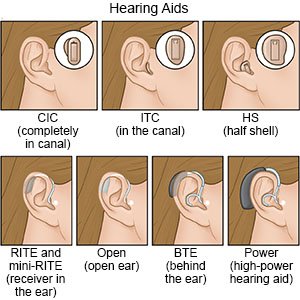
- A behind the ear hearing aid has a small plastic case that rests behind your child's ear. It is connected by a tube to a molded plastic piece that fits inside your child's ear. This type of hearing aid is the style that is most often used for infants and young children.
- An in the ear hearing aid fits inside your child's ear. This style is usually used for children who are 7 years or older.
 |
How to take care of your child's hearing aid:
Ask your child's healthcare provider about the following:
- Replace hearing aid molds as your child grows. The ear molds must fit well in your child's ears to prevent feedback.
- Change the batteries as needed. Batteries may need to be changed every 1 to 2 weeks.
- Learn how to use the hearing aid. Learn how to use the features on the hearing aid, such as the volume, power, and settings.
- Clean and maintain the hearing aid as directed. Proper care will help the hearing aid last as long as possible.
How to help your child hear better:
- Keep your child away from loud noise. This can prevent more hearing loss. Loud noise includes fireworks, loud music, motorcycles, and power tools.
- Face your child when you speak to him or her. Do not cover your mouth as you speak. When you are in a group setting, have your child sit in a location where he or she can clearly see the faces of the people who are talking. Ask people not to speak loudly when they speak to your child if they do this. People should speak using their usual tone and volume.
- Help your child get used to the hearing aids. Have your child wear the aids as much as possible. When your infant is feeding or having a tantrum, you may leave the aids out for a period of time. Ask your child's healthcare providers about headbands and other devices that can help hold the hearing aids in place.
- Prevent feedback from the hearing aid. Feedback is a whistling sound that comes out of the ear mold when it does not fit properly. Earwax and dirt in your child's ears make feedback worse. Watch your child for signs of an ear infection. Ear infections can worsen feedback and lead to pain and more hearing loss. Ask your child's providers for more information about signs of an ear infection.
- Learn about other listening devices. If you have a school-aged child, ask his or her providers about listening aids that will work in a classroom. These listening aids will make it easier for your child to hear a teacher and other classmates.
- Keep all appointments with your child's providers. Your child's hearing loss may change as he or she grows, so he or she will need regular appointments to check for changes.
Follow up with your child's doctor or audiologist as directed:
Your child's hearing loss may change as he or she grows. He or she will need regular appointments to check for changes. Write down your questions so you remember to ask them during your visits.
For more information:
- American Hearing Research Foundation
275 North York Street, Suite 401
Elmhurst , IL 60126
Phone: 1- 630 - 617-5079
Web Address: http://www.american-hearing.org
- Better Hearing Institute
1444 I Street NW, Suite 700
Washington , DC 20005
Phone: 1- 202 - 449-1100
Web Address: www.betterhearing.org
© Copyright Merative 2024 Information is for End User's use only and may not be sold, redistributed or otherwise used for commercial purposes.
The above information is an educational aid only. It is not intended as medical advice for individual conditions or treatments. Talk to your doctor, nurse or pharmacist before following any medical regimen to see if it is safe and effective for you.
Further information
Always consult your healthcare provider to ensure the information displayed on this page applies to your personal circumstances.
