Chemical Eye Burns
What are chemical eye burns?
Chemical Eye Burns Care Guide
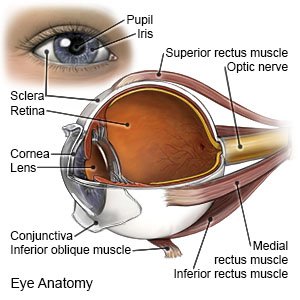
- Chemical eye burns happen when a chemical comes into contact with your eye and causes injury. Chemicals can come in different forms, such as powder, liquid, gas, or spray. Your eye burn may be mild, moderate, or severe, depending on the type of chemical. It also depends on how much and how long the chemical touched your eye. Your cornea and sclera (the white part of your eye) are often damaged in a chemical burn. The cornea is a clear layer covering the front of your eyeball.
- After a chemical eye burn, you may have problems that range from mild irritation to blindness. Mild chemical eye burns that are treated quickly often heal well within a few days. If your burn is intermediate or severe, the damage may last for several months or become permanent. Severe eye burns cause more damage to the deeper tissues of your eye and can cause more problems. Washing your eye thoroughly right after your burn increases your chances for healing better and faster.
![]() |
What causes chemical eye burns?
You may get chemicals in your eye at work. You may also get a chemical burn at home or anyplace else that has chemicals. Chemicals can get into your eyes by accident or as part of a physical attack. Eye burns in a physical attack may happen if someone throws chemicals into your face on purpose. Eye burns may also happen in times of war when chemicals can be used as weapons.
- Common causes of chemical eye burns at home may include:
- Ammonia, bleach, and toilet bowl cleaner.
- Vinegar and glass polish.
- Dishwasher detergent, oven cleaner, and drain cleaner.
- Contact lens cleaner.
- Car battery fluid.
- Swimming pool cleaner.
- Ammonia, bleach, and toilet bowl cleaner.
- Common causes of chemical eye burns at work may include:
- Ammonia.
- Lime (a chemical that may be found in cement or plaster).
- Products that remove rust.
- Solvents (used for cleaning things).
- Hydrochloric acid (used for making some food and leather products).
- Ammonia.
- Other causes of chemical eye burns:
- Fireworks.
- Gasoline.
- Chemicals used to make illegal drugs, such as methamphetamine (meth).
- Pesticides (to kill bugs).
- Fertilizer (to help things grow).
- Personal defense (pepper) sprays.
- Fireworks.
What are the signs and symptoms of chemical eye burns?
- Your eyesight is blurry or you cannot see at all.
- Your eyeball feels like there is something in it.
- You have eye pain or it hurts to look at light.
- Your eye keeps watering (leaking tears) or feels dry.
- Your eyeball or eyelid is swollen or your eyelid starts to twitch.
- You have new cuts, bumps, or other damage on your eyeball.
- The whites of your eye become red or show blood vessels.
- Your pupil is larger than usual. Your pupil is the black dot in the center of your eye where light passes through.
- Your eye becomes covered with tissue that is cloudy, white, or gray.
How are chemical eye burns diagnosed?
Your caregiver will ask you questions while your eye is being washed. He will ask you what chemicals you used at the time of your burn. After your eye is fully washed, he may look at your eye using a small bright light. He will do an eye exam that tests your vision and eye movements. He may also check the upper and lower eyelids for something that may be stuck in there. You may also need any of the following tests:
- Litmus paper test: This is also called a pH paper test. In this test, your caregiver will put a small piece of paper on your lower lid. This test may help your caregiver figure out the kind of chemical that burned your eye. It may also help him see if your eye has been washed enough.
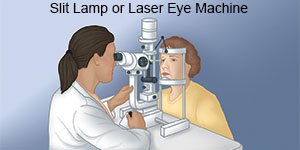
- Slit-lamp test: This test uses a microscope with a strong light to look into your eyes. It is used to check the inside part of your eye and the area around it. This test may help your caregiver see damage to your eye. It may also help him see if there are any chemicals left in your eye.
- Visual acuity test: This test will help your caregiver know if there has been a change in your vision. He may ask you to read an eye chart at different distances.
- Eye stain test: This test uses a special dye and blue light. It may help your caregiver see if parts of your eye have been injured, such as the cornea. It can also help show if the fluid inside your eyeballs is leaking.
- Tonometry: This test measures the pressure inside your eye.
What should I do if I get chemicals in my eye?
If you get chemicals in your eye, then it is important to act fast. The sooner you begin to wash your eye the better your chances are of healing. Waiting even a few extra seconds can make your burn a lot worse.
- Irrigate (wash) your eye immediately: It is very important to wash out the chemical from your eye at once. Do not stop irrigating your eye before 30 minutes. Wash your eye with a steady stream of water using tap water from your faucet or shower. Move your eyeball in all directions to make sure that all parts of your eye are washed. If possible, continue to wash out your eye with water until you reach the treatment center. Ask your caregiver or employer for the safest and best way to irrigate your eye.
- Remove anything with chemicals on it: Take off any clothing (such as a hat, shirt, or glasses) that may have chemicals still on it. Do not take off your contact lenses. Your contact lenses may wash out during irrigation or may be removed by your caregiver.
- Have someone hold your eye open: If another adult is nearby, ask him to help you irrigate your eye. He may help keep your eye open if your eyelid is twitching.
- Use the cleanest water: If you are at home, use the cleanest water that you can quickly get. Use tap water (water from your faucet) if that is the only water you can get to quickly. If you are burned at work, use a wash station if your company has one. A wash station is a special faucet that provides certain fluid for washing out your eye. Otherwise, use the cleanest water that you can get to quickly. Never use other chemicals to wash out your eye.
- Call for help: If another adult is nearby, ask him to call 911. If you are by yourself, call 911 if you can safely do so without stopping irrigation.
- Bring container to treatment center: If possible, bring the chemical's container to show your caregiver. Do not bring the container if the chemical may burn you again.
How are chemical eye burns treated?
Once you are at the treatment center, you may need any of the following:
- Eye wash and cleaning: Your caregiver will continue to wash your eye using a special tube. He may use litmus paper to help decide when it is safe to stop washing your eye. Your caregiver may then remove any remaining chemicals or other objects from your eye. He may do this using a small stick with a wet cotton tip or another special tool. Numbing medicine may be put on your eye to help decrease your pain.
- Medicines:
- Antibiotic medicine: This may be given as an eye drop or ointment. Antibiotic medicine helps prevent an infection caused by germs called bacteria. It may also help your eye heal faster.
- Pain medicine: Eye drops may be used to widen your pupil and decrease your eye pain. You may also be given pain medicine through an IV. An IV is a tube placed in your vein for giving medicine or liquids. This tube is capped or connected to tubing and liquid. You may also be given pain medicine that is taken by mouth.
- Steroids: This medicine may be given to decrease inflammation.
- Antibiotic medicine: This may be given as an eye drop or ointment. Antibiotic medicine helps prevent an infection caused by germs called bacteria. It may also help your eye heal faster.
- Surgery: You may have one or more surgeries to help fix your eye. During these surgeries, your caregiver may cut parts of your skin tissue to help relax your eye. Ask your caregiver for more information about these surgeries.
- Debridement: This is surgery to remove any damaged tissue in your eye. It may decrease inflammation in your eye. It may also help your eye heal.
- Tenonplasty: Tenonplasty is a surgery that rebuilds damaged parts of your eyeball. It helps restore the surface of your eye and may increase its blood flow.
- Tissue grafting: You may need to have damaged tissue in your eye replaced.
- Transplant: You may need to have a corneal transplant that replaces your damaged cornea with a new one. The new cornea may come from a relative or a cadaver (someone who has died). Other parts of your eye may also need to be replaced.
- Probing: During probing, your caregiver will remove any scar tissue between your eyelid and your eye. He will use a small glass stick or another special tool.
- Symblepharon rings: This tool may be used to remove scar tissue between your eyelid and your eye. It may also help prevent your eye from getting new adhesions. An adhesion is scar tissue that joins two parts of your eye or eyelid together.
- Debridement: This is surgery to remove any damaged tissue in your eye. It may decrease inflammation in your eye. It may also help your eye heal.
- Eye care:
- Special lens: You may need to wear a special type of lens on your eye. This may help decrease your pain. This may also prevent the inner part of your eyelid from sticking to your eye.
- Eye patch: Your caregiver may place an eye patch or shield (plastic cover) over your eye. This may help keep your medicine against your eye. This may also help protect your eye from infection or another injury.
- Special lens: You may need to wear a special type of lens on your eye. This may help decrease your pain. This may also prevent the inner part of your eyelid from sticking to your eye.
How can I prevent chemical eye burns?
- Wear goggles: Always wear protective eyewear, such as goggles that closely fit around your eyes. If you wear glasses, then be sure that they fully protect your eyes.
- Avoid contact lenses: Avoid wearing contact lenses. Some chemicals can be very dangerous to people who wear contact lenses. Find out which chemicals you should avoid if you wear contact lenses.
- Do not touch your eyes: Do not touch your eyes with your hands when working with chemicals.
- Follow instructions: When using chemicals that may hurt your eye, always follow the instructions on the chemical's container.
- Have a plan: If you use chemicals, make a plan in case you or someone else gets burned. Know where the best water or liquid is located for washing your eye. If you work around chemicals, ask your employer for the best plan in case you get burned. Check to see if your company has an eye wash.
When should I call my caregiver?
Call your caregiver if:
- Your eye keeps watering or feels dry.
- Your pupil is larger than usual.
When should I seek immediate help?
If another adult is nearby, ask him to call 911. If you are by yourself, call 911 if you can safely do so without stopping irrigation. Seek care immediately or call 911 if:
- You get a chemical in your eye.
- Your eyesight is blurry or you cannot see at all.
- Your eye feels like there is something in it.
- You have eye pain or it hurts to look at light.
- Your eyeball or eyelid is swollen or your eyelid starts to twitch.
- You have new cuts, bumps, or other damage on your eyeball.
- The whites of your eye become red or show blood vessels.
- Your eye becomes covered with tissue that is cloudy, white, or gray.
Where can I find more information?
Contact any of the following:
- American Academy of Ophthalmology
7424
San Francisco , CA 941207424
Phone: 1- 415 - 5618500
Web Address: http://www.aao.org/
- National Eye Institute, National Institutes of Health
202 Vision Pl.
Bethesda , MD 20892-3655
Phone: 1- 301 - 496-5248
Web Address: www.nei.nih.gov
Care Agreement
You have the right to help plan your care. Learn about your health condition and how it may be treated. Discuss treatment options with your caregivers to decide what care you want to receive. You always have the right to refuse treatment.
Copyright © 2012. Thomson Reuters. All rights reserved. Information is for End User's use only and may not be sold, redistributed or otherwise used for commercial purposes.
The above information is an educational aid only. It is not intended as medical advice for individual conditions or treatments. Talk to your doctor, nurse or pharmacist before following any medical regimen to see if it is safe and effective for you.
Learn more about Chemical Eye Burns
Related encyclopedia articles: