
Breastfeeding and Plugged Ducts
Medically reviewed by Drugs.com. Last updated on Apr 2, 2024.
What is a plugged duct?
A plugged duct is a milk duct in your breast that is blocked. Milk ducts carry breast milk from the glands (small sacs) where it is made down to your nipple. When a duct is blocked, the flow of milk from the duct to your nipple may decrease or stop. Milk may build up and cause a tender lump to form in your breast.
What are the signs and symptoms of a plugged duct?
- Tender breast lump that grows slowly and usually forms on one side of your breast
- Pink or red skin over the tender area
- Increased warmth in your breast
- Small, white bump on your nipple
- Pain in your nipple or shooting pains in your breast
What can I do to relieve plugged ducts?
- Breastfeed every 2 hours from the breast that has the plugged duct. This will help loosen the blocked duct and get your milk moving. Feed your baby from the side that has the plugged duct first. Frequent breastfeeding may remove the blockage in your milk duct.
- Position your baby to help empty milk from the plugged duct. Hold your baby so that his or her chin is pointing toward the area of your breast with the plugged duct. This helps drain breast milk from the plugged duct.
- Massage your breast before and during breastfeeding. You may also do this while you take a hot shower or bath. Massage your breast with firm pressure from the area just behind the lump to the nipple.
- Express milk after you breastfeed. Use a breast pump or your hand to drain extra milk after your baby is done feeding. You can also express milk if your breasts are too full for your baby to latch on.
- Apply warmth to your breasts before you breastfeed. Put a warm, wet cloth on your breasts, or take a warm shower or bath. You can also lean over a sink or basin of warm water and place your breasts in it. This may help remove the blockage and increase your milk flow.
- Ask your healthcare provider about medicines to decrease pain and swelling. Take them as directed.
What can I do to help prevent a plugged duct?
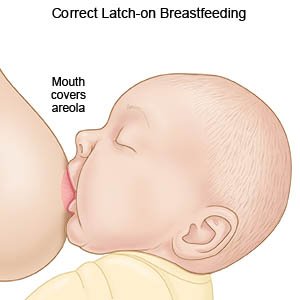
- Help your baby get a good latch. Hold the nape of his or her neck to help him or her latch onto your breast. Touch his or her top lip with your nipple and wait for him or her to open his or her mouth wide. Your baby's lower lip and chin should touch the areola (dark area around the nipple) first. Help him or her get as much of the areola in his or her mouth as possible. You should feel as if your baby will not separate from your breast easily. Gently break suction and reposition if your baby is only sucking on the nipple. Talk to a lactation consultant if you need help with your baby's latch.
- Empty your breasts completely. Breastfeed your baby 8 to 12 times each day or any time he or she shows signs of being hungry. Use a pump if your baby cannot empty your breasts. Do not hurry through your breastfeeding sessions. Take your time when you breastfeed to allow your baby to empty your breast. Try not to switch breasts too early.
- Decrease pressure on your breasts. Do not wear tight bras, underwire bras, or clothing that places pressure on your breasts. Try not to sleep on your stomach. Pressure can pinch your milk ducts and cause a plugged duct.
When should I contact my healthcare provider?
- You have a fever with chills or body aches.
- Your breast is red, swollen or hard, painful, and feels warm or hot.
- You have a new tender lump in the same area that you have had a lump before.
- You have pus or blood draining from one or both of your nipples or mixed in with your milk.
- Your signs and symptoms do not get better within 24 hours.
- You have questions or concerns about your condition or care.
Care Agreement
You have the right to help plan your care. Learn about your health condition and how it may be treated. Discuss treatment options with your healthcare providers to decide what care you want to receive. You always have the right to refuse treatment. The above information is an educational aid only. It is not intended as medical advice for individual conditions or treatments. Talk to your doctor, nurse or pharmacist before following any medical regimen to see if it is safe and effective for you.© Copyright Merative 2024 Information is for End User's use only and may not be sold, redistributed or otherwise used for commercial purposes.
Learn more about Breastfeeding and Plugged Ducts
Treatment options
Care guides
Further information
Always consult your healthcare provider to ensure the information displayed on this page applies to your personal circumstances.
