Bowel Obstruction

WHAT YOU SHOULD KNOW:

Bowel Obstruction (Inpatient Care) Care Guide

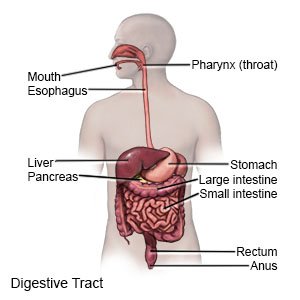
  • You have a bowel obstruction when part of your intestines (small or large bowels) is blocked. Your bowel is a long, coiled tube inside your abdomen (stomach) that moves food through your body. A bowel obstruction can happen in any part of your small or large bowels. When your bowels are completely blocked, nothing can pass through. If your bowels are partially blocked, only small amounts of air, water, or food may pass through. A bowel obstruction may be caused by bands of scar tissue that have formed after a previous surgery. It may also be caused by cancer or a tumor (growth) in your stomach. You may also get a bowel obstruction if you have certain medical conditions or treatments.

  • With a bowel obstruction, you may not be able to have a bowel movement (BM). You may have back pain, an upset stomach, vomiting (throwing up), or a bloated (full) feeling. Your caregiver may use imaging tests to look at the part of your bowel that is blocked. If you have a bowel obstruction, you may need to rest your bowel by not eating or drinking. You may also need surgery or special tubes to help empty your stomach. Having your bowel obstruction treated may decrease your pain. You may not feel sick to your stomach or throw up as much. You may be able to have normal BMs and your bowels may be less likely to become damaged.

CARE AGREEMENT:

You have the right to help plan your care. Learn about your health condition and how it may be treated. Discuss treatment options with your caregivers to decide what care you want to receive. You always have the right to refuse treatment.

RISKS:

  • A nasogastric tube may irritate or damage nearby tissue. Your tubes or stents may move out of place. This may cause damage to your nearby organs or cause another blockage. You may have pain, bleeding, or get an infection. You may not be able to control your bowel movements. You may get fluid in your chest, lungs, or abdomen that could cause serious problems including death. With surgery, you may have pain, bleed more than expected, or get an infection. Your incision (wound site) may open or not heal well.

  • Surgery may also cause adhesions (bands of scar tissue) inside your abdomen. Your nearby organs may get damaged. If you have a stoma, the hole may not close and it may stay open. Without treatment, stool may build up in your bowel and parts of your bowel may become compressed. You may not get enough blood flow to your organs. Some of your bowel tissue may die and your bowel may burst. Stool may leak inside your abdomen, cause a serious infection, and you may die. Ask your caregiver if you have questions or concerns about your condition, treatment, or care.

WHILE YOU ARE HERE:

Informed consent

is a legal document that explains the tests, treatments, or procedures that you may need. Informed consent means you understand what will be done and can make decisions about what you want. You give your permission when you sign the consent form. You can have someone sign this form for you if you are not able to sign it. You have the right to understand your medical care in words you know. Before you sign the consent form, understand the risks and benefits of what will be done. Make sure all your questions are answered.

An IV (intravenous)

is a small tube placed in your vein that is used to give you medicine or liquids.

Foley catheter:

This is a tube caregivers put into your bladder to drain your urine into a bag. Keep the bag below your waist. This will help prevent infection and other problems caused by urine flowing back into your bladder. Do not pull on the catheter, because this may cause pain and bleeding, and the catheter could come out. Keep the catheter tubing free of kinks so your urine will flow into the bag. Caregivers will remove the catheter as soon as possible, to help prevent infection.

Medicines:

You may be given the following medicines:

  • Antibiotics: This medicine is given to help treat or prevent an infection caused by bacteria.

  • Anticholinergic medicine: Your caregiver may give you this medicine to treat your stomach cramps. Ask your caregiver for more information about this medicine.

  • Antinausea medicine: This medicine may be given to calm your stomach and prevent vomiting.

  • Nonsteroidal anti-inflammatory (NSAID) medicine may decrease swelling and pain or fever. This medicine can be bought with or without a doctor's order. This medicine can cause stomach bleeding or kidney problems in certain people. If you take blood thinner medicine, always ask your primary healthcare provider if NSAIDs are safe for you. Always read the medicine label and follow the directions on it before using this medicine.

  • Morphine: This medicine helps decrease your pain. It also may help you breathe easier. Morphine helps tiny blood vessels in your lungs open wider. This lets your blood pick up more oxygen, and your breathing may become easier.

  • Steroids: This medicine may be given to decrease inflammation.

  • Stool softeners: This medicine makes it easier for you to have a bowel movement. You may need this medicine to treat or prevent constipation.

Monitoring:

  • Intake and output: Caregivers will keep track of the amount of liquid you are getting. They also may need to know how much you are urinating. Ask how much liquid you should drink each day. Ask caregivers if they need to measure or collect your urine.

  • Vital signs: Caregivers will check your blood pressure, heart rate, breathing rate, and temperature. They will also ask about your pain. These vital signs give caregivers information about your current health.

Tests:

  • Blood tests: You may need blood taken to give caregivers information about how your body is working. The blood may be taken from your hand, arm, or IV.

  • Digital rectal exam (DRE): During a DRE, your caregiver will put a gloved finger inside your anus to feel for lumps in your rectum. Your rectum is the lower part of your bowel just behind your anus. He will use lubrication, which is a gel-like substance that helps his finger gently enter your anus. He may remove a sample of your stool and send it to a lab to test it for blood.

  • Imaging tests: Your caregiver may do one or more tests to take pictures of your bowels. Before taking the pictures, you may be given dye through an intravenous (IV) tube in your vein. The dye may help your caregiver see the pictures better. People who are allergic to shellfish (lobster, crab, or shrimp) may be allergic to this dye. Tell your caregiver if you are allergic to shellfish or have other allergies.

    • Computed tomography: During computed tomography (CT), a special x-ray machine uses a computer to take pictures of your abdomen. This test may show your caregiver where you have an obstruction. It may also help your caregiver know why you have an obstruction. A CT may also help detect cancer and see what stage it is in.

    • Contrast studies: Your caregiver may do a contrast study. During a contrast study, your caregiver will put a liquid through a tube in your nose, mouth, or anus. The liquid helps your stomach and bowels show up better in x-rays.

    • Magnetic resonance imaging: During magnetic resonance imaging (MRI), pictures are taken of your abdomen. Your caregiver uses these pictures to look for a bowel obstruction or tumors. An MRI may help identify what is blocking your bowel. An MRI may be a good imaging option for pregnant women. You will need to lie still during an MRI. Never enter the MRI room with an oxygen tank, watch, or any other metal objects. This can cause serious injury.

    • Ultrasound: An abdominal ultrasound is a simple test that looks inside of your abdomen. Sound waves are used to show pictures of your abdomen on a TV-like screen. An ultrasound may show your caregiver the part of your bowel that is twisted or folded into itself.

    • X-rays: You may need abdominal and chest x-rays. Abdominal x-rays take pictures of the organs inside your abdomen. These are used to look for what may be causing your obstruction. Chest x-rays may be taken to look for problems with your heart and lungs.

Treatment options:

You may need to rest your bowels. You may get fluid and nutrition through an IV tube. You may not be allowed to eat food or drink liquid. Ask your caregiver for more information about any of the following treatments:

  • Enema: An enema is special liquid or air that is put through your bowel. Increased pressure against a partial blockage may cause it to open up.

  • Paracentesis: This procedure is also called an abdominal or peritoneal tap. During a paracentesis, caregivers use a needle to remove extra fluid or put special medicine in your abdomen. Removing extra fluid may help you breathe easier and feel more comfortable. The fluid may be sent to a lab and checked for signs of infection or other problems.

  • Surgery: Your caregiver may do an open surgery where he makes a cut in your abdomen so he can directly see your bowel. He may also do a laparoscopy. With laparoscopy, small incisions (cuts) will be made on your abdomen. Your caregiver will insert the scope and special tools through these cuts to remove your blocked bowel. During surgery, your caregiver may decide to switch your laparoscopy to an open surgery. Your surgery may be done all at once or it may be done in stages at different times.

    • Colostomy: A colostomy is a procedure to make a stoma (opening) between your bowel and your abdomen wall. It may be done before you have surgery to remove your blocked bowel. A colostomy can be used to remove air or fluid from your bowel. It may also help your caregiver check your condition before surgery. With a colostomy, stool comes out of the stoma into a sealed bag. Your stool may be watery, depending on which part of the large bowel was used for the colostomy. The stoma may be closed several days after surgery once your bowel has healed.

    • Stents: A stent is a small metal tube that widens the area of your bowel that is blocked. Your caregiver inserts the stent into your bowel using a scope (a long, thin bendable tube). A stent can open the bowel to let air and food pass through. Your caregiver may use a stent to help decrease your symptoms before your surgery. During surgery, your caregiver will usually remove the stent.

  • Tubes:

    • Nasogastric (NG) tube: An NG tube is put into your nose, and passes down your throat until it reaches your stomach. Food and medicine may be given through an NG tube if you cannot take anything by mouth. The tube may instead be attached to suction if caregivers need to keep your stomach empty.

    • Gastrostomy tube: A gastrostomy is also called G-tube, feeding tube, or PEG tube. The tube is used to give you liquids, food, and medicine. The tube may also be used to let air or fluids out of your stomach. This small, flexible tube goes into your stomach through a small cut in your abdomen. Your caregiver may also insert the tube using an endoscope (a long, thin, bendable tube). The endoscope is passed through the mouth and down into your stomach.

© 2013 Truven Health Analytics Inc. Information is for End User's use only and may not be sold, redistributed or otherwise used for commercial purposes. All illustrations and images included in CareNotes® are the copyrighted property of the Blausen Databases or Truven Health Analytics.

The above information is an educational aid only. It is not intended as medical advice for individual conditions or treatments. Talk to your doctor, nurse or pharmacist before following any medical regimen to see if it is safe and effective for you.

Learn more about Bowel Obstruction (Inpatient Care)

Advertisement
Close

Recommended

(web5)