Consumer Information
Carenotes > Atopic Dermatitis In Children (Aftercare Instructions)

Atopic Dermatitis In Children

Advertisement

WHAT YOU SHOULD KNOW:

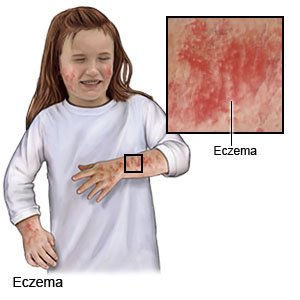
  • Atopic (ah-TOP-ic) dermatitis (der-mah-TI-tis), also called eczema, is a very common skin disease. This occurs when many cells in the skin overreact and cause inflammation (swelling). Swelling is the skin's reaction to things that irritate it or that it has an allergy to. Children with atopic dermatitis are born with overly sensitive cells. These cells do not turn off when exposed to allergens (substances that cause an allergic reaction) or irritants (something that causes irritation). Instead, they continue to overreact and cause symptoms. Atopic dermatitis usually affects babies and young children, and may last until they are fully grown up. It is more likely to occur if another family member has eczema, hay fever, asthma, or other allergies. Certain conditions and substances may cause your child's atopic dermatitis to flare-up. These may include pollen, house dust mites, animal dandruff (old skin cells), foods, dust, or smoke.

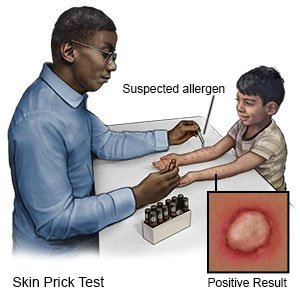
  • The most common sign and symptom of atopic dermatitis is an itchy, dry, red skin rash. The rash may look very different from one child to another. Skin tests, blood exams, and challenge tests may be done to help diagnose atopic dermatitis. Treatment is aimed at preventing allergens or irritants and decreasing symptoms. Your child may be treated with biofeedback or medicines, such as steroids, tar preparations, ultraviolet (UV) light, or steroids. With treatment, such as medicine and biofeedback, complications can be prevented and your child's atopic dermatitis may be controlled.

INSTRUCTIONS:

Medicines:

  • Keep a list of your child's medicines: Keep a written list of the medicines your child takes, the amounts, and when and why they are taken. Bring the list of your child's medicines or the medicine bottles when you visit your child's caregivers. Ask your child's caregiver for more information about the medicines. Do not give any medicines to your child without first asking your child's caregiver. This includes prescriptions, over-the-counter drugs, vitamins, herbs, or food supplements.

  • Give your child's medicine as directed: Always give your child's medicine as directed by his caregivers. Call your child's caregiver if you think your child's medicines are not helping. Call if you feel your child is having side effects. Do not quit giving the medicines to your child until you discuss it with your child's caregiver.

  • Do not give aspirin to children under 18 years of age: Giving aspirin to your child when he is ill may cause a very serious illness called Reye's Syndrome. This could lead to brain and liver damage. Read medicine labels to see if your child's medicine has aspirin in it.

  • Antibiotics: This medicine is given to fight infection caused by bacteria. Give this medicine as ordered until it is all gone, even if your child feels better. Stopping an antibiotic without the caregiver's OK may make it unable to kill the bacteria causing the infection. Tell a caregiver if your child is allergic to antibiotics.

  • Ibuprofen or acetaminophen: Ibuprofen or acetaminophen are over-the-counter medicines that may help your child's pain and fever. Ask your child's caregiver to tell you the right amount of medicine to give to your child, and how often to give it.

  • Immuno-modulators: These are medicines that decrease the immune system's response to allergans and irritants. Do not stop giving this medicine to your child without his caregivers OK. Stopping on your own can cause problems for your child.

Ask your child's caregiver when to return for a follow-up visit. Keep all appointments. Write down any questions you and your child may have. This way you will remember to ask these questions during your child's next visit.

Child care: Teach your child to avoid allergens or irritants to prevent flare-ups of his atopic dermatitis. The following may also help you and your child to deal with his skin disease at home:

  • Help your child to rest. Your child should rest as much as possible and get plenty of sleep.

  • Keep your child away from people who have colds and the flu. Also try to keep your child away from large groups of people while he is recovering from surgery. This decreases your child's chance of getting sick or getting an infection.

  • Diet: Your child needs to eat healthy foods that will not cause him to have an allergic reaction. Ask your child's caregiver for information about a diet for your child.

  • Drink liquids: Your child needs to drink water and other good liquids to stay healthy. Ask your caregiver what kind of liquids and how much liquid your child should drink. Drinking liquids will also add moisture to his skin.

  • Journal or diary: A journal or diary of information about your child's atopic dermatitis may help him control his disease. Write down the time of his flare-ups. Write down the things that you find around him when he starts to have a rash or other symptoms. There may be something close to him that is causing the rash or symptoms to appear. You may want him to have allergy testing if this has not been done.

Preventing flare-ups: Avoiding things that are known to trigger your child's atopic dermatitis may help prevent flare-ups.

  • Allergens:

    • Animal dandruff: Keep all pets out of your home. If you cannot keep the pets outdoors, keep them from going into your child's bedroom. Keep your pets out of rooms that have carpeting and off furniture that is covered with cloth.

    • Food: Avoid foods that may trigger atopic dermatitis flare-ups. These foods may include cow's milk, eggs, peanut butter, fish, seafoods, soy, and processed foods. Breastfeeding your baby may also decrease his risk of having flare-ups.

    • House dust mites: Do not use chemicals to kill dust mites. You may also want to remove the carpet from your child's bedroom. Replace or cover his pillows or mattress with materials that do not cause allergies. Look for bedding that is labeled non-allergenic or hypoallergenic. Use pillows that are made of foam rubber. Wash bedding and pillow covers in hot water every week.

    • Pollens or molds: Keep windows and doors closed when pollen and molds are at their highest, especially during spring. Stay away from things that have molds, such as wet leaves or other garden material. Stay indoors during midday and afternoon. This is when the pollen count is at its highest.

  • Irritants:

    • Chemicals or scented products: Do not stay in your house if the inside is being painted. Return to your home when the paint is dry. Do not use cleaning products that have strong odors. Limit your child's exposure to strong soaps, detergents, perfumes, perfumed makeup, and hair products.

    • Clothing: Do not dress your child in tight-fitting, scratchy, or rough clothing. Wash all new clothes before your child wears them for the first time. Use soft pillow cases and bedding on your child's bed.

    • Dry skin: Avoid giving your child frequent hot baths as they will dry out his skin. Use lukewarm water and mild soaps when bathing your child. Apply moisturizing ointments, lotions, and creams that your child's caregiver suggests. This will cause more moisture to stay in your child's skin.

    • Extreme temperatures: Exposure to extreme heat or cold can trigger atopic dermatitis. Keep your child's body warm in the winter and cool in the summer.

    • Infections: Try to keep your child away from people who have colds or flu. This decreases his chance of getting sick or getting an infection. Ask a caregiver if your child should get shots to keep him from getting the flu and other illnesses. Cut your child's fingernails short to decrease any skin injury caused by scratching. Scratching may lead to an infection of his already damaged skin.

    • Smoke: If someone in your family smokes, they should smoke outside and away from your child . Ask your caregiver for ways to help you or your family members quit smoking.

    • Stress: Help your child decrease or avoid stress. Ask caregivers how your child can learn to relax, such as deep breathing exercises or meditation. Biofeedback and muscle relaxation exercises may also help your child relax. Encourage your child to talk about things that upset him.

Skin care:

  • Apply wet dressings to the irritated areas of your child's skin to ease itching. Ask your caregiver for more information on how to apply them properly.

  • Apply emollients (something that softens or soothes the skin), lubricants, or moisturizing creams to your child's skin regularly. Stop using them if they sting his skin.

  • Ask your child's caregiver if it is OK to use products that can be put in water to decrease skin dryness. These may include bath oils or oatmeal products.

  • Avoid dressing your child in scratchy, rough, or irritating clothing, such as wool or coarsely woven materials. Dress your child in soft clothes, such as those made from cotton.

  • Avoid using harsh or scented bath soaps. Do not scrub your child too much while bathing him and gently pat your child's skin dry.

CONTACT A CAREGIVER IF:

  • Your child cannot sleep because his skin itches very badly.

  • Your child has a fever (increased body temperature).

  • Your child's rash flares up after he has been around someone with cold sores (fever blisters).

  • Your child's skin rash has pus coming from it or has soft yellow scabs on it.

  • You have any questions or concerns about your child's skin disease, treatment, or care.

SEEK CARE IMMEDIATELY IF:

  • Your child's skin rash is not getting better after treatment or his rash is getting worse.

  • Your child has the following early signs of a serious allergic reaction:

    • Abdominal (belly) pain.

    • Swelling of his lips, tongue, or around his eyes.

    • Trouble breathing or swallowing.

    • This is an emergency. Call 911 or 0 (operator) for an ambulance to get to the nearest hospital.

Copyright © 2008 Thomson Healthcare Inc. All rights reserved. Information is for End User's use only and may not be sold, redistributed or otherwise used for commercial purposes.

The above information is an educational aid only. It is not intended as medical advice for individual conditions or treatments. Talk to your doctor, nurse or pharmacist before following any medical regimen to see if it is safe and effective for you.


MedNotes
Advertisement

(web9)