Desogestrel and Ethinyl Estradiol Prescribing Information
Package insert / product label
Dosage form: tablets
Drug class: Contraceptives
Medically reviewed by Drugs.com. Last updated on Aug 9, 2023.
On This Page
WARNING: CIGARETTE SMOKING AND SERIOUS CARDIOVASCULAR EVENTS
Cigarette smoking increases the risk of serious cardiovascular events from combination oral contraceptive (COC) use. This risk increases with age, particularly in women over 35 years of age, and with the number of cigarettes smoked. For this reason, COCs, including desogestrel and ethinyl estradiol tablets and ethinyl estradiol tablets, are contraindicated in women who are over 35 years of age and smoke (see CONTRAINDICATIONS and WARNINGS).
Desogestrel and Ethinyl Estradiol Description
Desogestrel and Ethinyl Estradiol Tablets, USP and Ethinyl Estradiol Tablets, USP provide an oral contraceptive regimen of 21 white to off-white round tablets each containing 0.15 mg desogestrel (13-ethyl-11- methylene-18,19-dinor-17 alpha-pregn- 4-en- 20-yn-17-ol), 0.02 mg ethinyl estradiol (19-nor-17 alpha-pregna-1,3,5 (10)-trien-20-yne-3,17-diol), and inactive ingredients which include anhydrous lactose, colloidal silicon dioxide, polyvinyl pyrrolidone, potato starch, stearic acid, and vitamin E, followed by 2 inert green round tablets with the following inactive ingredients: FD&C Blue No. 1 Aluminum Lake, ferric oxide yellow, lactose monohydrate, magnesium stearate and polacrilin potassium. Desogestrel and Ethinyl Estradiol Tablets, USP and Ethinyl Estradiol Tablets, USP, 0.15 mg/0.02 mg and 0.01 mg also contain 5 light peach round tablets containing 0.01 mg ethinyl estradiol (19-nor-17 alpha-pregna-1,3,5 (10)-trien-20- yne-3,17-diol) and inactive ingredients which include anhydrous lactose, dl-alpha-tocopherol, FD&C Yellow No. 6 Aluminum Lake, lactose monohydrate, magnesium stearate, microcrystalline cellulose, polacrilin potassium and povidone K-25. The molecular weights for desogestrel and ethinyl estradiol are 310.48 and 296.40 respectively. The structural formulas are as follows:
Desogestrel and ethinyl estradiol tablets meet USP dissolution test 2
Related/similar drugs
norethindrone, medroxyprogesterone, levonorgestrel, Provera, Mirena, Yaz
Desogestrel and Ethinyl Estradiol - Clinical Pharmacology
Combination oral contraceptives act by suppression of gonadotropins. Although the primary mechanism of this action is inhibition of ovulation, other alterations include changes in the cervical mucus (which increase the difficulty of sperm entry into the uterus) and the endometrium (which reduce the likelihood of implantation).
Receptor binding studies, as well as studies in animals, have shown that etonogestrel, the biologically active metabolite of desogestrel, combines high progestational activity with minimal intrinsic androgenicity (91,92). The relevance of this latter finding in humans is unknown.
Pharmacokinetics
Absorption
Desogestrel is rapidly and almost completely absorbed and converted into etonogestrel, its biologically active metabolite. Following oral administration, the relative bioavailability of desogestrel compared to a solution, as measured by serum levels of etonogestrel, is approximately 100%. and ethinyl estradiol tablets and ethinyl estradiol tablets provide two different regimens of ethinyl estradiol; 0.02 mg in the combination tablet [white to off-white] as well as 0.01 mg in the light peach tablet. Ethinyl estradiol is rapidly and almost completely absorbed. After a single dose of Desogestrel and Ethinyl Estradiol Tablets and Ethinyl Estradiol Tablets combination tablet [white to off-white], the relative bioavailability of ethinyl estradiol is approximately 93% while the relative bioavailability of the 0.01 mg tablet [light peach] is 99%. The effect of food on the bioavailability of desogestrel and ethinyl estradiol tablets and ethinyl estradiol tablets following oral administration has not been evaluated.
The pharmacokinetics of etonogestrel and ethinyl estradiol following multiple dose administration of desogestrel and ethinyl estradiol tablets and ethinyl estradiol tablets were determined during the third cycle in 17 subjects. Plasma concentrations of etonogestrel and ethinyl estradiol reached steady-state by Day 21. The AUC(0–24) for etonogestrel at steady-state on Day 21 was approximately 2.2 times higher than AUC(0–24) on Day 1 of the third cycle. The pharmacokinetic parameters of etonogestrel and ethinyl estradiol during the third cycle following multiple dose administration of desogestrel and ethinyl estradiol tablets and ethinyl estradiol tablets are summarized in Table I.
|
||||||
|
Etonogestrel
|
||||||
|
Day
|
Dose*
|
Cmax
|
Tmax
|
t1/2
|
AUC0–24
|
CL/F
|
|
1 |
0.15 |
2503.6 (987.6) |
2.4 (1.0) |
29.8 (16.3) |
17,832 (5674) |
5.4 (2.5) |
|
21 |
0.15 |
4091.2 (1186.2) |
1.6 (0.7) |
27.8 (7.2) |
39,391 (12,134) |
4.4 (1.4) |
| Cmax measured peak concentration Tmax observed time of peak concentration t1/2 elimination half-life, calculated by 0.693/Kelim AUC0–24 area under the concentration-time curve calculated by the linear trapezoidal rule (Time 0 to 24 hours) CL/F apparent clearance |
|||||||||||||
|
|||||||||||||
|
Ethinyl Estradiol
|
|||||||||||||
|
Day
|
Dose
|
Cmax
|
Tmax
|
t1/2
|
AUC0–24
|
CL/F
|
|||||||
|
1 |
0.02 |
51.9 (15.4) |
2.9 (1.2) |
16.5 (4.8) |
566 (173)*
|
25.7 (9.1) |
|||||||
|
21 |
0.02 |
62.2 (25.9) |
2.0 (0.8) |
23.9 (25.5) |
597 (127*
|
35.1 (8.2) |
|||||||
|
24 |
0.01 |
24.6 (10.8) |
2.4 (1.0) |
18.8 (10.3) |
246 (65) |
43.6 (12.2) |
|||||||
|
24 |
0.01 |
35.3 (27.5) |
2.1 (1.3) |
18.9 (8.3) |
312 (62) |
33.2 (6.6) |
|||||||
Distribution
Etonogestrel, the active metabolite of desogestrel, was found to be 99% protein bound, primarily to sex hormone-binding globulin (SHBG). Ethinyl estradiol is approximately 98.3% bound, mainly to plasma albumin. Ethinyl estradiol does not bind to SHBG, but induces SHBG synthesis. Desogestrel, in combination with ethinyl estradiol, does not counteract the estrogen-induced increase in SHBG, resulting in lower serum levels of free testosterone (96–99).
Metabolism
Desogestrel
Desogestrel is rapidly and completely metabolized by hydroxylation in the intestinal mucosa and on first pass through the liver to etonogestrel. Other metabolites (i.e., 3α-OH-desogestrel, 3ß-OH-desogestrel, and 3α-OH-5α-H-desogestrel) with no pharmacologic actions also have been identified and these metabolites may undergo glucuronide and sulfate conjugation.
Ethinyl estradiol
Ethinyl estradiol is subject to a significant degree of presystemic conjugation (phase II metabolism). Ethinyl estradiol escaping gut wall conjugation undergoes phase I metabolism and hepatic conjugation (phase II metabolism). Major phase I metabolites are 2-OH-ethinyl estradiol and 2-methoxy-ethinyl estradiol. Sulfate and glucuronide conjugates of both ethinyl estradiol and phase I metabolites, which are excreted in bile, can undergo enterohepatic circulation.
Excretion
Etonogestrel and ethinyl estradiol are excreted in urine, bile, and feces. At steady state, on Day 21, the elimination half-life of etonogestrel is 27.8±7.2 hours and the elimination half-life of ethinyl estradiol for the combination tablet is 23.9±25.5 hours. For the 0.01 mg ethinyl estradiol tablet [light peach], the elimination half-life at steady state, Day 28, is 18.9±8.3 hours.
Special Populations
Race
There is no information to determine the effect of race on the pharmacokinetics of desogestrel and ethinyl estradiol tablets and ethinyl estradiol tablets.
Hepatic Insufficiency
No formal studies were conducted to evaluate the effect of hepatic disease on the disposition of desogestrel and ethinyl estradiol tablets and ethinyl estradiol tablets.
Renal Insufficiency
No formal studies were conducted to evaluate the effect of renal disease on the disposition of desogestrel and ethinyl estradiol tablets and ethinyl estradiol tablets.
Drug-Drug Interactions
Interactions between desogestrel/ethinyl estradiol and other drugs have been reported in the literature. No formal drug-drug interaction studies were conducted (see PRECAUTIONS section).
Indications and Usage for Desogestrel and Ethinyl Estradiol
Desogestrel and ethinyl estradiol tablets and ethinyl estradiol tablets are indicated for the prevention of pregnancy in women who elect to use this product as a method of contraception.
Oral contraceptives are highly effective. Table II lists the typical accidental pregnancy rates for users of combination oral contraceptives and other methods of contraception. The efficacy of these contraceptive methods, except sterilization, depends upon the reliability with which they are used. Correct and consistent use of these methods can result in lower failure rates.
| Adapted from Hatcher et al., 1998, ref # 1. | |||
|
|||
|
% of Women Experiencing an Unintended Pregnancy within the First Year of Use |
% of Women (4) |
||
|
Method |
Typical Use†
|
Perfect Use‡
|
|
|
Chance§ |
85 |
85 | |
|
Spermicides¶ |
26 |
6 |
40 |
|
Periodic abstinence |
25 |
63 |
|
|
Calendar |
9 | ||
|
Ovulation Method |
3 | ||
|
Sympto-Thermal# |
2 | ||
|
Post-Ovulation |
1 | ||
|
Withdrawal |
19 |
4 | |
|
CapÞ | |||
|
Parous Women |
40 |
26 |
42 |
|
Nulliparous Women |
20 |
9 |
56 |
|
Sponge | |||
|
Parous Women |
40 |
20 |
42 |
|
Nulliparous Women |
20 |
9 |
56 |
|
DiaphragmÞ |
20 |
6 |
56 |
|
Condomß | |||
|
Female (Reality) |
21 |
5 |
56 |
|
Male |
14 |
3 |
61 |
|
Pill |
5 |
71 |
|
|
Progestin Only |
0.5 | ||
|
Combined |
0.1 | ||
|
IUD | |||
|
Progesterone T |
2.0 |
1.5 |
81 |
|
Copper T 380A |
0.8 |
0.6 |
78 |
|
LNg 20 |
0.1 |
0.1 |
81 |
|
Depo-Provera |
0.3 |
0.3 |
70 |
|
Norplant and Norplant-2 |
0.05 |
0.05 |
88 |
|
Female sterilization |
0.5 |
0.5 |
100 |
|
Male sterilization |
0.15 |
0.10 |
100 |
Contraindications
Oral contraceptives should not be used in women who currently have the following conditions:
- •
- Thrombophlebitis or thromboembolic disorders
- •
- A past history of deep vein thrombophlebitis or thromboembolic disorders
- •
- Cerebral vascular or coronary artery disease
- •
- Current diagnosis of, or history of, breast cancer, which may be hormone-sensitive
- •
- Carcinoma of the endometrium or other known or suspected estrogen-dependent neoplasia
- •
- Undiagnosed abnormal genital bleeding
- •
- Cholestatic jaundice of pregnancy or jaundice with prior pill use
- •
- Hepatic adenomas or carcinomas
Are receiving Hepatitis C drug combinations containing ombitasvir/paritaprevir/ritonavir, with or without dasabuvir, due to the potential for ALT elevations (see Warnings, RISK OF LIVER ENZYME ELEVATIONS WITH CONCOMITANT HEPATITIS C TREATMENT)
Warnings
The use of oral contraceptives is associated with increased risks of several serious conditions including myocardial infarction, thromboembolism, stroke, hepatic neoplasia, and gallbladder disease, although the risk of serious morbidity or mortality is very small in healthy women without underlying risk factors. The risk of morbidity and mortality increases significantly in the presence of other underlying risk factors such as hypertension, hyperlipidemias, obesity, and diabetes.
Practitioners prescribing oral contraceptives should be familiar with the following information relating to these risks.
The information contained in this package insert is principally based on studies carried out in patients who used oral contraceptives with formulations of higher doses of estrogens and progestogens than those in common use today. The effect of long-term use of the oral contraceptives with formulations of lower doses of both estrogens and progestogens remains to be determined.
Throughout this labeling, epidemiologic studies reported are of two types: retrospective or case control studies and prospective or cohort studies. Case control studies provide a measure of the relative risk of a disease, namely, a ratio of the incidence of a disease among oral contraceptive users to that among non-users. The relative risk does not provide information on the actual clinical occurrence of a disease. Cohort studies provide a measure of attributable risk, which is the difference in the incidence of disease between oral contraceptive users and non-users. The attributable risk does provide information about the actual occurrence of a disease in the population (Adapted from refs. 2 and 3 with the authors’ permission). For further information, the reader is referred to a text on epidemiologic methods.
1. Thromboembolic disorders and other vascular problems
a. Thromboembolism
An increased risk of thromboembolic and thrombotic disease associated with the use of oral contraceptives is well established. Case control studies have found the relative risk of users compared to non-users to be 3 for the first episode of superficial venous thromboembolic disease, 4 to 11 for deep vein thrombosis or pulmonary embolism, and 1.5 to 6 for women with predisposing conditions for venous thromboembolic disease (2,3,19–24). Cohort studies have shown the relative risk to be somewhat lower, about 3 for new cases and about 4.5 for new cases requiring hospitalization (25). The risk of thromboembolic disease associated with oral contraceptives is not related to length of use and disappears after pill use is stopped (2).
Several epidemiologic studies indicate that third generation oral contraceptives, including those containing desogestrel, are associated with a higher risk of venous thromboembolism than certain second generation oral contraceptives (102–104). In general, these studies indicate an approximate two-fold increased risk, which corresponds to an additional 1 to 2 cases of venous thromboembolism per 10,000 women-years of use. However, data from additional studies have not shown this two-fold increase in risk.
A two- to four-fold increase in relative risk of post-operative thromboembolic complications has been reported with the use of oral contraceptives (9, 26). The relative risk of venous thrombosis in women who have predisposing conditions is twice that of women without such medical conditions (9, 26). If feasible, oral contraceptives should be discontinued at least four weeks prior to and for two weeks after elective surgery of a type associated with an increase in risk of thromboembolism and during and following prolonged immobilization. Since the immediate postpartum period is also associated with an increased risk of thromboembolism, oral contraceptives should be started no earlier than four weeks after delivery in women who elect not to breast-feed.
b. Myocardial infarction
An increased risk of myocardial infarction has been attributed to oral contraceptive use. This risk is primarily in smokers or women with other underlying risk factors for coronary artery disease such as hypertension, hypercholesterolemia, morbid obesity, and diabetes. The relative risk of heart attack for current oral contraceptive users has been estimated to be two to six (4–10). The risk is very low in women under the age of 30.
Smoking in combination with oral contraceptive use has been shown to contribute substantially to the incidence of myocardial infarction in women in their mid-thirties or older with smoking accounting for the majority of excess cases (11). Mortality rates associated with circulatory disease have been shown to increase substantially in smokers, over the age of 35 and non-smokers over the age of 40 (Table III) among women who use oral contraceptives.
Adapted from P.M. Layde and V. Beral, ref. #12.
FIGURE 1: CIRCULATORY DISEASE MORTALITY RATES PER 100,000 WOMAN-YEARS BY AGE, SMOKING STATUS, AND ORAL CONTRACEPTIVE USE
Oral contraceptives may compound the effects of well-known risk factors, such as hypertension, diabetes, hyperlipidemias, age and obesity (13). In particular, some progestogens are known to decrease HDL cholesterol and cause glucose intolerance, while estrogens may create a state of hyperinsulinism (14–18). Oral contraceptives have been shown to increase blood pressure among users (see section 10 in WARNINGS). Similar effects on risk factors have been associated with an increased risk of heart disease. Oral contraceptives must be used with caution in women with cardiovascular disease risk factors.
c. Cerebrovascular diseases
Oral contraceptives have been shown to increase both the relative and attributable risks of cerebrovascular events (thrombotic and hemorrhagic strokes), although, in general, the risk is greatest among older (>35 years), hypertensive women who also smoke. Hypertension was found to be a risk factor for both users and non-users, for both types of strokes, while smoking interacted to increase the risk for hemorrhagic strokes (27–29).
In a large study, the relative risk of thrombotic strokes has been shown to range from 3 for normotensive users to 14 for users with severe hypertension (30). The relative risk of hemorrhagic stroke is reported to be 1.2 for non-smokers who used oral contraceptives, 2.6 for smokers who did not use oral contraceptives, 7.6 for smokers who used oral contraceptives, 1.8 for normotensive users and 25.7 for users with severe hypertension (30). The attributable risk is also greater in older women (3).
d. Dose-related risk of vascular disease from oral contraceptives
A positive association has been observed between the amount of estrogen and progestogen in oral contraceptives and the risk of vascular disease (31–33). A decline in serum high-density lipoproteins (HDL) has been reported with many progestational agents (14–16). A decline in serum high-density lipoproteins has been associated with an increased incidence of ischemic heart disease. Because estrogens increase HDL cholesterol, the net effect of an oral contraceptive depends on a balance achieved between doses of estrogen and progestogen and the nature and absolute amount of progestogens used in the contraceptives. The amount of both hormones should be considered in the choice of an oral contraceptive.
Minimizing exposure to estrogen and progestogen is in keeping with good principles of therapeutics. For any particular estrogen/progestogen combination, the dosage regimen prescribed should be one which contains the least amount of estrogen and progestogen that is compatible with a low failure rate and the needs of the individual patient. New acceptors of oral contraceptive agents should be started on preparations containing 0.035 mg or less of estrogen.
e. Persistence of risk of vascular disease
There are two studies which have shown persistence of risk of vascular disease for ever-users of oral contraceptives. In a study in the United States, the risk of developing myocardial infarction after discontinuing oral contraceptives persists for at least 9 years for women 40 to 49 years old who had used oral contraceptives for five or more years, but this increased risk was not demonstrated in other age groups (8). In another study in Great Britain, the risk of developing cerebrovascular disease persisted for at least 6 years after discontinuation of oral contraceptives, although excess risk was very small (34). However, both studies were performed with oral contraceptive formulations containing 50 micrograms or more of estrogen.
2. Estimates of mortality from contraceptive use
One study gathered data from a variety of sources which have estimated the mortality rate associated with different methods of contraception at different ages (Table IV). These estimates include the combined risk of death associated with contraceptive methods plus the risk attributable to pregnancy in the event of method failure. Each method of contraception has its specific benefits and risks. The study concluded that with the exception of oral contraceptive users 35 and older who smoke and 40 and older who do not smoke, mortality associated with all methods of birth control is low and below that associated with childbirth.
The observation of a possible increase in risk of mortality with age for oral contraceptive users is based on data gathered in the 1970’s - but not reported until 1983 (35). However, current clinical practice involves the use of lower estrogen formulations combined with careful consideration of risk factors.
Because of these changes in practice and, also, because of some limited new data which suggest that the risk of cardiovascular disease with the use of oral contraceptives may now be less than previously observed (100,101), the Fertility and Maternal Health Drugs Advisory Committee was asked to review the topic in 1989. The Committee concluded that although cardiovascular disease risks may be increased with oral contraceptive use after age 40 in healthy non-smoking women (even with the newer low-dose formulations), there are also greater potential health risks associated with pregnancy in older women and with the alternative surgical and medical procedures which may be necessary if such women do not have access to effective and acceptable means of contraception.
Therefore, the Committee recommended that the benefits of low-dose oral contraceptive use by healthy non-smoking women over 40 may outweigh the possible risks. Of course, older women, as all women who take oral contraceptives, should take the lowest possible dose formulation that is effective.
| Adapted from H.W. Ory, ref. #35. | ||||||
|
Method of control and outcome |
15-19 |
20-24 |
25-29 |
30-34 |
35-39 |
40-44 |
|
No fertility |
7.0 |
7.4 |
9.1 |
14.8 |
25.7 |
28.2 |
|
Oral contraceptives |
0.3 |
0.5 |
0.9 |
1.9 |
13.8 |
31.6 |
|
Oral contraceptives |
2.2 |
3.4 |
6.6 |
13.5 |
51.1 |
117.2 |
|
IUD† |
0.8 |
0.8 |
1.0 |
1.0 |
1.4 |
1.4 |
|
Condom* |
1.1 |
1.6 |
0.7 |
0.2 |
0.3 |
0.4 |
|
Diaphragm/spermicide* |
1.9 |
1.2 |
1.2 |
1.3 |
2.2 |
2.8 |
|
Periodic abstinence* |
2.5 |
1.6 |
1.6 |
1.7 |
2.9 |
3.6 |
3. Malignant Neoplasms
Breast Cancer
Desogestrel and ethinyl estradiol tablets and ethinyl estradiol tablets are contraindicated in females who currently have or have had breast cancer because breast cancer may be hormonally sensitive (see CONTRAINDICATIONS).
Epidemiology studies have not found a consistent association between use of combined oral contraceptives (COCs) and breast cancer risk. Studies do not show an association between ever (current or past) use of COCs and risk of breast cancer. However, some studies report a small increase in the risk of breast cancer among current or recent users (<6 months since last use) and current users with longer duration of COC use (see ADVERSE REACTIONS, Postmarketing Experience).
Cervical Cancer
Some studies suggest that oral contraceptive use has been associated with an increase in the risk of cervical intra-epithelial neoplasia in some populations of women (48). However, there continues to be controversy about the extent to which such findings may be due to differences in sexual behavior and other factors.
4. Hepatic neoplasia
Benign hepatic adenomas are associated with oral contraceptive use, although the incidence of benign tumors is rare in the United States. Indirect calculations have estimated the attributable risk to be in the range of 3.3 cases/100,000 for users, a risk that increases after four or more years of use especially with oral contraceptives of higher dose (49). Rupture of rare, benign, hepatic adenomas may cause death through intra-abdominal hemorrhage (50,51).
Studies from Britain have shown an increased risk of developing hepatocellular carcinoma (43–45) in long-term (>8 years) oral contraceptive users. However, these cancers are extremely rare in the US and the attributable risk (the excess incidence) of liver cancers in oral contraceptive users approaches less than one per million users.
5. Risk of Liver Enzyme Elevations with Concomitant Hepatitis C Treatment
During clinical trials with the Hepatitis C combination drug regimen that contains ombitasvir/paritaprevir/ritonavir, with or without dasabuvir, ALT elevations greater than 5 times the upper limit of normal (ULN), including some cases greater than 20 times the ULN, were significantly more frequent in women using ethinyl estradiol-containing medications such as COCs. Discontinue desogestrel and ethinyl estradiol tablets and ethinyl estradiol tablets prior to starting therapy with the combination drug regimen ombitasvir/paritaprevir/ritonavir, with or without dasabuvir (see CONTRAINDICATIONS). Desogestrel and ethinyl estradiol tablets and ethinyl estradiol tablets can be restarted approximately 2 weeks following completion of treatment with the combination drug regimen.
6. Ocular lesions
There have been clinical case reports of retinal thrombosis associated with the use of oral contraceptives. Oral contraceptives should be discontinued if there is unexplained partial or complete loss of vision; onset of proptosis or diplopia; papilledema; or retinal vascular lesions. Appropriate diagnostic and therapeutic measures should be undertaken immediately.
7. Oral contraceptive use before or during early pregnancy
Extensive epidemiologic studies have revealed no increased risk of birth defects in women who have used oral contraceptives prior to pregnancy (55–57). Studies also do not suggest a teratogenic effect, particularly in so far as cardiac anomalies and limb reduction defects are concerned (55,56,58,59), when oral contraceptives are taken inadvertently during early pregnancy.
The administration of oral contraceptives to induce withdrawal bleeding should not be used as a test for pregnancy. Oral contraceptives should not be used during pregnancy to treat threatened or habitual abortion. It is recommended that for any patient who has missed two consecutive periods, pregnancy should be ruled out before continuing oral contraceptive use. If the patient has not adhered to the prescribed schedule, the possibility of pregnancy should be considered at the first missed period. Oral contraceptive use should be discontinued until pregnancy is ruled out.
8. Gallbladder disease
Earlier studies have reported an increased lifetime relative risk of gallbladder surgery in users of oral contraceptives and estrogens (60,61). More recent studies, however, have shown that the relative risk of developing gallbladder disease among oral contraceptive users may be minimal (62–64). The recent findings of minimal risk may be related to the use of oral contraceptive formulations containing lower hormonal doses of estrogens and progestogens.
9. Carbohydrate and lipid metabolic effects
Oral contraceptives have been shown to cause a decrease in glucose tolerance in a significant percentage of users (17). Oral contraceptives containing greater than 75 micrograms of estrogens cause hyperinsulinism, while lower doses of estrogen cause less glucose intolerance (65). Progestogens increase insulin secretion and create insulin resistance, this effect varying with different progestational agents (17,66). However, in the non-diabetic woman, oral contraceptives appear to have no effect on fasting blood glucose (67). Because of these demonstrated effects, prediabetic and diabetic women should be carefully monitored while taking oral contraceptives.
A small proportion of women will have persistent hypertriglyceridemia while on the pill. As discussed earlier (see WARNINGS 1.a. and 1.d.), changes in serum triglycerides and lipoprotein levels have been reported in oral contraceptive users.
10. Elevated blood pressure
An increase in blood pressure has been reported in women taking oral contraceptives (68) and this increase is more likely in older oral contraceptive users (69) and with continued use (61). Data from the Royal College of General Practitioners (12) and subsequent randomized trials have shown that the incidence of hypertension increases with increasing quantities of progestogens.
Women with a history of hypertension or hypertension-related diseases, or renal disease (70) should be encouraged to use another method of contraception. If women elect to use oral contraceptives, they should be monitored closely and if significant elevation of blood pressure occurs, oral contraceptives should be discontinued. For most women, elevated blood pressure will return to normal after stopping oral contraceptives (69), and there is no difference in the occurrence of hypertension between ever- and never-users (68,70,71).
11. Headache
The onset or exacerbation of migraine or development of headache with a new pattern which is recurrent, persistent, or severe requires discontinuation of oral contraceptives and evaluation of the cause.
12. Bleeding irregularities
Breakthrough bleeding and spotting are sometimes encountered in patients on oral contraceptives, especially during the first three months of use. Non-hormonal causes should be considered and adequate diagnostic measures taken to rule out malignancy or pregnancy in the event of breakthrough bleeding, as in the case of any abnormal vaginal bleeding. If pathology has been excluded, time or a change to another formulation may solve the problem. In the event of amenorrhea, pregnancy should be ruled out.
Some women may encounter post-pill amenorrhea or oligomenorrhea, especially when such a condition was pre-existent.
13. Depression
Carefully observe women with a history of depression and discontinue desogestrel and ethinyl estradiol tablets and ethinyl estradiol tablets if depression recurs to a serious degree.
14. Hereditary Angioedema
In females with hereditary angioedema, exogenous estrogens may induce or exacerbate symptoms of angioedema.
15. Chloasma
Chloasma may occur with desogestrel and ethinyl estradiol tablets and ethinyl estradiol tablets use, especially in females with a history of chloasma gravidarum. Advise females with a history of chloasma to avoid exposure to the sun or ultraviolet radiation while using desogestrel and ethinyl estradiol tablets and ethinyl estradiol tablets.
Precautions
1. General
Patients should be counseled that this product does not protect against HIV infection (AIDS) and other sexually transmitted infections.
2. Physical examination and follow up
It is good medical practice for all women to have annual history and physical examinations, including women using oral contraceptives. The physical examination, however, may be deferred until after initiation of oral contraceptives if requested by the woman and judged appropriate by the clinician. The physical examination should include special reference to blood pressure, breasts, abdomen, and pelvic organs, including cervical cytology, and relevant laboratory tests. In case of undiagnosed, persistent or recurrent abnormal vaginal bleeding, appropriate measures should be conducted to rule out malignancy. Women with a strong family history of breast cancer or who have breast nodules should be monitored with particular care.
3. Lipid disorders
Women who are being treated for hyperlipidemias should be followed closely if they elect to use oral contraceptives. Some progestogens may elevate LDL levels and may render the control of hyperlipidemias more difficult.
4. Liver function
If jaundice develops in any woman receiving such drugs, the medication should be discontinued. Steroid hormones may be poorly metabolized in patients with impaired liver function.
5. Fluid retention
Oral contraceptives may cause some degree of fluid retention. They should be prescribed with caution, and only with careful monitoring, in patients with conditions which might be aggravated by fluid retention.
6. Contact lenses
Contact lens wearers who develop visual changes or changes in lens tolerance should be assessed by an ophthalmologist.
7. Drug interactions
Reduced efficacy and increased incidence of breakthrough bleeding and menstrual irregularities have been associated with concomitant use of rifampin. A similar association, though less marked, has been suggested with barbiturates, phenylbutazone, phenytoin sodium, carbamazepine and possibly with griseofulvin, ampicillin, and tetracyclines (72).
Combined hormonal contraceptives have been shown to significantly decrease plasma concentrations of lamotrigine likely due to induction of lamotrigine glucuronidation. This may reduce seizure control; therefore, dosage adjustments of lamotrigine may be necessary.
Concomitant Use with Hepatitis C Virus (HCV) Combination Therapy – Liver Enzyme Elevation
Co-administration of desogestrel and ethinyl estradiol tablets and ethinyl estradiol tablets with HCV drug combinations containing ombitasvir/paritaprevir/ritonavir, with or without dasabuvir, is contraindicated due to potential for ALT elevations (see CONTRAINDICATIONS and WARNINGS, RISK OF LIVER ENZYME ELEVATIONS WITH CONCOMITANT HEPATITIS C TREATMENT). Co-administration of desogestrel and ethinyl estradiol tablets and ethinyl estradiol tablets and glecaprevir/pibrentasvir is not recommended due to potential for ALT elevations.
Consult the labeling of the concurrently-used drug to obtain further information about interactions with hormonal contraceptives or the potential for enzyme alterations.
8. Interactions with laboratory tests
Certain endocrine and liver function tests and blood components may be affected by oral contraceptives:
- a.
- Increased prothrombin and factors VII, VIII, IX and X; decreased antithrombin 3; increased norepinephrine-induced platelet aggregability.
- b.
- Increased thyroid binding globulin (TBG) leading to increased circulating total thyroid hormone, as measured by protein-bound iodine (PBI), T4 by column or by radioimmunoassay. Free T3 resin uptake is decreased, reflecting the elevated TBG; free T4 concentration is unaltered.
- c.
- Other binding proteins may be elevated in serum.
- d.
- Sex hormone-binding globulins are increased and result in elevated levels of total circulating sex steroids; however, free or biologically active levels either decrease or remain unchanged.
- e.
- High-density lipoprotein cholesterol (HDL-C) and triglycerides may be increased, while low-density lipoprotein cholesterol (LDL-C) and total cholesterol (Total-C) may be decreased or unchanged.
- f.
- Glucose tolerance may be decreased.
- g.
- Serum folate levels may be depressed by oral contraceptive therapy. This may be of clinical significance if a woman becomes pregnant shortly after discontinuing oral contraceptives.
10. Pregnancy
Discontinue desogestrel and ethinyl estradiol tablets and ethinyl estradiol tablets if pregnancy occurs because there is no reason to use COCs in pregnancy. See WARNINGS section.
11. Lactation
Small amounts of oral contraceptive steroids have been identified in human milk, and a few adverse effects on the child have been reported, including jaundice and breast enlargement. In addition, oral contraceptives given in the postpartum period may interfere with lactation by decreasing the quantity and quality of breast milk. If possible, the nursing mother should be advised not to use oral contraceptives but to use other forms of contraception until she has completely weaned her child.
12. Pediatric use
Safety and efficacy of desogestrel and ethinyl estradiol tablets and ethinyl estradiol tablets have been established in women of reproductive age. Safety and efficacy are expected to be the same for postpubertal adolescents under the age of 16 and for users 16 years and older. Use of this product before menarche is not indicated.
PATIENT COUNSELING INFORMATION
Advise the patient to read the FDA-approved patient labeling (PATIENT PACKAGE INSERT BRIEF SUMMARY and DETAILED PATIENT PACKAGE INSERT).
- •
- Counsel patients that cigarette smoking increases the risk of serious cardiovascular events from COC use, and that women who are over 35 years old and smoke should not use COCs (see BOXED WARNING and CONTRAINDICATIONS).
- •
- Counsel patients that the increased risk of venous thromboembolism compared to non-users of CHCs is greatest after initially starting a CHC or restarting (following a 4-week or greater interruption in intake) the same or a different CHC (see WARNINGS).
- •
- Counsel patients that this product does not protect against HIV-infection (AIDS) and other sexually transmitted infections.
- •
- Counsel patients to take one tablet daily by mouth at the same time every day. Instruct patients what to do in the event pills are missed (see DOSAGE AND ADMINISTRATION).
- •
- Counsel patients to use a back-up or alternative method of contraception when enzyme inducers are used with COCs (see PRECAUTIONS).
- •
- Counsel patients who are breastfeeding or who desire to breastfeed that COCs may reduce breast milk production. This is less likely to occur if breastfeeding is well established (see PRECAUTIONS).
- •
- Counsel any patient who starts desogestrel and ethinyl estradiol tablets and ethinyl estradiol tablets postpartum, and who has not yet had a period, to use an additional method of contraception until she has taken a white to off-white tablet for 7 consecutive days (see DOSAGE AND ADMINISTRATION).
- •
- Counsel patients that amenorrhea may occur. Pregnancy should be considered in the event of amenorrhea, and should be ruled out if amenorrhea is associated with symptoms of pregnancy, such as morning sickness or unusual breast tenderness (see WARNINGS).
Counsel patients with a history of depression that depression may reoccur. Women should contact their healthcare provider if depression occurs (see WARNINGS).
Adverse Reactions/Side Effects
An increased risk of the following serious adverse reactions has been associated with the use of oral contraceptives (see WARNINGS section):
- •
- Thrombophlebitis and venous thrombosis with or without embolism
- •
- Arterial thromboembolism
- •
- Pulmonary embolism
- •
- Myocardial infarction
- •
- Cerebral hemorrhage
- •
- Cerebral thrombosis
- •
- Hypertension
- •
- Gallbladder disease
- •
- Hepatic adenomas or benign liver tumors
Post Marketing Experience
Five studies that compared breast cancer risk between ever-users (current or past use) of COCs and never-users of COCs reported no association between ever use of COCs and breast cancer risk, with effect estimates ranging from 0.90 - 1.12 (Figure 2) (64-68).
Three studies compared breast cancer risk between current or recent COC users (<6 months since last use) and never users of COCs (Figure 2) (64, 67, 69). One of these studies reported no association between breast cancer risk and COC use. The other two studies found an increased relative risk of 1.19 - 1.33 with current or recent use. Both of these studies found an increased risk of breast cancer with current use of longer duration, with relative risks ranging from 1.03 with less than one year of COC use to approximately 1.4 with more than 8-10 years of COC use.
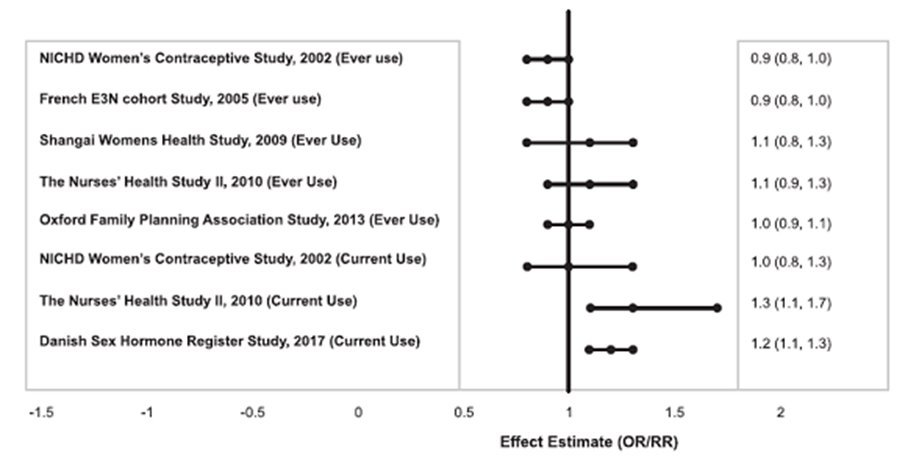
RR = relative risk; OR = odds ratio; HR = hazard ratio. “ever COC” are females with current or past COC use; “never COC use” are females that never used COCs.
There is evidence of an association between the following conditions and the use of oral contraceptives:
- •
- Mesenteric thrombosis
- •
- Retinal thrombosis
The following adverse reactions have been reported in patients receiving oral contraceptives and are believed to be drug-related:
- •
- Nausea
- •
- Vomiting
- •
- Gastrointestinal symptoms (such as abdominal cramps and bloating)
- •
- Breakthrough bleeding
- •
- Spotting
- •
- Change in menstrual flow
- •
- Amenorrhea
- •
- Temporary infertility after discontinuation of treatment
- •
- Edema
- •
- Melasma which may persist
- •
- Breast changes: tenderness, enlargement, secretion
- •
- Change in weight (increase or decrease)
- •
- Change in cervical erosion and secretion
- •
- Diminution in lactation when given immediately postpartum
- •
- Cholestatic jaundice
- •
- Migraine
- •
- Rash (allergic)
- •
- Mental depression
- •
- Reduced tolerance to carbohydrates
- •
- Vaginal candidiasis
- •
- Change in corneal curvature (steepening)
- •
- Intolerance to contact lenses
The following adverse reactions have been reported in users of oral contraceptives and the association has been neither confirmed nor refuted:
- •
- Pre-menstrual syndrome
- •
- Cataracts
- •
- Changes in appetite
- •
- Cystitis-like syndrome
- •
- Headache
- •
- Nervousness
- •
- Dizziness
- •
- Hirsutism
- •
- Loss of scalp hair
- •
- Erythema multiforme
- •
- Erythema nodosum
- •
- Hemorrhagic eruption
- •
- Vaginitis
- •
- Porphyria
- •
- Impaired renal function
- •
- Hemolytic uremic syndrome
- •
- Acne
- •
- Changes in libido
- •
- Colitis
Budd-Chiari Syndrome
Overdosage
Serious ill effects have not been reported following acute ingestion of large doses of oral contraceptives by young children. Overdosage may cause nausea, and withdrawal bleeding may occur in females.
NON-CONTRACEPTIVE HEALTH BENEFITS
The following non-contraceptive health benefits related to the use of oral contraceptives are supported by epidemiologic studies which largely utilized oral contraceptive formulations containing estrogen doses exceeding 0.035 mg of ethinyl estradiol or 0.05 mg of mestranol (73–78).
Effects on menses:
- •
- increased menstrual cycle regularity
- •
- decreased blood loss and decreased incidence of iron deficiency anemia
- •
- decreased incidence of dysmenorrhea
Effects related to inhibition of ovulation:
- •
- decreased incidence of functional ovarian cysts
- •
- decreased incidence of ectopic pregnancies
Effects from long-term use:
- •
- decreased incidence of fibroadenomas and fibrocystic disease of the breast
- •
- decreased incidence of acute pelvic inflammatory disease
- •
- decreased incidence of endometrial cancer
decreased incidence of ovarian cancer
Desogestrel and Ethinyl Estradiol Dosage and Administration
To achieve maximum contraceptive effectiveness, maximum contraceptive effectiveness, desogestrel and ethinyl estradiol tablets and ethinyl estradiol tablets must be taken exactly as directed and at intervals not exceeding 24 hours. Desogestrel and ethinyl estradiol tablets and ethinyl estradiol tablets may be initiated using either a Sunday start or a Day 1 start.
NOTE: Each blister is preprinted with the days of the week, starting with Sunday, to facilitate a Sunday start regimen. Six different "day label strips" are provided with each blister in order to accommodate a Day 1 start regimen. In this case, the patient should place the self-adhesive "day label strip" that corresponds to her starting day over the preprinted days.
IMPORTANT: The possibility of ovulation and conception prior to initiation of use of desogestrel and ethinyl estradiol tablets and ethinyl estradiol tablets should be considered.
The use of desogestrel and ethinyl estradiol tablets and ethinyl estradiol tablets for contraception may be initiated 4 weeks postpartum in women who elect not to breast-feed. When the tablets are administered during the postpartum period, the increased risk of thromboembolic disease associated with the postpartum period must be considered (see CONTRAINDICATIONS and WARNINGS concerning thromboembolic disease. See also PRECAUTIONS for Nursing mothers).
If the patient starts on desogestrel and ethinyl estradiol tablets and ethinyl estradiol tablets postpartum, and has not yet had a period, she should be instructed to use another method of contraception until a white to off-white tablet has been taken daily for 7 days.
SUNDAY START
When initiating a Sunday start regimen, another method of contraception should be used until after the first 7 consecutive days of administration.
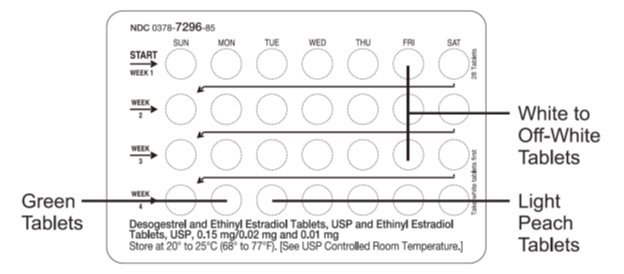
Using a Sunday start, tablets are taken daily without interruption as follows: The first white to off-white tablet should be taken on the first Sunday after menstruation begins (if menstruation begins on Sunday, the first white to off-white tablet is taken on that day). One white to off-white tablet is taken daily for 21 days, followed by 1 green (inert) tablet daily for 2 days and 1 light peach (active) tablet daily for 5 days. For all subsequent cycles, the patient then begins a new 28-tablet regimen on the next day (Sunday) after taking the last light peach tablet. [If switching from a Sunday start oral contraceptive, the first desogestrel and ethinyl estradiol tablets and ethinyl estradiol tablets should be taken on the second Sunday after the last tablet of a 21 day regimen or should be taken on the first Sunday after the last inactive tablet of a 28 day regimen.]
If a patient misses 1 white to off-white tablet, she should take the missed tablet as soon as she remembers. If the patient misses 2 consecutive white to off-white tablets in Week 1 or Week 2, the patient should take 2 tablets the day she remembers and 2 tablets the next day; thereafter, the patient should resume taking 1 tablet daily until she finishes the cycle pack. The patient should be instructed to use a back-up method of birth control if she has intercourse in the 7 days after missing pills. If the patient misses 2 consecutive white to off-white tablets in the third week or misses 3 or more white to off-white tablets in a row at any time during the cycle, the patient should keep taking 1 white to off-white tablet daily until the next Sunday. On Sunday the patient should throw out the rest of that cycle pack and start a new cycle pack that same day. The patient should be instructed to use a back-up method of birth control if she has intercourse in the 7 days after missing pills.
DAY 1 START
Counting the first day of menstruation as "Day 1", tablets are taken without interruption as follows: One white to off-white tablet daily for 21 days, one green (inert) tablet daily for 2 days followed by 1 light peach (ethinyl estradiol) tablet daily for 5 days. For all subsequent cycles, the patient then begins a new 28-tablet regimen on the next day after taking the last light peach tablet. [If switching directly from another oral contraceptive, the first white to off-white tablet should be taken on the first day of menstruation which begins after the last ACTIVE tablet of the previous product.]
If a patient misses 1 white to off-white tablet, she should take the missed tablet as soon as she remembers. If the patient misses 2 consecutive white to off-white tablets in Week 1 or Week 2, the patient should take 2 tablets the day she remembers and 2 tablets the next day; thereafter, the patient should resume taking 1 tablet daily until she finishes the cycle pack. The patient should be instructed to use a back-up method of birth control if she has intercourse in the 7 days after missing pills. If the patient misses 2 consecutive white tablets in the third week or if the patient misses 3 or more white to off-white tablets in a row at any time during the cycle, the patient should throw out the rest of that cycle pack and start a new cycle pack that same day. The patient should be instructed to use a back-up method of birth control if she has intercourse in the 7 days after missing pills.
ALL ORAL CONTRACEPTIVES
Breakthrough bleeding, spotting, and amenorrhea are frequent reasons for patients discontinuing oral contraceptives. In breakthrough bleeding, as in all cases of irregular bleeding from the vagina, non-functional causes should be borne in mind. In undiagnosed persistent or recurrent abnormal bleeding from the vagina, adequate diagnostic measures are indicated to rule out pregnancy or malignancy. If both pregnancy and pathology have been excluded, time or a change to another preparation may solve the problem. Changing to an oral contraceptive with a higher estrogen content, while potentially useful in minimizing menstrual irregularity, should be done only if necessary since this may increase the risk of thromboembolic disease.
Use of oral contraceptives in the event of a missed menstrual period:
- 1.
- If the patient has not adhered to the prescribed schedule, the possibility of pregnancy should be considered at the time of the first missed period and oral contraceptive use should be discontinued until pregnancy is ruled out.
If the patient has adhered to the prescribed regimen and misses two consecutive periods, pregnancy should be ruled out before continuing oral contraceptive use.
How is Desogestrel and Ethinyl Estradiol supplied
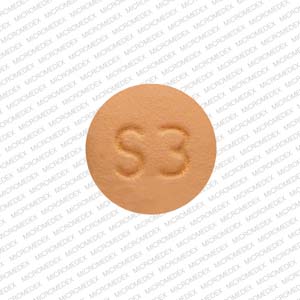
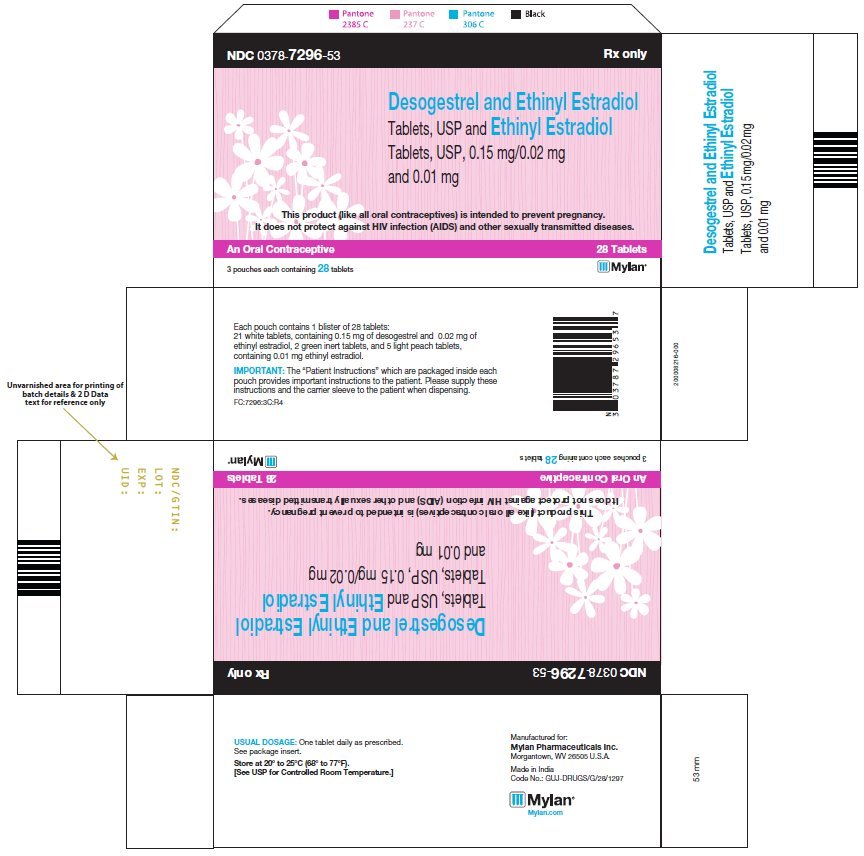
Desogestrel and Ethinyl Estradiol Tablets, USP and Ethinyl Estradiol Tablets, USP, 0.15 mg/0.02 mg and 0.01 mg contain 21 round white to off-white tablets, 2 round green tablets and 5 round light peach tablets in a blister pack. Each round white to off-white tablet (debossed with “232” on one side and other side plain) contains 0.15 mg desogestrel and 0.02 mg ethinyl estradiol. Each round green tablet (debossed with “294” on one side and other side plain) contains inert ingredients. Each round light peach tablet (debossed with “233” on one side and other side plain) contains 0.01 mg ethinyl estradiol.
|
Cartons of 3 |
NDC 0378-7296-53 |
|
Cartons of 6 |
NDC 0378-7296-56 |
Store at 20° to 25°C (68° to 77°F) [See USP Controlled Room Temperature].
Rx only
References
1. Hatcher RA, Trussell J, Stewart F et al. Contraceptive Technology: Seventeenth Revised Edition, New York: Irvington Publishers, 1998, in press. 2. Stadel BV. Oral contraceptives and cardiovascular disease. (Pt. 1). N Engl J Med 1981; 305:612–618. 3. Stadel BV. Oral contraceptives and cardiovascular disease. (Pt. 2). N Engl J Med 1981; 305:672–677. 4. Adam SA, Thorogood M. Oral contraception and myocardial infarction revisited: the effects of new preparations and prescribing patterns. Br J Obstet and Gynecol 1981; 88:838–845. 5. Mann JI, Inman WH. Oral contraceptives and death from myocardial infarction. Br Med J 1975; 2(5965):245–248. 6. Mann JI, Vessey MP, Thorogood M, Doll R. Myocardial infarction in young women with special reference to oral contraceptive practice. Br Med J 1975; 2(5956):241–245. 7. Royal College of General Practitioners’ Oral Contraception Study: Further analyses of mortality in oral contraceptive users. Lancet 1981; 1:541–546. 8. Slone D, Shapiro S, Kaufman DW, Rosenberg L, Miettinen OS, Stolley PD. Risk of myocardial infarction in relation to current and discontinued use of oral contraceptives. N Engl J Med 1981; 305:420–424. 9. Vessey MP. Female hormones and vascular disease—an epidemiological overview. Br J Fam Plann 1980; 6:1–12. 10. Russell-Briefel RG, Ezzati TM, Fulwood R, Perlman JA, Murphy RS. Cardiovascular risk status and oral contraceptive use, United States, 1976–80. Prevent Med 1986; 15:352–362. 11. Goldbaum GM, Kendrick JS, Hogelin GC, Gentry EM. The relative impact of smoking and oral contraceptive use on women in the United States. JAMA 1987; 258:1339–1342. 12. Layde PM, Beral V. Further analyses of mortality in oral contraceptive users: Royal College General Practitioners’ Oral Contraception Study. (Table 5) Lancet 1981; 1:541–546. 13. Knopp RH. Arteriosclerosis risk: the roles of oral contraceptives and postmenopausal estrogens. J Reprod Med 1986; 31(9) (Supplement):913–921. 14. Krauss RM, Roy S, Mishell DR, Casagrande J, Pike MC. Effects of two low-dose oral contraceptives on serum lipids and lipoproteins: Differential changes in high-density lipoproteins subclasses. Am J Obstet 1983; 145:446–452. 15. Wahl P, Walden C, Knopp R, Hoover J, Wallace R, Heiss G, Rifkind B. Effect of estrogen/ progestin potency on lipid/lipoprotein cholesterol. N Engl J Med 1983; 308:862–867. 16. Wynn V, Niththyananthan R. The effect of progestin in combined oral contraceptives on serum lipids with special reference to high-density lipoproteins. Am J Obstet Gynecol 1982; 142:766–771. 17. Wynn V, Godsland I. Effects of oral contraceptives and carbohydrate metabolism. J Reprod Med 1986; 31 (9) (Supplement):892–897. 18. LaRosa JC. Atherosclerotic risk factors in cardiovascular disease. J Reprod Med 1986; 31 (9) (Supplement):906–912. 19. Inman WH, Vessey MP. Investigation of death from pulmonary, coronary, and cerebral thrombosis and embolism in women of child-bearing age. Br Med J 1968; 2 (5599):193–199. 20. Maguire MG, Tonascia J, Sartwell PE, Stolley PD, Tockman MS. Increased risk of thrombosis due to oral contraceptives: a further report. Am J Epidemiol 1979; 110 (2):188–195. 21. Pettiti DB, Wingerd J, Pellegrin F, Ramacharan S. Risk of vascular disease in women: smoking, oral contraceptives, noncontraceptive estrogens, and other factors. JAMA 1979; 242:1150–1154. 22. Vessey MP, Doll R. Investigation of relation between use of oral contraceptives and thromboembolic disease. Br Med J 1968; 2 (5599):199–205. 23. Vessey MP, Doll R. Investigation of relation between use of oral contraceptives and thromboembolic disease. A further report. Br Med J 1969; 2 (5658):651–657. 24. Porter JB, Hunter JR, Danielson DA, Jick H, Stergachis A. Oral contraceptives and non-fatal vascular disease—recent experience. Obstet Gynecol 1982; 59 (3):299–302. 25. Vessey M, Doll R, Peto R, Johnson B, Wiggins P. A long-term follow-up study of women using different methods of contraception: an interim report. Biosocial Sci 1976; 8:375–427. 26. Royal College of General Practitioners: Oral contraceptives, venous thrombosis, and varicose veins. J Royal Coll Gen Pract 1978; 28:393–399. 27. Collaborative Group for the Study of Stroke in Young Women: Oral contraception and increased risk of cerebral ischemia or thrombosis. N Engl J Med 1973; 288:871–878. 28. Petitti DB, Wingerd J. Use of oral contraceptives, cigarette smoking, and risk of subarachnoid hemorrhage. Lancet 1978; 2:234–236. 29. Inman WH. Oral contraceptives and fatal subarachnoid hemorrhage. Br Med J 1979; 2 (6203):1468– 70. 30. Collaborative Group for the Study of Stroke in Young Women: Oral contraceptives and stroke in young women: associated risk factors. JAMA 1975; 231:718–722. 31. Inman WH, Vessey MP, Westerholm B, Engelund A. Thromboembolic disease and the steroidal content of oral contraceptives. A report to the Committee on Safety of Drugs. Br Med J 1970; 2:203–209. 32. Meade TW, Greenberg G, Thompson SG. Progestogens and cardiovascular reactions associated with oral contraceptives and a comparison of the safety of 50- and 35-mcg oestrogen preparations. Br Med J 1980; 280 (6224):1157–1161. 33. Kay CR. Progestogens and arterial disease—evidence from the Royal College of General Practitioners’ Study. Am J Obstet Gynecol 1982; 142:762–765. 34. Royal College of General Practitioners: Incidence of arterial disease among oral contraceptive users. J Royal Coll Gen Pract 1983; 33:75– 82. 35. Ory HW. Mortality associated with fertility and fertility control: 1983. Family Planning Perspectives 1983; 15:50–56. 36. The Cancer and Steroid Hormone Study of the Centers for Disease Control and the National Institute of Child Health and Human Development: Oral-contraceptive use and the risk of breast cancer. N Engl J Med 1986; 315:405–411. 37. Pike MC, Henderson BE, Krailo MD, Duke A, Roy S. Breast cancer risk in young women and use of oral contraceptives: possible modifying effect of formulation and age at use. Lancet 1983; 2:926–929. 38. Paul C, Skegg DG, Spears GFS, Kaldor JM. Oral contraceptives and breast cancer: A national study. Br Med J 1986; 293:723–725. 39. Miller DR, Rosenberg L, Kaufman DW, Schottenfeld D, Stolley PD, Shapiro S. Breast cancer risk in relation to early oral contraceptive use. Obstet Gynecol 1986; 68:863–868. 40. Olson H, Olson KL, Moller TR, Ranstam J, Holm P. Oral contraceptive use and breast cancer in young women in Sweden (letter). Lancet 1985; 2:748–749. 41. McPherson K, Vessey M, Neil A, Doll R, Jones L, Roberts M. Early contraceptive use and breast cancer: Results of another case-control study. Br J Cancer 1987; 56:653–660. 42. Huggins GR, Zucker PF. Oral contraceptives and neoplasia: 1987 update. Fertil Steril 1987; 47:733–761. 43. McPherson K, Drife JO. The pill and breast cancer: why the uncertainty? Br Med J 1986; 293:709–710. 44. Shapiro S. Oral contraceptives—time to take stock. N Engl J Med 1987; 315:450–451. 45. Ory H, Naib Z, Conger SB, Hatcher RA, Tyler CW. Contraceptive choice and prevalence of cervical dysplasia and carcinoma in situ. Am J Obstet Gynecol 1976; 124:573–577. 46. Vessey MP, Lawless M, McPherson K, Yeates D. Neoplasia of the cervix uteri and contraception: a possible adverse effect of the pill. Lancet 1983; 2:930. 47. Brinton LA, Huggins GR, Lehman HF, Malli K, Savitz DA, Trapido E, Rosenthal J, Hoover R. Long-term use of oral contraceptives and risk of invasive cervical cancer. Int J Cancer 1986; 38:339–344. 48. WHO Collaborative Study of Neoplasia and Steroid Contraceptives: Invasive cervical cancer and combined oral contraceptives. Br Med J 1985; 209:961–965. 49. Rooks JB, Ory HW, Ishak KG, Strauss LT, Greenspan JR, Hill AP, Tyler CW. Epidemiology of hepatocellular adenoma: the role of oral contraceptive use. JAMA 1979; 242:644–648. 50. Bein NN, Goldsmith HS. Recurrent massive hemorrhage from benign hepatic tumors secondary to oral contraceptives. Br J Surg 1977; 64:433–435. 51. Klatskin G. Hepatic tumors: possible relationship to use of oral contraceptives. Gastroenterology 1977; 73:386–394. 52. Henderson BE, Preston- Martin S, Edmondson HA, Peters RL, Pike MC. Hepatocellular carcinoma and oral contraceptives. Br J Cancer 1983; 48:437–440. 53. Neuberger J, Forman D, Doll R, Williams R. Oral contraceptives and hepatocellular carcinoma. Br Med J 1986; 292:1355–1357. 54. Forman D, Vincent TJ, Doll R. Cancer of the liver and oral contraceptives. Br Med J 1986; 292:1357–1361. 55. Harlap S, Eldor J. Births following oral contraceptive failures. Obstet Gynecol 1980; 55:447–452. 56. Savolainen E, Saksela E, Saxen L. Teratogenic hazards of oral contraceptives analyzed in a national malformation register. Am J Obstet Gynecol 1981; 140:521–524. 57. Janerich DT, Piper JM, Glebatis DM. Oral contraceptives and birth defects. Am J Epidemiol 1980; 112:73–79. 58. Ferencz C, Matanoski GM, Wilson PD, Rubin JD, Neill CA, Gutberlet R. Maternal hormone therapy and congenital heart disease. Teratology 1980; 21:225–239. 59. Rothman KJ, Fyler DC, Goldbatt A, Kreidberg MB. Exogenous hormones and other drug exposures of children with congenital heart disease. Am J Epidemiol 1979; 109:433–439. 60. Boston Collaborative Drug Surveillance Program: Oral contraceptives and venous thromboembolic disease, surgically confirmed gallbladder disease, and breast tumors. Lancet 1973; 1:1399–1404. 61. Royal College of General Practitioners: Oral contraceptives and health. New York, Pittman, 1974. 62. Layde PM, Vessey MP, Yeates D. Risk of gallbladder disease: a cohort study of young women attending family planning clinics. J Epidemiol Community Health 1982; 36:274–278. 63. Rome Group for the Epidemiology and Prevention of Cholelithiasis (GREPCO): Prevalence of gallstone disease in an Italian adult female population. Am J Epidemiol 1984; 119:796–805. 64. Strom BL, Tamragouri RT, Morse ML, Lazar EL, West SL, Stolley PD, Jones JK. Oral contraceptives and other risk factors for gallbladder disease. Clin Pharmacol Ther 1986; 39:335–341. 65. Wynn V, Adams PW, Godsland IF, Melrose J, Niththyananthan R, Oakley NW, Seedj A. Comparison of effects of different combined oral-contraceptive formulations on carbohydrate and lipid metabolism. Lancet 1979; 1:1045–1049. 66. Wynn V. Effect of progesterone and progestins on carbohydrate metabolism. In Progesterone and Progestin. Edited by Bardin CW, Milgrom E, Mauvis-Jarvis P. New York, Raven Press, 1983 pp. 395–410. 67. Perlman JA, Roussell-Briefel RG, Ezzati TM, Lieberknecht G. Oral glucose tolerance and the potency of oral contraceptive progestogens. J Chronic Dis 1985; 38:857–864. 68. Royal College of General Practitioners’ Oral Contraception Study: Effect on hypertension and benign breast disease of progestogen component in combined oral contraceptives. Lancet 1977; 1:624. 69. Fisch IR, Frank J. Oral contraceptives and blood pressure. JAMA 1977; 237:2499–2503. 70. Laragh AJ. Oral contraceptive induced hypertension—nine years later. Am J Obstet Gynecol 1976; 126:141– 147. 71. Ramcharan S, Peritz E, Pellegrin FA, Williams WT. Incidence of hypertension in the Walnut Creek Contraceptive Drug Study cohort. In Pharmacology of Steroid Contraceptive Drugs. Garattini S, Berendes HW. Eds. New York, Raven Press, 1977 pp. 277–288. (Monographs of the Mario Negri Institute for Pharmacological Research, Milan). 72. Stockley I. Interactions with oral contraceptives. J Pharm 1976; 216:140–143. 73. The Cancer and Steroid Hormone Study of the Centers for Disease Control and the National Institute of Child Health and Human Development: Oral contraceptive use and the risk of ovarian cancer. JAMA 1983; 249:1596–1599. 74. The Cancer and Steroid Hormone Study of the Centers for Disease Control and the National Institute of Child Health and Human Development: Combination oral contraceptive use and the risk of endometrial cancer. JAMA 1987; 257:796–800. 75. Ory HW. Functional ovarian cysts and oral contraceptives: negative association confirmed surgically. JAMA 1974; 228:68–69. 76. Ory HW, Cole P, Macmahon B, Hoover R. Oral contraceptives and reduced risk of benign breast disease. N Engl J Med 1976; 294:419–422. 77. Ory HW. The noncontraceptive health benefits from oral contraceptive use. Fam Plann Perspect 1982; 14:182–184. 78. Ory HW, Forrest JD, Lincoln R. Making Choices: Evaluating the health risks and benefits of birth control methods. New York, The Alan Guttmacher Institute, 1983; p. 1. 79. Schlesselman J, Stadel BV, Murray P, Lai S. Breast Cancer in relation to early use of oral contraceptives 1988; 259:1828–1833. 80. Hennekens CH, Speizer FE, Lipnick RJ, Rosner B, Bain C, Belanger C, Stampfer MJ, Willett W, Peto R. A case-controlled study of oral contraceptive use and breast cancer. JNCI 1984; 72:39–42. 81. LaVecchia C, Decarli A, Fasoli M, Franceschi S, Gentile A, Negri E, Parazzini F, Tognoni G. Oral contraceptives and cancers of the breast and of the female genital tract. Interim results from a case-control study. Br. J. Cancer 1986; 54:311–317. 82. Meirik O, Lund E, Adami H, Bergstrom R, Christoffersen T, Bergsjo P. Oral contraceptive use in breast cancer in young women. A Joint National Casecontrol study in Sweden and Norway. Lancet 1986; 11:650–654. 83. Kay CR, Hannaford PC. Breast cancer and the pill—A further report from the Royal College of General Practitioners’ oral contraception study. Br. J. Cancer 1988; 58:675–680. 84. Stadel BV, Lai S, Schlesselman JJ, Murray P. Oral contraceptives and premenopausal breast cancer in nulliparous women. Contraception 1988; 38:287–299. 85. Miller DR, Rosenberg L, Kaufman DW, Stolley P, Warshauer ME, Shapiro S. Breast cancer before age 45 and oral contraceptive use: New Findings. Am. J. Epidemiol 1989; 129:269–280. 86. The UK National Case-Control Study Group, Oral contraceptive use and breast cancer risk in young women. Lancet 1989; 1:973–982. 87. Schlesselman JJ. Cancer of the breast and reproductive tract in relation to use of oral contraceptives. Contraception 1989; 40:1–38. 88. Vessey MP, McPherson K, Villard- Mackintosh L, Yeates D. Oral contraceptives and breast cancer: latest findings in a large cohort study. Br. J. Cancer 1989; 59:613– 617. 89. Jick SS, Walker AM, Stergachis A, Jick H. Oral contraceptives and breast cancer. Br. J. Cancer 1989; 59:618–621. 90. Godsland, I et al. The effects of different formulations of oral contraceptive agents on lipid and carbohydrate metabolism. N Engl J Med 1990; 323:1375–81. 91. Kloosterboer, HJ et al. Selectivity in progesterone and androgen receptor binding of progestogens used in oral contraception. Contraception, 1988; 38:325–32. 92. Van der Vies, J and de Visser, J. Endocrinological studies with desogestrel. Arzneim. Forsch./Drug Res., 1983; 33(l),2:231–6. 93. Data on file, Organon Inc. 94. Fotherby, K. Oral contraceptives, lipids and cardiovascular diseases. Contraception, 1985; Vol. 31; 4:367–94. 95. Lawrence, DM et al. Reduced sex hormone binding globulin and derived free testosterone levels in women with severe acne. Clinical Endocrinology, 1981; 15:87–91. 96. Cullberg, G et al. Effects of a low-dose desogestrel-ethinyl estradiol combination on hirsutism, androgens and sex hormone binding globulin in women with a polycystic ovary syndrome. Acta Obstet Gynecol Scand, 1985; 64:195–202. 97. Jung-Hoffmann, C and Kuhl, H. Divergent effects of two low-dose oral contraceptives on sex hormone-binding globulin and free testosterone. AJOG, 1987; 156:199–203. 98. Hammond, G et al. Serum steroid binding protein concentrations, distribution of progestogens, and bioavailability of testosterone during treatment with contraceptives containing desogestrel or levonorgestrel. Fertil. Steril., 1984; 42:44–51. 99. Palatsi, R et al. Serum total and unbound testosterone and sex hormone binding globulin (SHBG) in female acne patients treated with two different oral contraceptives. Acta Derm Venereol, 1984; 64:517–23. 100. Porter JB, Hunter J, Jick H et al. Oral contraceptives and nonfatal vascular disease. Obstet Gynecol 1985; 66:1–4. 101. Porter JB, Jick H, Walker AM. Mortality among oral contraceptive users. Obstet Gynecol 1987; 7029–32. 102. Jick H, Jick SS, Gurewich V, Myers MW, Vasilakis C. Risk of idiopathic cardiovascular death and non-fatal venous thromboembolism in women using oral contraceptives with differing progestagen components. Lancet, 1995; 346:1589–93. 103. World Health Organization Collaborative Study of Cardiovascular Disease and Steroid Hormone Contraception. Effect of different progestagens in low oestrogen oral contraceptives on venous thromboembolic disease. Lancet, 1995; 346:1582– 88. 104. Spitzer WO, Lewis MA, Heinemann LAJ, Thorogood M, MacRae KD on behalf of Transnational Research Group on Oral Contraceptives and Health of Young Women. Third generation oral contraceptives and risk of venous thromboembolic disorders: An international case-control study. Br Med J, 1996; 312:83–88. 105. Christensen J, Petrenaite V, Atterman J, et al. Oral contraceptives induce lamotrigine metabolism: evidence from a doubleblind, placebo-controlled trial. Epilepsia 2007; 48(3):484-489.
PATIENT PACKAGE INSERT BRIEF SUMMARY
Desogestrel and Ethinyl Estradiol Tablets USP, 0.15 mg/0.02 mg and Ethinyl Estradiol Tablets USP, 0.01 mg
|
Cigarette smoking increases the risk of serious cardiovascular side effects from oral contraceptive use. This risk increases with age and with heavy smoking (15 or more cigarettes per day) and is quite marked in women over 35 years of age. Women who use oral contraceptives are strongly advised not to smoke. |
This product (like all oral contraceptives) is intended to prevent pregnancy. It does not protect against HIV infection (AIDS) and other sexually transmitted infections.
Oral contraceptives, also known as "birth control pills" or "the pill", are taken to prevent pregnancy, and when taken correctly, have a failure rate of about 1% per year when used without missing any pills. The typical failure rate of large numbers of pill users is less than 5% per year when women who miss pills are included. For most women, oral contraceptives are also free of serious or unpleasant side effects. However, forgetting to take pills considerably increases the chances of pregnancy.
For the majority of women, oral contraceptives can be taken safely. But there are some women who are at high risk of developing certain serious diseases that can be life-threatening or may cause temporary or permanent disability. The risks associated with taking oral contraceptives increase significantly if you:
- •
- smoke
- •
- have high blood pressure, diabetes, high cholesterol
- •
- have or have had clotting disorders, heart attack, stroke, angina pectoris, cancer of the breast, jaundice, or malignant or benign liver tumors.
Although cardiovascular disease risks may be increased with oral contraceptive use after age 40 in healthy, non-smoking women (even with the newer low-dose formulations), there are also greater potential health risks associated with pregnancy in older women.
You should not take the pill if you suspect you are pregnant or have unexplained vaginal bleeding.
Most side effects of the pill are not serious. The most common such effects are nausea, vomiting, bleeding between menstrual periods, weight gain, breast tenderness, headache, and difficulty wearing contact lenses. These side effects, especially nausea and vomiting, may subside within the first three months of use.
The serious side effects of the pill occur very infrequently, especially if you are in good health and are young. However, you should know that the following medical conditions have been associated with or made worse by the pill:
- 1.
- Blood clots in the legs (thrombophlebitis) or lungs (pulmonary embolism), stoppage or rupture of a blood vessel in the brain (stroke), blockage of blood vessels in the heart (heart attack or angina pectoris) or other organs of the body. As mentioned above, smoking increases the risk of heart attacks and strokes, and subsequent serious medical consequences.
- 2.
- Liver tumors, which may rupture and cause severe bleeding. A possible but not definite association has been found with the pill and liver cancer. However, liver cancers are extremely rare. The chance of developing liver cancer from using the pill is thus even rarer.
- 3.
- High blood pressure, although blood pressure usually returns to normal when the pill is stopped.
The symptoms associated with these serious side effects are discussed in the detailed leaflet given to you with your supply of pills. Notify your doctor or health care provider if you notice any unusual physical disturbances while taking the pill. In addition, drugs such as rifampin, as well as some anticonvulsants and some antibiotics may decrease oral contraceptive effectiveness.
There may be slight increases in the risk of breast cancer among current users of hormonal birth control pills with longer duration of use of 8 years or more. Some studies have found an increase in the incidence of cancer of the cervix in women who use oral contraceptives. However, this finding may be related to factors other than the use of oral contraceptives.
Taking the pill provides some important non-contraceptive benefits. These include less painful menstruation, less menstrual blood loss and anemia, fewer pelvic infections, and fewer cancers of the ovary and the lining of the uterus.
Be sure to discuss any medical condition you may have with your doctor or healthcare provider. Your doctor or healthcare provider will take a medical and family history before prescribing oral contraceptives and will examine you. The physical examination may be delayed to another time if you request it and your doctor or healthcare provider believes that it is a good medical practice to postpone it. You should be reexamined at least once a year while taking oral contraceptives. The detailed patient information leaflet gives you further information which you should read and discuss with your doctor or healthcare provider.
This product (like all oral contraceptives) is intended to prevent pregnancy. It does not protect against transmission of HIV (AIDS) and other sexually transmitted infections such as chlamydia, genital herpes, genital warts, gonorrhea, hepatitis B, and syphilis.
INSTRUCTIONS TO PATIENTS
HOW TO TAKE THE PILL
IMPORTANT POINTS TO REMEMBER
BEFORE YOU START TAKING YOUR PILLS:
- 1.
- BE SURE TO READ THESE DIRECTIONS:
Before you start taking your pills.
Anytime you are not sure what to do.
- 2.
- THE RIGHT WAY TO TAKE THE PILL IS TO TAKE ONE PILL EVERY DAY AT THE SAME TIME.
If you miss pills you could get pregnant. This includes starting the pack late.
The more pills you miss, the more likely you are to get pregnant.
- 3.
- MANY WOMEN HAVE SPOTTING OR LIGHT BLEEDING, OR MAY FEEL SICK TO THEIR STOMACH DURING THE FIRST 1 TO 3 PACKS OF PILLS.
If you feel sick to your stomach, do not stop taking the pill. The problem will usually go away. If it doesn't go away, check with your doctor or healthcare provider.
- 4.
- MISSING PILLS CAN ALSO CAUSE SPOTTING OR LIGHT BLEEDING, even when you make up these missed pills.
On the days you take 2 pills to make up for missed pills, you could also feel a little sick to your stomach.
- 5.
- IF YOU HAVE VOMITING OR DIARRHEA, for any reason, or IF YOU TAKE SOME MEDICINES, including some antibiotics, your pills may not work as well.
Use a back-up method (such as condoms, foam, or sponge) until you check with your doctor or healthcare provider.
- 6.
- IF YOU HAVE TROUBLE REMEMBERING TO TAKE THE PILL, talk to your doctor or healthcare provider about how to make pill-taking easier or about using another method of birth control.
- 7.
- IF YOU HAVE ANY QUESTIONS OR ARE UNSURE ABOUT THE INFORMATION IN THIS LEAFLET, call your doctor or healthcare provider.
BEFORE YOU START TAKING YOUR PILLS
- 1.
- DECIDE WHAT TIME OF DAY YOU WANT TO TAKE YOUR PILL.
It is important to take it at about the same time every day.
- 2.
- LOOK AT YOUR PILL PACK: IT WILL HAVE 28 PILLS:
This 28-pill pack has 26 "active" [white to off-white and light peach] pills (with hormones) and 2 "inactive" [green] pills (without hormones).
- 3.
- ALSO FIND:
- 1)
- where on the pack to start taking the pills,
- 2)
- in what order to take the pills (follow the arrows) and
- 3)
- the week numbers as shown in the picture below.
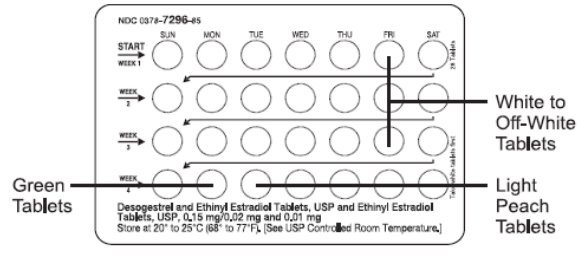
- 4.
- BE SURE YOU HAVE READY AT ALL TIMES:
ANOTHER KIND OF BIRTH CONTROL (such as condoms, foam, or sponge) to use as a back-up in case you miss pills.
AN EXTRA, FULL PILL PACK.
WHEN TO START THE FIRST PACK OF PILLS
You have a choice of which day to start taking your first pack of pills. Decide with your doctor or healthcare provider which is the best day for you. Pick a time of day which will be easy to remember.
DAY 1 START
- 1.
- Pick the day label strip that starts with the first day of your period (this is the day you start bleeding or spotting, even if it is almost midnight when the bleeding begins).
- 2.
- Place this day label strip in the cycle tablet blister over the area that has the days of the week (starting with Sunday) preprinted.
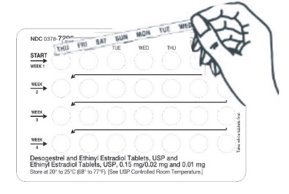
Note: If the first day of your period is a Sunday, you can skip steps #1 and #2.
- 3.
- Take the first "active" [white to off-white] pill of the first pack during the first 24 hours of your period.
- 4.
- You will not need to use a back-up method of birth control, since you are starting the pill at the beginning of your period.
SUNDAY START
- 1.
- Take the first "active" [white to off-white] pill of the first pack on the Sunday after your period starts, even if you are still bleeding. If your period begins on Sunday, start the pack that same day.
- 2.
- Use another method of birth control as a back-up method if you have sex anytime from the Sunday you start your first pack until the next Sunday (7 days). Condoms, foam, or the sponge are good back-up methods of birth control.
WHAT TO DO DURING THE MONTH
- 1.
- TAKE ONE PILL AT THE SAME TIME EVERY DAY UNTIL THE PACK IS EMPTY.
Do not skip pills even if you are spotting or bleeding between monthly periods or feel sick to your stomach (nausea).
Do not skip pills even if you do not have sex very often.
- 2.
- WHEN YOU FINISH A PACK OR SWITCH YOUR BRAND OF PILLS:
21 pills: Wait 7 days to start the next pack. You will probably have your period during that week. Be sure that no more than 7 days pass between 21-day packs.
28 pills: Start the next pack on the day after your last pill. Do not wait any days between packs.
WHAT TO DO IF YOU MISS PILLS
If you MISS 1 "active" [white to off-white] pill:
- 1.
- Take it as soon as you remember. Take the next pill at your regular time. This means you take 2 pills in 1 day.
- 2.
- You do not need to use a back-up birth control method if you have sex.
If you MISS 2 "active" [white to off-white] pills in a row in WEEK 1 OR WEEK 2 of your pack:
- 1.
- Take 2 pills on the day you remember and 2 pills the next day.
- 2.
- Then take 1 pill a day until you finish the pack.
- 3.
- You MAY BECOME PREGNANT if you have sex in the 7 days after you miss pills.
You MUST use another birth control method (such as condoms, foam, or sponge) as a back-up method for those 7 days.
If you MISS 2 "active" [white] pills in a row in WEEK 3:
- 1.
- If you are a Day 1 Starter:
THROW OUT the rest of the pill pack and start a new pack that same day.
If you are a Sunday Starter:
Keep taking 1 pill every day until Sunday.
On Sunday, THROW OUT the rest of the pack and start a new pack of pills that same day.
- 2.
- You may not have your period this month but this is expected. However, if you miss your period 2 months in a row, call your doctor or healthcare provider because you might be pregnant.
- 3.
- You MAY BECOME PREGNANT if you have sex in the 7 days after you miss pills. You MUST use another birth control method (such as condoms, foam, or sponge) as a back-up method for those 7 days.
If you MISS 3 OR MORE "active" [white to off-white] pills in a row (during the first 3 weeks):
- 1.
- If you are a Day 1 Starter:
THROW OUT the rest of the pill pack and start a new pack that same day.
If you are a Sunday Starter:
Keep taking 1 pill every day until Sunday.
On Sunday, THROW OUT the rest of the pack and start a new pack of pills that same day.
- 2.
- You may not have your period this month but this is expected. However, if you miss your period 2 months in a row, call your doctor or healthcare provider because you might be pregnant.
- 3.
- You MAY BECOME PREGNANT if you have sex in the 7 days after you miss pills. You MUST use another birth control method (such as condoms, foam, or sponge) as a back-up method for those 7 days.
A REMINDER FOR THOSE ON 28-DAY PACKS
If you forget any of the 2 [green] or 5 [light peach] pills in Week 4:
THROW AWAY the pills you missed.
Keep taking 1 pill each day until the pack is empty.
You do not need a back-up method.
FINALLY, IF YOU ARE STILL NOT SURE WHAT TO DO ABOUT THE PILLS YOU HAVE MISSED
Use a BACK-UP METHOD anytime you have sex.
KEEP TAKING ONE "ACTIVE" [WHITE] PILL EACH DAY until you can reach your doctor or healthcare provider.
DETAILED PATIENT PACKAGE INSERT
Desogestrel and Ethinyl Estradiol Tablets, USP and Ethinyl Estradiol Tablets, USP
This product (like all oral contraceptives) is intended to prevent pregnancy. It does not protect against HIV infection (AIDS) and other sexually transmitted infections.
Rx only
PLEASE NOTE: This labeling is revised from time to time as important new medical information becomes available. Therefore, please review this labeling carefully.
DESCRIPTION
The following oral contraceptive product contains a combination of a progestin and estrogen, the two kinds of female hormones:
Each white to off-white tablet contains 0.15 mg desogestrel and 0.02 mg ethinyl estradiol. Each green tablet contains inert ingredients and each light peach tablet contains 0.01 mg ethinyl estradiol.
INTRODUCTION
Any woman who considers using oral contraceptives (the birth control pill or the pill) should understand the benefits and risks of using this form of birth control. This leaflet will give you much of the information you will need to make this decision and will also help you determine if you are at risk of developing any of the serious side effects of the pill. It will tell you how to use the pill properly so that it will be as effective as possible. However, this leaflet is not a replacement for a careful discussion between you and your doctor or healthcare provider. You should discuss the information provided in this leaflet with him or her, both when you first start taking the pill and during your revisits. You should also follow your doctor's or healthcare provider's advice with regard to regular check-ups while you are on the pill.
EFFECTIVENESS OF ORAL CONTRACEPTIVES
Oral contraceptives or "birth control pills" or "the pill" are used to prevent pregnancy and are more effective than other non-surgical methods of birth control. When they are taken correctly, the chance of becoming pregnant is less than 1% (1 pregnancy per 100 women per year of use) when used perfectly, without missing any pills. Typical failure rates are actually 5% per year. The chance of becoming pregnant increases with each missed pill during a menstrual cycle.
In comparison, typical failure rates for other methods of birth control during the first year of use are as follows:
|
Implants (2 or 6 capsules): <1% |
Male sterilization: <1% |
|
Injection: <1% |
Cervical Cap with spermicides: 20 to 40% |
|
IUD: <1 to 2% |
Condom alone (male): 14% |
|
Diaphragm with spermicides: 20% |
Condom alone (female): 21% |
|
Spermicides alone: 26% |
Periodic abstinence: 25% |
|
Vaginal sponge: 20 to 40% |
Withdrawal: 19% |
|
Female sterilization: <1% |
No methods: 85%. |
WHO SHOULD NOT TAKE ORAL CONTRACEPTIVES
|
Cigarette smoking increases the risk of serious cardiovascular side effects from oral contraceptive use. This risk increases with age and with heavy smoking (15 or more cigarettes per day) and is quite marked in women over 35 years of age. Women who use oral contraceptives are strongly advised not to smoke. |
Some women should not use the pill. For example, you should not take the pill if you are pregnant or think you may be pregnant. You should also not use the pill if you have any of the following conditions:
- •
- A history of heart attack or stroke
- •
- Blood clots in the legs (thrombophlebitis), lungs (pulmonary embolism), or eyes
- •
- A history of blood clots in the deep veins of your legs
- •
- Chest pain (angina pectoris)
- •
- Known or suspected breast cancer
- •
- Unexplained vaginal bleeding (until a diagnosis is reached by your doctor)
- •
- Yellowing of the whites of the eyes or of the skin (jaundice) during pregnancy or during previous use of the pill
- •
- Liver tumor (benign or cancerous)
- •
- Hepatitis C and are taking any drug combination containing ombitasvir/paritaprevir/ritonavir, with or without dasabuvir. This may increase levels of the liver enzyme “alanine aminotransferase” (ALT) in the blood
Tell your doctor or healthcare provider if you have ever had any of these conditions. Your doctor or healthcare provider can recommend another method of birth control.
OTHER CONSIDERATIONS BEFORE TAKING ORAL CONTRACEPTIVES
Tell your doctor or healthcare provider if you have:
- •
- Breast nodules, fibrocystic disease of the breast, an abnormal breast x-ray or mammogram
- •
- Diabetes
- •
- Elevated cholesterol or triglycerides
- •
- High blood pressure
- •
- Migraine or other headaches or epilepsy
- •
- Depression
- •
- Gallbladder, heart, or kidney disease
- •
- History of scanty or irregular menstrual periods.
Women with any of these conditions should be checked often by their doctor or healthcare provider if they choose to use oral contraceptives.
Also, be sure to inform your doctor or healthcare provider if you smoke or are on any medications.
RISKS OF TAKING ORAL CONTRACEPTIVES
- 1.
- Risk of developing blood clots
Blood clots and blockage of blood vessels are one of the most serious side effects of taking oral contraceptives and can cause death or serious disability. In particular, a clot in the leg can cause thrombophlebitis and a clot that travels to the lungs can cause a sudden blockage of the vessel carrying blood to the lungs. The risks of these side effects may be greater with desogestrel-containing oral contraceptives such as desogestrel and ethinyl estradiol tablets and ethinyl estradiol tablets than with certain other low-dose pills. Rarely, clots occur in the blood vessels of the eye and may cause blindness, double vision, or impaired vision.
If you take oral contraceptives and need elective surgery, need to stay in bed for a prolonged illness or have recently delivered a baby, you may be at risk of developing blood clots. You should consult your doctor or healthcare provider about stopping oral contraceptives three to four weeks before surgery and not taking oral contraceptives for two weeks after surgery or during bed rest. You should also not take oral contraceptives soon after delivery of a baby. It is advisable to wait for at least four weeks after delivery if you are not breast-feeding or four weeks after a second trimester abortion. If you are breast-feeding, you should wait until you have weaned your child before using the pill (see Breast-feeding in GENERAL PRECAUTIONS).
The risk of circulatory disease in oral contraceptive users may be higher in users of high dose pills and may be greater with longer duration of oral contraceptive use. In addition, some of these increased risks may continue for a number of years after stopping oral contraceptives. The risk of venous thromboembolic disease associated with oral contraceptives does not increase with length of use and disappears after pill use is stopped. The risk of abnormal blood clotting increases with age in both users and non-users of oral contraceptives, but the increased risk from the oral contraceptive appears to be present at all ages. For women aged 20 to 44 it is estimated that about 1 in 2,000 using oral contraceptives will be hospitalized each year because of abnormal clotting. Among non-users in the same age group, about 1 in 20,000 would be hospitalized each year. For oral contraceptive users in general, it has been estimated that in women between the ages of 15 and 34 the risk of death due to a circulatory disorder is about 1 in 12,000 per year, whereas for non-users the rate is about 1 in 50,000 per year. In the age group 35 to 44, the risk is estimated to be about 1 in 2,500 per year for oral contraceptive users and about 1 in 10,000 per year for non-users.
- 2.
- Heart attacks and strokes
Oral contraceptives may increase the tendency to develop strokes (stoppage or rupture of blood vessels in the brain) and angina pectoris and heart attacks (blockage of blood vessels in the heart). Any of these conditions can cause death or serious disability.
Smoking greatly increases the possibility of suffering heart attacks and strokes. Furthermore, smoking and the use of oral contraceptives greatly increase the chances of developing and dying of heart disease.
- 3.
- Gallbladder disease
Oral contraceptive users probably have a greater risk than non-users of having gallbladder disease, although this risk may be related to pills containing high doses of estrogens.
- 4.
- Liver tumors
In rare cases, oral contraceptives can cause benign but dangerous liver tumors. These benign liver tumors can rupture and cause fatal internal bleeding. In addition, a possible but not definite association has been found with the pill and liver cancers in two studies, in which a few women who developed these very rare cancers were found to have used oral contraceptives for long periods. However, liver cancers are extremely rare. The chance of developing liver cancer from using the pill is thus even rarer.
- 5.
- Risk of Cancer
It is not known if hormonal birth control pills cause breast cancer. Some studies, but not all, suggest that there could be a slight increase in the risk of breast cancer among current users with longer duration of use.
If you have breast cancer now, or have had it in the past, do not use hormonal birth control because some breast cancers are sensitive to hormones.
Some studies have found an increase in the incidence of cancer of the cervix in women who use oral contraceptives. However, this finding may be related to factors other than the use of oral contraceptives. There is insufficient evidence to rule out the possibility that pills may cause such cancers.
ESTIMATED RISK OF DEATH FROM A BIRTH CONTROL METHOD OR PREGNANCY
All methods of birth control and pregnancy are associated with a risk of developing certain diseases which may lead to disability or death. An estimate of the number of deaths associated with different methods of birth control and pregnancy has been calculated and is shown in the following table.
| *Deaths are birth related | |||||||||
| **Deaths are method related | |||||||||
|
Method of control and outcome
|
15-19
|
20-24
|
25-29
|
30-34
|
35-39
|
40-44
|
|||
|
No fertility |
7 |
7.4 |
9.1 |
14.8 |
25.7 |
28.2 |
|||
|
Oral contraceptives |
0.3 |
0.5 |
0.9 |
1.9 |
13.8 |
31.6 |
|||
|
Oral contraceptives |
2.2 |
3.4 |
6.6 |
13.5 |
51.1 |
117.2 |
|||
|
IUD** |
0.8 |
0.8 |
1 |
1 |
1.4 |
1.4 |
|||
|
Condom* |
1.1 |
1.6 |
0.7 |
0.2 |
0.3 |
0.4 |
|||
|
Diaphragm/spermicide* |
1.9 |
1.2 |
1.2 |
1.3 |
2.2 |
2.8 |
|||
|
Periodic abstinence* |
2.5 |
1.6 |
1.6 |
1.7 |
2.9 |
3.6 |
|||
In the above table, the risk of death from any birth control method is less than the risk of childbirth, except for oral contraceptive users over the age of 35 who smoke and pill users over the age of 40 even if they do not smoke. It can be seen in the table that for women aged 15 to 39, the risk of death was highest with pregnancy (7 to 26 deaths per 100,000 women, depending on age). Among pill users who do not smoke, the risk of death is always lower than that associated with pregnancy for any age group, although over the age of 40, the risk increases to 32 deaths per 100,000 women, compared to 28 associated with pregnancy at that age. However, for pill users who smoke and are over the age of 35, the estimated number of deaths exceeds those for other methods of birth control. If a woman is over the age of 40 and smokes, her estimated risk of death is four times higher (117/100,000 women) than the estimated risk associated with pregnancy (28/100,000 women) in that age group.
The suggestion that women over 40 who do not smoke should not take oral contraceptives is based on information from older, high-dose pills and on less selective use of pills than is practiced today. An Advisory Committee of the FDA discussed this issue in 1989 and recommended that the benefits of oral contraceptive use by healthy, non-smoking women over 40 years of age may outweigh the possible risks. However, all women, especially older women, are cautioned to use the lowest dose pill that is effective.
WARNING SIGNALS
If any of these adverse effects occur while you are taking oral contraceptives, call your doctor or healthcare provider immediately:
- •
- Sharp chest pain, coughing of blood, or sudden shortness of breath (indicating a possible clot in the lung)
- •
- Pain in the calf (indicating a possible clot in the leg)
- •
- Crushing chest pain or heaviness in the chest (indicating a possible heart attack)
- •
- Sudden severe headache or vomiting, dizziness or fainting, disturbances of vision or speech, weakness, or numbness in an arm or leg (indicating a possible stroke)
- •
- Sudden partial or complete loss of vision (indicating a possible clot in the eye)
- •
- Breast lumps (indicating possible breast cancer or fibrocystic disease of the breast; ask your doctor or healthcare provider to show you how to examine your breasts)
- •
- Severe pain or tenderness in the stomach area (indicating a possibly ruptured liver tumor)
- •
- Difficulty in sleeping, weakness, lack of energy, fatigue, or change in mood (possibly indicating severe depression)
- •
- Jaundice or a yellowing of the skin or eyeballs, accompanied frequently by fever, fatigue, loss of appetite, dark colored urine, or light colored bowel movements (indicating possible liver problems).
SIDE EFFECTS OF ORAL CONTRACEPTIVES
- 1.
- Vaginal bleeding
Irregular vaginal bleeding or spotting may occur while you are taking the pills. Irregular bleeding may vary from slight staining between menstrual periods to breakthrough bleeding which is a flow much like a regular period. Irregular bleeding occurs most often during the first few months of oral contraceptive use, but may also occur after you have been taking the pill for some time. Such bleeding may be temporary and usually does not indicate any serious problems. It is important to continue taking your pills on schedule. If the bleeding occurs in more than one cycle or lasts for more than a few days, talk to your doctor or healthcare provider.
- 2.
- Contact lenses
If you wear contact lenses and notice a change in vision or an inability to wear your lenses, contact your doctor or healthcare provider.
- 3.
- Fluid retention
Oral contraceptives may cause edema (fluid retention) with swelling of the fingers or ankles and may raise your blood pressure. If you experience fluid retention, contact your doctor or healthcare provider.
- 4.
- Melasma
A spotty darkening of the skin is possible, particularly of the face.
- 5.
- Other side effects
Other side effects may include nausea and vomiting, change in appetite, headache, nervousness, depression, dizziness, loss of scalp hair, rash, and vaginal infections.
If any of these side effects bother you, call your doctor or healthcare provider.
GENERAL PRECAUTIONS
- 1.
- Missed periods and use of oral contraceptives before or during early pregnancy
There may be times when you may not menstruate regularly after you have completed taking a cycle of pills. If you have taken your pills regularly and miss one menstrual period, continue taking your pills for the next cycle but be sure to inform your doctor or healthcare provider before doing so. If you have not taken the pills daily as instructed and missed a menstrual period, or if you missed two consecutive menstrual periods, you may be pregnant. Check with your doctor or healthcare provider immediately to determine whether you are pregnant. Do not continue to take oral contraceptives until you are sure you are not pregnant, but continue to use another method of contraception.
There is no conclusive evidence that oral contraceptive use is associated with an increase in birth defects, when taken inadvertently during early pregnancy. Previously, a few studies had reported that oral contraceptives might be associated with birth defects, but these studies have not been confirmed. Nevertheless, oral contraceptives or any other drugs should not be used during pregnancy unless clearly necessary and prescribed by your doctor or healthcare provider. You should check with your doctor or healthcare provider about risks to your unborn child of any medication taken during pregnancy.
- 2.
- While breast-feeding
If you are breast-feeding, consult your doctor or healthcare provider before starting oral contraceptives. Some of the drug will be passed on to the child in the milk. A few adverse effects on the child have been reported, including yellowing of the skin (jaundice) and breast enlargement. In addition, oral contraceptives may decrease the amount and quality of your milk. If possible, do not use oral contraceptives while breast-feeding. You should use another method of contraception since breast-feeding provides only partial protection from becoming pregnant and this partial protection decreases significantly as you breast-feed for longer periods of time. You should consider starting oral contraceptives only after you have weaned your child completely.
- 3.
- Laboratory tests
If you are scheduled for any laboratory tests, tell your doctor or healthcare provider you are taking birth control pills. Certain blood tests may be affected by birth control pills.
- 4.
- Drug interactions
Certain drugs may interact with birth control pills to make them less effective in preventing pregnancy or cause an increase in breakthrough bleeding. Such drugs include rifampin, drugs used for epilepsy such as barbiturates (for example, phenobarbital), phenytoin (Dilantin® is one brand of this drug), phenylbutazone (Butazolidin® is one brand), and possibly certain antibiotics. You may need to use additional contraception when you take drugs which can make oral contraceptives less effective.
Birth control pills may interact with lamotrigine, an anticonvulsant used for epilepsy. This may increase the risk of seizures, so your physician may need to adjust the dose of lamotrigine. Some medicines may make birth control pill less effective, including:
- •
- Barbiturates
- •
- Bosentan
- •
- Carbamazepine
- •
- Felbamate
- •
- Griseofulvine
- •
- Oxcarbazepine
- •
- Phenytoin
- •
- Rifampin
- •
- St. John's wort
- •
- Topiramate
As with all prescription products, you should notify your healthcare provider of any other medicines and herbal products you are taking. You may need to use a barrier contraceptive when you take drugs or products that can make birth control pills less effective.
- 5.
- Sexually transmitted infections
This product (like all oral contraceptives) is intended to prevent pregnancy. It does not protect against transmission of HIV (AIDS) and other sexually transmitted infections such as chlamydia, genital herpes, genital warts, gonorrhea, hepatitis B, and syphilis.
HOW TO TAKE THE PILL
IMPORTANT POINTS TO REMEMBER
BEFORE YOU START TAKING YOUR PILLS:
- 1.
- BE SURE TO READ THESE DIRECTIONS:
Before you start taking your pills.
Anytime you are not sure what to do.
- 2.
- THE RIGHT WAY TO TAKE THE PILL IS TO TAKE ONE PILL EVERY DAY AT THE SAME TIME.
If you miss pills you could get pregnant. This includes starting the pack late.
The more pills you miss, the more likely you are to get pregnant.
- 3.
- MANY WOMEN HAVE SPOTTING OR LIGHT BLEEDING, OR MAY FEEL SICK TO THEIR STOMACH DURING THE FIRST 1 TO 3 PACKS OF PILLS.
If you feel sick to your stomach, do not stop taking the pill. The problem will usually go away. If it doesn't go away, check with your doctor or healthcare provider.
- 4.
- MISSING PILLS CAN ALSO CAUSE SPOTTING OR LIGHT BLEEDING, even when you make up these missed pills.
On the days you take 2 pills to make up for missed pills, you could also feel a little sick to your stomach.
- 5.
- IF YOU HAVE VOMITING OR DIARRHEA, for any reason, or IF YOU TAKE SOME MEDICINES, including some antibiotics, your pills may not work as well.
Use a back-up method (such as condoms, foam, or sponge) until you check with your doctor or healthcare provider.
- 6.
- IF YOU HAVE TROUBLE REMEMBERING TO TAKE THE PILL, talk to your doctor or healthcare provider about how to make pill-taking easier or about using another method of birth control.
- 7.
- IF YOU HAVE ANY QUESTIONS OR ARE UNSURE ABOUT THE INFORMATION IN THIS LEAFLET, call your doctor or healthcare provider.
BEFORE YOU START TAKING YOUR PILLS
- 1.
- DECIDE WHAT TIME OF DAY YOU WANT TO TAKE YOUR PILL.
It is important to take it at about the same time every day.
- 2.
- LOOK AT YOUR PILL PACK: IT WILL HAVE 28 PILLS:
This 28-pill pack has 26 "active" [white to off-white and light peach] pills (with hormones) and 2 "inactive" [green] pills (without hormones).
- 3.
- ALSO FIND:
- 1)
- where on the pack to start taking the pills,
- 2)
- in what order to take the pills (follow the arrows) and
- 3)
- the week numbers as shown in the picture below.
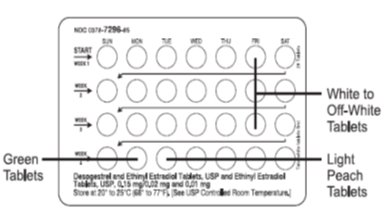
- 4.
- BE SURE YOU HAVE READY AT ALL TIMES:
ANOTHER KIND OF BIRTH CONTROL (such as condoms, foam, or sponge) to use as a back-up in case you miss pills.
AN EXTRA, FULL PILL PACK.
WHEN TO START THE FIRST PACK OF PILLS
You have a choice of which day to start taking your first pack of pills. Decide with your doctor or healthcare provider which is the best day for you. Pick a time of day which will be easy to remember.
DAY 1 START
- 1.
- Pick the day label strip that starts with the first day of your period (this is the day you start bleeding or spotting, even if it is almost midnight when the bleeding begins).
- 2.
- Place this day label strip in the cycle tablet blister over the area that has the days of the week (starting with Sunday) preprinted.
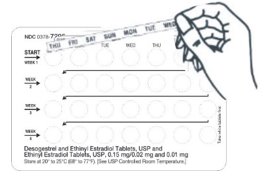
Note: If the first day of your period is a Sunday, you can skip steps #1 and #2.
- 3.
- Take the first "active" [white to off-white] pill of the first pack during the first 24 hours of your period.
- 4.
- You will not need to use a back-up method of birth control, since you are starting the pill at the beginning of your period.
SUNDAY START
- 1.
- Take the first "active" [white to off-white] pill of the first pack on the Sunday after your period starts, even if you are still bleeding. If your period begins on Sunday, start the pack that same day.
- 2.
- Use another method of birth control as a back-up method if you have sex anytime from the Sunday you start your first pack until the next Sunday (7 days). Condoms, foam, or the sponge are good back-up methods of birth control.
WHAT TO DO DURING THE MONTH
- 1.
- TAKE ONE PILL AT THE SAME TIME EVERY DAY UNTIL THE PACK IS EMPTY.
Do not skip pills even if you are spotting or bleeding between monthly periods or feel sick to your stomach (nausea).
Do not skip pills even if you do not have sex very often.
- 2.
- WHEN YOU FINISH A PACK OR SWITCH YOUR BRAND OF PILLS:
21 pills: Wait 7 days to start the next pack. You will probably have your period during that week. Be sure that no more than 7 days pass between 21-day packs.
28 pills: Start the next pack on the day after your last pill. Do not wait any days between packs.
WHAT TO DO IF YOU MISS PILLS
If you MISS 1 "active" [white to off-white] pill:
- 1.
- Take it as soon as you remember. Take the next pill at your regular time. This means you take 2 pills in 1 day.
- 2.
- You do not need to use a back-up birth control method if you have sex.
If you MISS 2 "active" [white to off-white] pills in a row in WEEK 1 OR WEEK 2 of your pack:
- 1.
- Take 2 pills on the day you remember and 2 pills the next day.
- 2.
- Then take 1 pill a day until you finish the pack.
- 3.
- You MAY BECOME PREGNANT if you have sex in the 7 days after you miss pills.
You MUST use another birth control method (such as condoms, foam, or sponge) as a back-up method for those 7 days.
If you MISS 2 "active" [white to off-white] pills in a row in WEEK 3:
- 1.
- If you are a Day 1 Starter:
THROW OUT the rest of the pill pack and start a new pack that same day.
If you are a Sunday Starter:
Keep taking 1 pill every day until Sunday.
On Sunday, THROW OUT the rest of the pack and start a new pack of pills that same day.
- 2.
- You may not have your period this month but this is expected. However, if you miss your period 2 months in a row, call your doctor or healthcare provider because you might be pregnant.
- 3.
- You MAY BECOME PREGNANT if you have sex in the 7 days after you miss pills. You MUST use another birth control method (such as condoms, foam, or sponge) as a back-up method for those 7 days.
If you MISS 3 OR MORE "active" [white to off-white] pills in a row (during the first 3 weeks):
- 1.
- If you are a Day 1 Starter:
THROW OUT the rest of the pill pack and start a new pack that same day.
If you are a Sunday Starter:
Keep taking 1 pill every day until Sunday.
On Sunday, THROW OUT the rest of the pack and start a new pack of pills that same day.
- 2.
- You may not have your period this month but this is expected. However, if you miss your period 2 months in a row, call your doctor or healthcare provider because you might be pregnant.
- 3.
- You MAY BECOME PREGNANT if you have sex in the 7 days after you miss pills. You MUST use another birth control method (such as condoms, foam, or sponge) as a back-up method for those 7 days.
A REMINDER FOR THOSE ON 28-DAY PACKS
If you forget any of the 2 [green] or 5 [light peach] pills in Week 4:
THROW AWAY the pills you missed.
Keep taking 1 pill each day until the pack is empty.
You do not need a back-up method.
FINALLY, IF YOU ARE STILL NOT SURE WHAT TO DO ABOUT THE PILLS YOU HAVE MISSED
Use a BACK-UP METHOD anytime you have sex.
KEEP TAKING ONE "ACTIVE" [WHITE TO OFF-WHITE] PILL EACH DAY until you can reach your doctor or healthcare provider.
PREGNANCY DUE TO PILL FAILURE
The incidence of pill failure resulting in pregnancy is approximately one percent (i.e., one pregnancy per 100 women per year) if taken every day as directed, but more typical failure rates are about 5%. If failure does occur, the risk to the fetus is minimal.
PREGNANCY AFTER STOPPING THE PILL
There may be some delay in becoming pregnant after you stop using oral contraceptives, especially if you had irregular menstrual cycles before you used oral contraceptives. It may be advisable to postpone conception until you begin menstruating regularly once you have stopped taking the pill and desire pregnancy.
There does not appear to be any increase in birth defects in newborn babies when pregnancy occurs soon after stopping the pill.
OVERDOSAGE
Serious ill effects have not been reported following ingestion of large doses of oral contraceptives by young children. Overdosage may cause nausea and withdrawal bleeding in females. In case of overdosage, contact your doctor, healthcare provider or pharmacist.
OTHER INFORMATION
Your doctor or healthcare provider will take a medical and family history before prescribing oral contraceptives and will examine you. The physical examination may be delayed to another time if you request it and your doctor or the healthcare provider believes that it is a good medical practice to postpone it. You should be reexamined at least once a year. Be sure to inform your doctor or healthcare provider if there is a family history of any of the conditions listed previously in this leaflet. Be sure to keep all appointments with your doctor or healthcare provider, because this is a time to determine if there are early signs of side effects of oral contraceptive use.
Do not use the drug for any condition other than the one for which it was prescribed. This drug has been prescribed specifically for you; do not give it to others who may want birth control pills.
HEALTH BENEFITS FROM ORAL CONTRACEPTIVES
In addition to preventing pregnancy, use of combination oral contraceptives may provide certain benefits. They are:
- •
- menstrual cycles may become more regular.
- •
- blood flow during menstruation may be lighter and less iron may be lost. Therefore, anemia due to iron deficiency is less likely to occur.
- •
- pain or other symptoms during menstruation may be encountered less frequently.
- •
- ectopic (tubal) pregnancy may occur less frequently.
- •
- non-cancerous cysts or lumps in the breast may occur less frequently.
- •
- acute pelvic inflammatory disease may occur less frequently.
- •
- oral contraceptive use may provide some protection against developing two forms of cancer: cancer of the ovaries and cancer of the lining of the uterus.
If you want more information about birth control pills, ask your doctor, healthcare provider, or pharmacist. They have a more technical leaflet called the Prescribing Information which you may wish to read.
Manufactured for:
Mylan Pharmaceuticals Inc.
Morgantown, WV 26505 U.S.A.
Manufactured by:
Mylan Laboratories Limited
Ahmedabad - 382 213, India
Code No.: GUJ-DRUGS/G/28/1297
75098328
Revised: 8/2023
FC:OT:7296:R6
PRINCIPAL DISPLAY PANEL - 0.15 mg/0.02 mg and 0.01 mg
NDC 0378-7296-53
Rx only
Desogestrel and Ethinyl Estradiol
Tablets, USP and Ethinyl Estradiol
Tablets, USP, 0.15 mg/0.02 mg
and 0.01 mg
This product (like all oral contraceptives) is intended to prevent pregnancy.
It does not protect against HIV infection (AIDS) and other sexually transmitted diseases.
An oral contraceptive | 28 Tablets
3 pouches each containing 28 tablets
USUAL DOSAGE: One tablet daily as prescribed.
See package insert.
Store at 20° to 25°C (68° to 77°F).
[See USP Controlled Room Temperature.]
Manufactured for:
Mylan Pharmaceuticals Inc.
Morgantown, WV 26505 U.S.A.
Made in India
Code No.: GUJ-DRUGS/G/28/1297
Mylan.com
Each pouch contains 1 blister of 28 tablets:
21 white tablets, containing 0.15 mg of desogestrel and 0.02 mg of ethinyl estradiol, 2 green inert tablets, and 5 light peach tablets, containing 0.01 mg ethinyl estradiol.
IMPORTANT: The “Patient Instructions” which are packaged inside each pouch provides important instructions to the patient. Please supply these instructions and the carrier sleeve to the patient when dispensing.
FC:7296:3C:R4
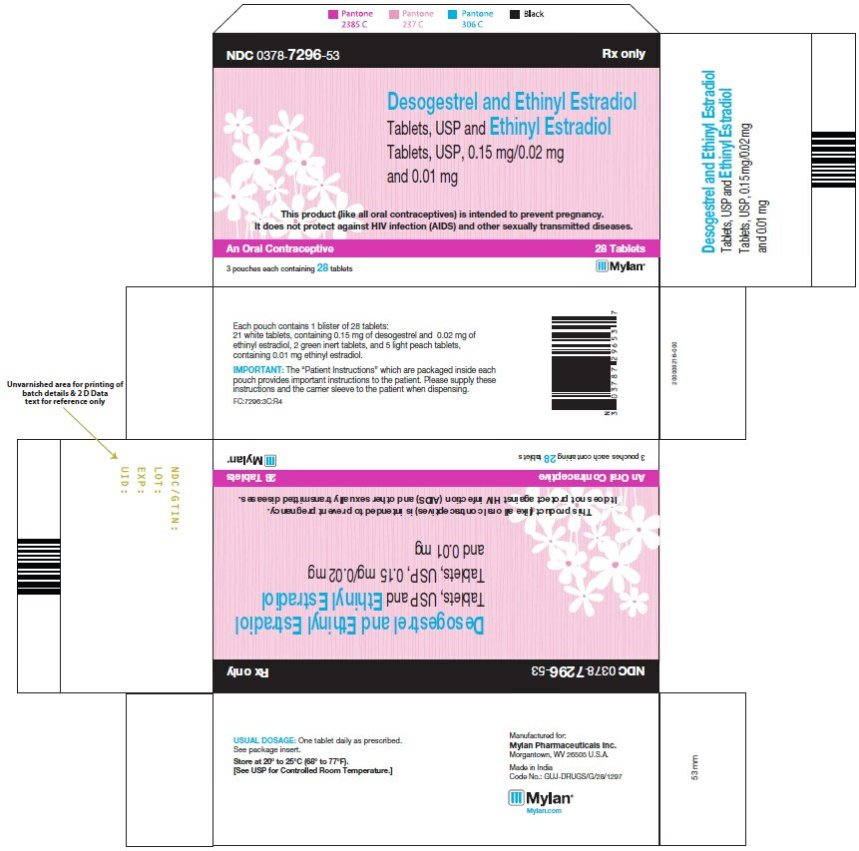
| DESOGESTREL AND ETHINYL ESTRADIOL AND ETHINYL ESTRADIOL
desogestrel and ethinyl estradiol and ethinyl estradiol kit |
||||||||||||||||||||||||||||||||||||||||
|
||||||||||||||||||||||||||||||||||||||||
|
||||||||||||||||||||||||||||||||||||||||
|
||||||||||||||||||||||||||||||||||||||||
|
||||||||||||||||||||||||||||||||||||||||
|
||||||||||||||||||||||||||||||||||||||||
|
||||||||||||||||||||||||||||||||||||||||
|
||||||||||||||||||||||||||||||||||||||||
|
||||||||||||||||||||||||||||||||||||||||
|
||||||||||||||||||||||||||||||||||||||||
|
||||||||||||||||||||||||||||||||||||||||
|
||||||||||||||||||||||||||||||||||||||||
|
||||||||||||||||||||||||||||||||||||||||
|
||||||||||||||||||||||||||||||||||||||||
|
||||||||||||||||||||||||||||||||||||||||
|
||||||||||||||||||||||||||||||||||||||||
|
||||||||||||||||||||||||||||||||||||||||
|
||||||||||||||||||||||||||||||||||||||||
|
||||||||||||||||||||||||||||||||||||||||
|
||||||||||||||||||||||||||||||||||||||||
|
||||||||||||||||||||||||||||||||||||||||
|
||||||||||||||||||||||||||||||||||||||||
| Labeler - Mylan Pharmaceuticals Inc. (059295980) |
More about desogestrel / ethinyl estradiol
- Check interactions
- Compare alternatives
- Pricing & coupons
- Reviews (1,567)
- Drug images
- Side effects
- Dosage information
- During pregnancy
- Drug class: contraceptives
- En español
Patient resources
- Ethinyl estradiol and desogestrel drug information
- Desogestrel and ethinyl estradiol (Advanced Reading)
Professional resources
Other brands
Apri, Kariva, Isibloom, Azurette, ... +19 more